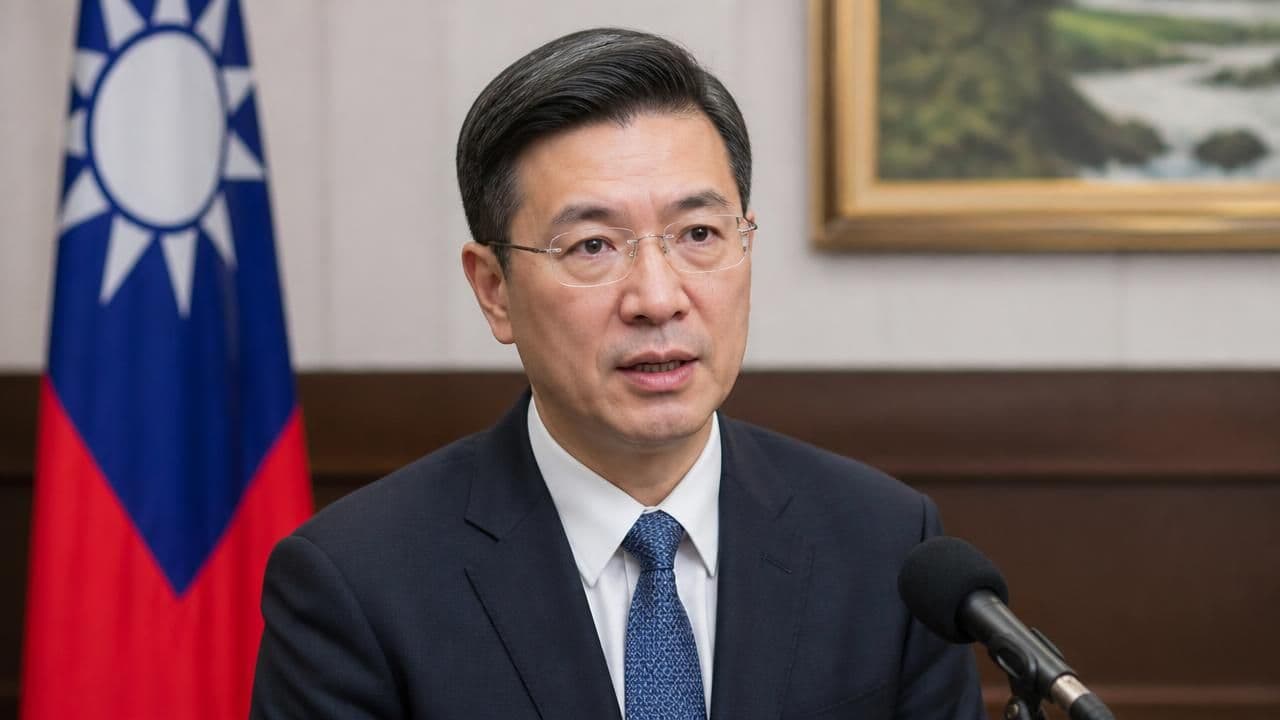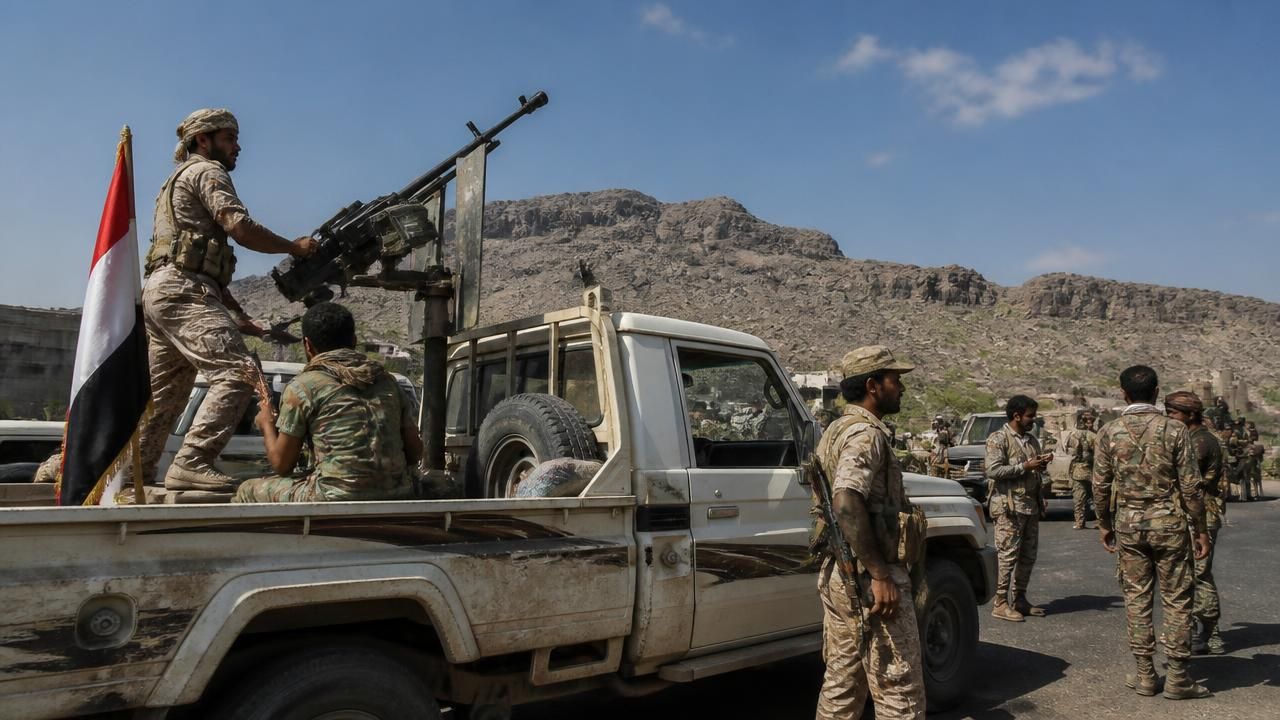
Yemen's internationally recognized government has announced a full-scale military operation aimed at recapturing all territory held by the Iran-backed Houthi movement, according to Bloomberg Markets, marking a sharp escalation in a conflict that has simmered, flared and repeatedly defied diplomatic resolution for more than a decade.
The announcement, carried in near-identical form by a string of wire and aggregator outlets — MSN, Yahoo and regional news sites among them — was framed by Bloomberg as the culmination of "weeks of escalation" between the Houthis and Saudi Arabia, the government's principal foreign backer. Bloomberg's Jill Disis broke down the news for markets, a signal that the story is being read in trading rooms as much as in foreign ministries.
What Was Announced
Yemen's leadership declared a comprehensive military campaign to retake areas under Houthi control, a territory that includes the capital, Sana'a, and most of the country's northern highlands — the most populous region and the heartland of the movement that seized the capital in 2014.
The scope of the stated objective is notable. Previous government offensives have been framed as limited pushes along specific front lines, particularly in the energy-rich Marib governorate and along the Red Sea coast. A pledge to retake all Houthi-held territory is maximalist, and analysts have long cautioned that the government and its allies lack the capacity to achieve such a goal by force alone.
"The announcement is as much political signaling as military planning," one regional analyst said, speaking on condition of anonymity because of the sensitivity of the file. "It tells Riyadh, Washington and the Houthis that the government intends to be a party to whatever comes next, not an observer."
How the Story Is Being Framed
The divergence in coverage is instructive. Bloomberg led on escalation dynamics and market implications, treating the announcement as a risk event — the kind of headline that moves shipping insurance premiums and crude futures. Aggregators such as MSN and Yahoo carried the announcement as straight news, stripped to a single sentence with no analytical scaffolding, reflecting how wire copy is repackaged at scale. Regional outlets emphasized sovereignty and the legitimacy of the internationally recognized government. None of the accounts provided operational detail: no timelines, no named front lines, no force estimates.
That silence is itself the story. In a conflict where battlefield claims are routinely inflated by all sides, an announcement without detail is best read as a declaration of intent rather than a battle plan.
Background: A War That Never Ended
The Houthis took Sana'a in September 2014, prompting the intervention of a Saudi-led coalition the following March. What followed was one of the century's worst humanitarian catastrophes: hundreds of thousands dead from direct and indirect causes, more than 4 million people displaced, and roughly 18 million — well over half the population — in need of humanitarian assistance, according to UN figures.
A UN-brokered truce that took effect in April 2022 delivered the longest sustained pause in fighting of the war, but it expired in October of that year and was never revived. Since then, the conflict has settled into a volatile equilibrium: no nationwide offensive, but persistent clashes, economic warfare between rival central banks, and a Houthi campaign against Red Sea shipping that drew retaliatory strikes from the United States and the United Kingdom.
Diplomacy meanwhile ran on a separate track. China brokered a restoration of Saudi-Iranian relations in 2023, and Riyadh pursued direct talks with Houthi representatives — a process that raised hopes in the region that the Yemen file might be closed politically rather than militarily.
Why Now
Three pressures appear to converge. First, weeks of renewed Houthi-Saudi escalation have eroded whatever quiet understanding underpinned the partial calm. Second, the Houthis' regional posture — as the most visible armed actor in Iran's network — has hardened the calculus in Riyadh and in the government's Aden-based headquarters. Third, the government itself faces internal legitimacy pressures: an economy crippled by halted oil exports, a divided currency, and a population that has grown skeptical of a leadership that governs from abroad.
Launching a military initiative reasserts the government's relevance at a moment when it risks being sidelined by direct Saudi-Houthi channels.
The Economic Dimension
Yemen sits astride Bab el-Mandeb, the chokepoint through which a substantial share of Europe-Asia trade passes. Any escalation carries an immediate transmission channel to global markets: higher war-risk insurance for vessels, rerouted container traffic around the Cape of Good Hope, and upward pressure on freight rates and fuel costs.
- Shipping: Red Sea transits remain far below pre-crisis norms, extending a rerouting regime that has already added days and cost to global supply chains.
- Energy: Yemen is not a major exporter, but it borders the world's most consequential oil corridor. Traders price geopolitical risk at the chokepoint, not at Yemeni wells.
- Humanitarian finance: UN appeals for Yemen remain consistently underfunded, and any return to full-scale war would sharply increase displacement and aid requirements.
What to Watch
The credibility of the announcement will be tested on three fronts. Whether the Saudi-led coalition resumes air support at scale is the first. Whether fighting actually shifts to new front lines — rather than the familiar Marib and Taiz theaters — is the second. And whether Riyadh's direct channel to the Houthis survives the rhetoric is the third.
For now, the most consequential fact may be what the announcement does to the diplomatic track. A maximalist military objective is, by definition, incompatible with a negotiated settlement that leaves the Houthis in control of Sana'a. If the government holds to its stated aim, the space for a political exit narrows — and Yemen's long war finds yet another way to continue.