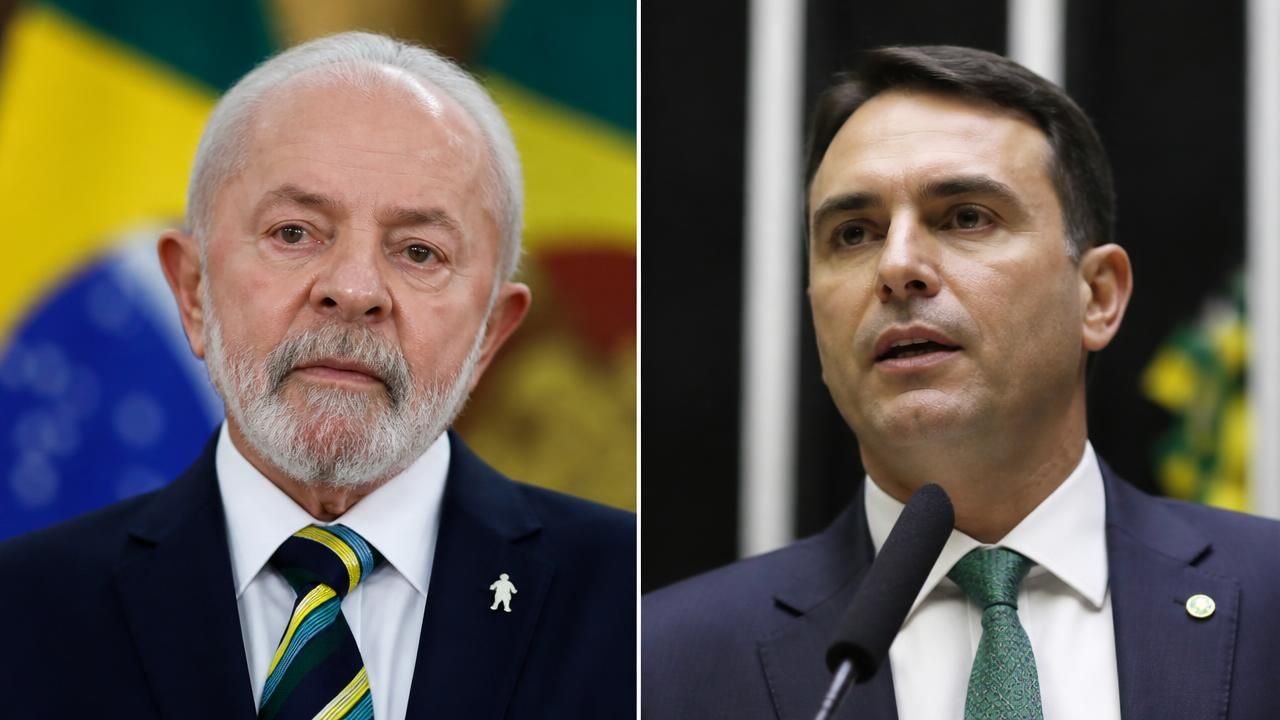
Brazil goes to the polls on Sunday in a presidential election that was supposed to close the book on the Bolsonaro era — and has instead reopened it. Nine months after former president Jair Bolsonaro was convicted of attempting a coup, his son Flávio Bolsonaro is mounting a serious bid for the office his father once held, while incumbent Luiz Inácio Lula da Silva warns that only he can halt what he calls the rise of fascism in South America's largest democracy.
From conviction to candidacy
The arc of the story is, by any measure, extraordinary. When Jair Bolsonaro was found guilty in September 2025 of plotting to overturn the 2022 election result, the consensus among Brazilian and international analysts was that his political career was finished and his legacy permanently tainted. Instead, as the Guardian's Latin America correspondent Tom Phillips reported ahead of Sunday's first round, another Bolsonaro is now within striking distance of the presidency.
Flávio Bolsonaro, a senator and the former president's eldest son, has built his campaign around two poles: inheriting the movement his father assembled, and campaigning for his father's release from custody. The pairing has given the younger Bolsonaro a mobilising cause that few challengers can match — a grievance narrative fused with a family name that remains one of the most recognisable brands in Brazilian politics.
"You would have been forgiven for thinking that when Jair Bolsonaro was convicted in September 2025 of attempting a coup, his political career was finished and his legacy forever tainted."
A rematch, by proxy
The race is being framed in much of the coverage as a political rematch: Lula versus the Bolsonaro name, 2022 revisited. But it is also something structurally new. Lula, the veteran leftist who returned to the presidency in 2023, is running explicitly as the last line of defence against the far right rather than chiefly on his own record.
According to the Guardian, Lula has told supporters that only he can stop the rise of fascism under Bolsonaro's son — a framing that positions the election as a referendum on democratic survival rather than a conventional policy contest. It is a message calibrated to consolidate the broad, anti-Bolsonaro coalition that carried him to victory three years ago, and to persuade undecided and centre-right voters that a Flávio Bolsonaro presidency would mean continuity with the coup-plotting project that landed his father in prison.
The horse race
The polling picture entering Sunday's vote is tight. Lula holds a slim lead over Flávio Bolsonaro, according to the most recent surveys — a margin narrow enough that the outcome of the first round remains genuinely uncertain and a runoff is considered highly likely. Brazilian electoral rules require an outright majority to win in the first round, meaning that unless one candidate clears 50% of valid votes, the top two will meet again in a second round.
That slim margin matters for how the story is being told. Coverage on aggregator platforms such as MSN has emphasised the numbers — the horse-race framing, the narrowing gap, the volatility of late-deciding voters. The Guardian's coverage has stressed the historical weight: the son of a convicted coup plotter competing for the highest office, and the implications for democratic norms should he win. Explanatory outlets such as WCBE have taken a third approach, treating the vote as "Brazil's big political rematch" — a guide for audiences unfamiliar with the cast of characters and the stakes.
The divergence in framing is itself telling. Where one lens sees a polling snapshot, another sees a stress test for Brazilian democracy, and a third sees a sequel to a story audiences already know.
What's at stake
- Democratic institutions: A Flávio Bolsonaro victory would place the machinery of state in the hands of a movement whose patriarch was convicted of trying to subvert it — and who would enter office with an explicit pledge to free him.
- The Bolsonaro coalition: The campaign is testing whether the movement's electoral base transfers dynastically, or whether it was always personal to Jair Bolsonaro himself.
- Lula's legacy: A defeat would end the career of Brazil's most consequential living politician; a victory would complicate his stated intention to be the bridge to a post-Bolsonaro era.
- The region: Brazil's size and diplomatic weight mean its political direction shapes climate policy, trade alignment, and the broader trajectory of Latin American politics.
What happens next
Sunday's first round is, in the strictest sense, an elimination contest. If no candidate wins an outright majority — the widely anticipated scenario — Brazilians return to the polls for a runoff that would function as a straight binary choice between Lula and the Bolsonaro name.
That prospect explains the intensity of the closing days. Lula's camp is pouring its energy into framing the choice in existential terms, betting that fear of a Bolsonaro restoration still outweighs fatigue with the incumbent. Flávio Bolsonaro's camp, meanwhile, is betting on the opposite: that his father's imprisonment has become a sympathy-generating grievance, that the family brand remains potent, and that enough Brazilians want a change.
The world will be watching. An election that was meant to be an epilogue now reads as a new chapter — with the same family, and many of the same questions, at its centre.