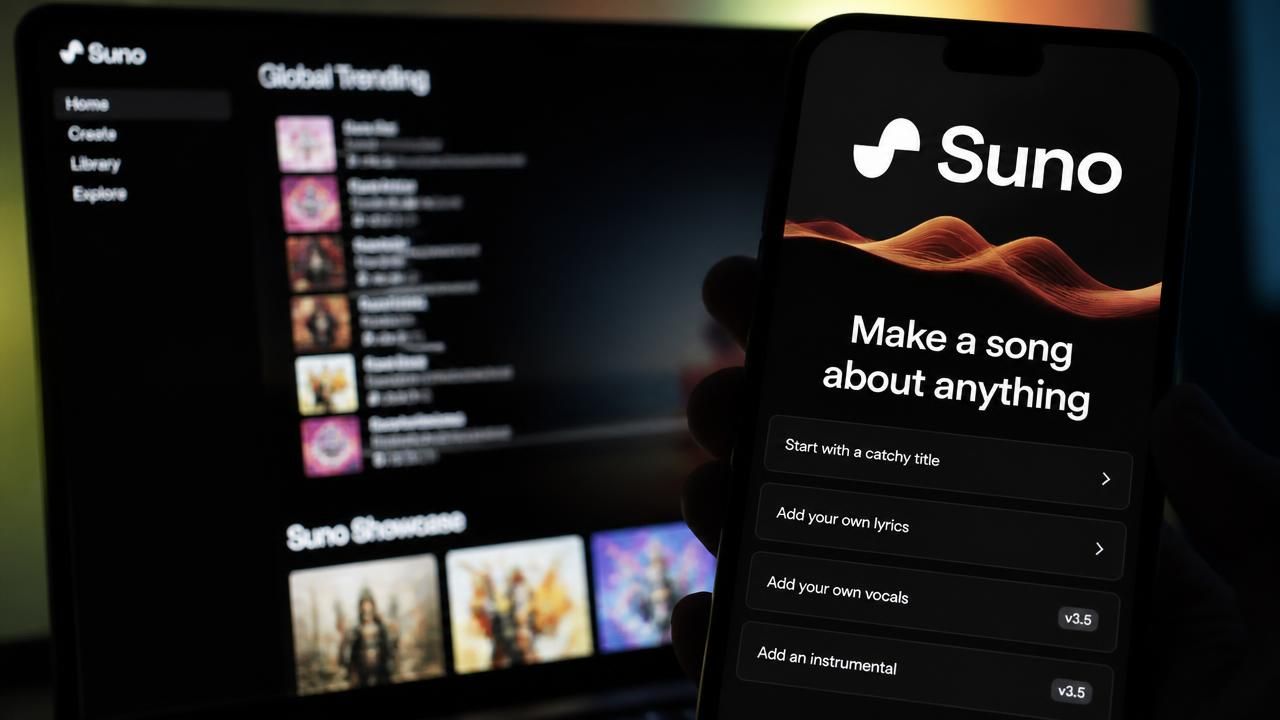
Suno, the AI music generator valued at $2.5 billion, is pushing deeper into audio creation — launching a spoken-word model, inking a licensing pact with a major label group, and quietly building out watermarking tools — all while fighting an intensifying wave of litigation and reeling from a security breach that exposed the data used to train its models.
The company announced that Speech, its new voice-generation feature, is now available in public beta across its web and mobile platforms. The tool lets users generate spoken voices from written scripts or prompted descriptions and, crucially, pair those voiceovers with AI-generated background music in a single pass. Suno positions the feature as its first audio model capable of producing voice and music together.
"Music will always be at the heart of Suno and what we build. At the same time, our vision has always extended to other forms of human expression," Suno chief product officer Jack Brody said in the announcement. "Today, we're expanding what's possible in Suno with Speech: the first audio model that generates voice and music to …"
The launch is a strategic expansion for a company whose core business is under mounting legal siege. By moving into speech, Suno is edging into territory already occupied by synthetic-voice startups and podcasting tools — a market with its own unresolved questions about consent, likeness rights, and voice cloning.
A Growing Wall of Litigation
The most prominent challenge came this week when Grammy-winning Americana artist Jason Isbell filed a class-action lawsuit against Suno, accusing the company of coding its AI to "extract musicians' identities." The complaint, reported by Billboard, ArtistDirect and the Indianapolis Star, alleges unauthorized use of artists' identities in the training and operation of Suno's models. Isbell is seeking class status on behalf of other musicians he says were similarly affected.
A separate suit, also covered by Billboard, accuses Suno of training its model on a Mexican music catalog in order to generate Spanish-language AI songs — an allegation that speaks to a broader concern among rights holders: that AI systems can dilute or supplant regional and genre-specific musical traditions without licensing or compensation.
Meanwhile, MSN reported that a group of music artists has sued the AI song generator over alleged copycats, adding to a docket that now spans individual creators, catalog owners and represented talent.
The Hack That Laid Bare the Training Data
Perhaps the most damaging development came from a security breach. Reporting by Variety, ExtremeTech and AndroidHeadlines described how a hack exposed the third-party data Suno used to train its models — including material scraped from YouTube Music, Deezer and Genius. According to those reports, the leak suggests millions of YouTube Music songs were harvested to build the system.
That revelation undercuts a common industry defense — that AI models learn in a transformative way from publicly available audio — by showing the scale and the specific sources involved. It also strengthens the hand of plaintiffs, who can now point to concrete data pipelines rather than inference.
A European First
Abroad, Suno suffered another setback when a German court ruled that the company had broken copyright law — a judgment The Next Web described as a first for Europe. The decision gives European rights holders a precedent they can cite, and it raises the prospect that Suno's model could face restrictions in the EU, one of its most important markets.
The Mary J. Blige Ad That Wasn't
The company's troubles have also taken on a reputational dimension. Suno pulled an advertisement featuring Mary J. Blige after it emerged that the company had struck a deal with someone pretending to be a representative of the singer, who sources said was left "uncomfortable" by the episode, according to Yahoo and Entertainment Weekly. The incident highlights the fragility of consent infrastructure in an industry increasingly reliant on celebrity likenesses.
Betting That Licensing Beats Litigation
Suno is not standing still. As Variety reported, the company has struck a licensing deal with BMG and is preparing new label-backed models — an explicit pivot toward a legally cleaner training pipeline. The Next Web framed the effort as Suno trying to "watermark the flood" it helped unleash, adding provenance signals to the torrent of AI-generated music now circulating online.
Forbes, meanwhile, framed the whole enterprise as a $2.5 billion wager that AI-made music is here to stay — a bet that assumes the courts will eventually bless a licensed, transparent version of the technology rather than ban it outright.
What Comes Next
- Legal exposure: The Isbell class action, the Mexican catalog suit and the German ruling could force Suno to disclose training data and potentially pay damages.
- Technical remedies: Watermarking and label-backed models are Suno's attempt to convert a compliance liability into a product feature.
- Market signal: The BMG deal suggests some rights holders are willing to license rather than litigate — a path that could split the industry.
- Reputational risk: The Blige ad incident shows how quickly consent failures can overshadow product announcements.
The coming months will determine whether Suno's expansion into speech is remembered as a milestone in AI audio — or as the moment a company best known for generating songs found itself defined by the lawsuits, leaks and courtroom defeats surrounding them.