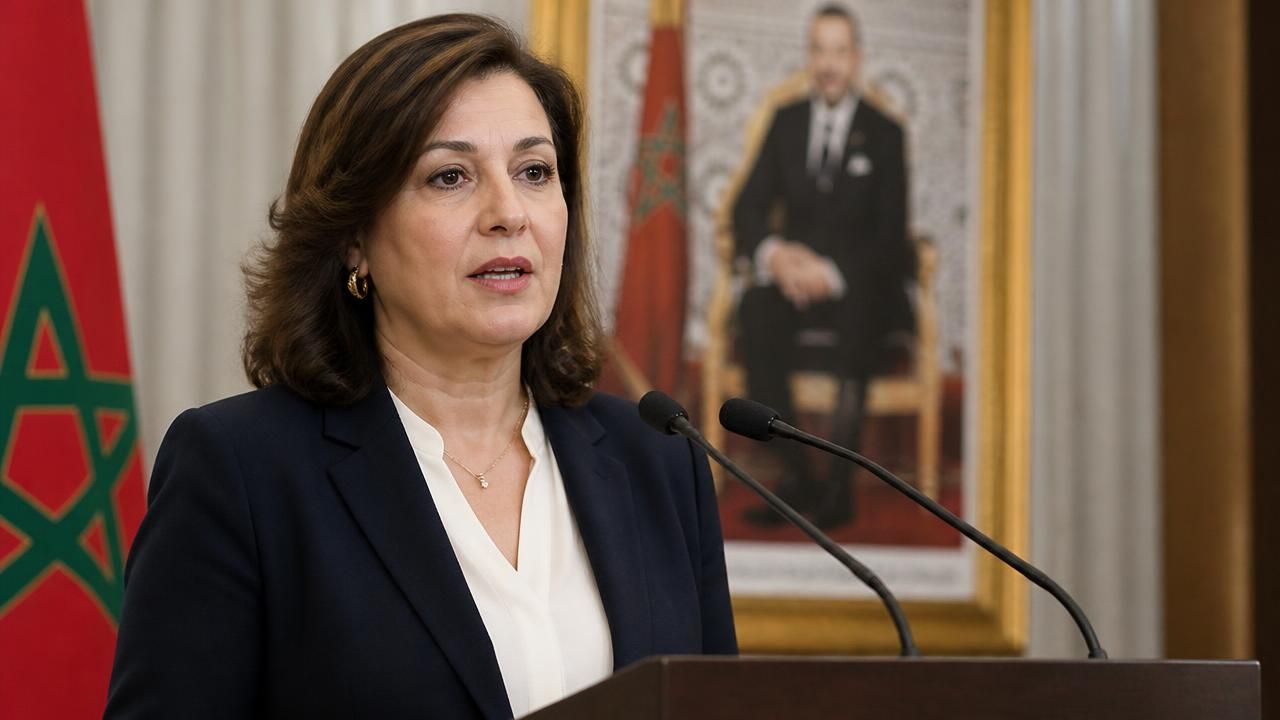
Morocco's King Mohammed VI has named Fatima Ezzahra El Mansouri as the country's first female prime minister, a landmark appointment that makes the North African kingdom only the second country in the region to be led by a woman.
The selection of El Mansouri, a lawyer and politician from the centrist Authenticity and Modernity Party (PAM), followed a strong showing by her party in national elections and was announced by the royal palace. Reuters, The New York Times, Le Monde, Bloomberg and a wide range of regional outlets all led with the same framing: truly historic.
Morocco became the second North African country to have a woman lead the government with the selection of Fatima Ezzahra El Mansouri, a lawyer and politician from the centrist Authenticity and Modernity Party.
Who is Fatima Ezzahra El Mansouri?
El Mansouri is a trained lawyer who built her career in Morocco's legal system before moving into national politics through PAM, a party founded in 2008 by allies of the palace and generally characterized as centrist and pro-monarchy in orientation.
Her profile fits a pattern that Moroccan commentators have described as significant: a woman with a professional, non-dynastic background ascending to the head of government, rather than a symbolic figure drawn from the royal circle.
Under Morocco's 2011 constitution, the king appoints the prime minister from the party that wins the most seats in parliament. The monarch retains sweeping authority over defense, religion and strategic affairs, while the prime minister runs the day-to-day government. That structure means El Mansouri's power will be real but bounded — a nuance that several European outlets flagged, even as headlines across the world emphasized the symbolism of the appointment.
A regional first — but not the first
Morocco is not the first country in North Africa to be governed by a woman. Tunisia appointed Najla Bouden as prime minister in 2021, a move that was widely celebrated at the time but later overshadowed by President Kais Saied's consolidation of power. Regional outlets noted that comparison pointedly: a woman in the prime minister's office does not automatically translate into democratic deepening.
- Tunisia appointed Najla Bouden in 2021, the first woman to serve as prime minister in the Arab world.
- Morocco now becomes the second North African state with a woman at the head of government.
- Across the wider Middle East and North Africa, women remain significantly underrepresented in executive office, despite gains in parliaments and cabinets.
How different outlets framed the story
The coverage revealed sharply different editorial priorities. U.S. and U.K. outlets such as The New York Times, UPI, Sky News and the Baltimore Sun treated the appointment primarily as a gender milestone, using language like "historic first" and "truly historic." Le Monde and other French-language outlets placed more weight on the domestic political calculus and the balance of power between the palace and the governing party.
Business-focused coverage — notably Bloomberg — anchored the story in timing. Bloomberg's headline tied the appointment directly to the electoral calendar and to Morocco's preparations for the FIFA World Cup in 2030, which the kingdom will co-host with Spain and Portugal. For investors and analysts, the subtext was continuity: a technocratic, palace-aligned premier who can shepherd infrastructure spending, tourism growth and energy transition projects through the coming decade.
African and diaspora-facing outlets, including BellaNaija, emphasized representation and the message the appointment sends to women across the continent. Several aggregators and syndication partners simply amplified the palace statement, producing a wave of near-identical headlines — a reminder of how heavily global coverage of Moroccan politics still relies on official announcements.
Why the timing matters
The appointment lands at an unusually busy moment for Morocco. The country is preparing to host the Africa Cup of Nations, is investing heavily in stadiums, rail links and tourism infrastructure ahead of 2030, and is positioning itself as a bridge between Europe, Africa and the Gulf.
Those ambitions come with scrutiny. Morocco has consistently ranked in the lower reaches of global gender-parity indices, and women remain underrepresented in senior corporate and judicial roles. The 2004 reform of the family code, the Moudawana — later revisited under royal instruction — is often cited as evidence of top-down progress on women's rights, but activists argue that legal change has outpaced social and economic reality.
"This is a signal, not a finish line," one Moroccan civil-society figure said of the appointment, according to regional press accounts.
The road ahead
El Mansouri now faces a governing agenda that mixes opportunity with risk. Unemployment among young Moroccans remains stubbornly high, drought has strained the agricultural sector, and the government must deliver on World Cup infrastructure promises without inflating public debt.
Her tenure will also be judged on whether she can convert a symbolic breakthrough into durable institutional change — expanding the pipeline of women in ministries, regional councils and the judiciary, and demonstrating that the prime minister's office carries genuine weight within Morocco's executive hierarchy.
For now, the headline is unambiguous. A kingdom that has long projected a carefully managed image of gradual reform has placed a woman at the head of its government for the first time — and in doing so, handed the region a new benchmark against which the next appointment will be measured.