The Border Search Exception Meets the Smartphone
For decades, U.S. courts have recognized a “border search exception” to the Fourth Amendment, allowing customs and border agents to conduct routine searches of travelers and their belongings without a warrant or probable cause. But as smartphones have become repositories of entire lives—emails, photos, financial records, private messages—the question of whether that exception extends to digital devices has sparked intense legal battles. This week, that debate intensified on two fronts: a federal appeals court ruling that border agents in New York, Connecticut, and Vermont may search phones without a warrant, and a new lawsuit by an Argentinian-American writer and immigration advocate demanding that the government delete data copied from his phone during a re-entry at Miami International Airport.
Second Circuit: No Warrant Needed in NY, CT, VT
The U.S. Court of Appeals for the Second Circuit, which covers New York, Connecticut, and Vermont, has ruled that Customs and Border Protection (CBP) agents do not need a warrant to search electronic devices at the border. The decision, highlighted by Yahoo News under the headline “Returning to the U.S.? Court says agents can search your phone without a warrant,” affirms that the border search exception applies to phones and other digital devices. A separate Yahoo report emphasized the regional impact: “No Warrant Needed: Border Agents in NY, CT, and VT Can Now Search Your Phone.”
The ruling deepens a circuit split on digital border searches. Some courts have required at least reasonable suspicion for forensic searches that extract and analyze data, while others have upheld routine warrantless searches. The Second Circuit’s decision adds weight to the government’s position that the border is a special place where privacy expectations are reduced. But because the ruling conflicts with other appellate decisions, legal experts say the issue is ripe for Supreme Court review. Indeed, an MSN report noted that a related case now asks the Supreme Court to decide whether warrantless border phone searches are constitutional.
Thomas Kennedy’s Complaint
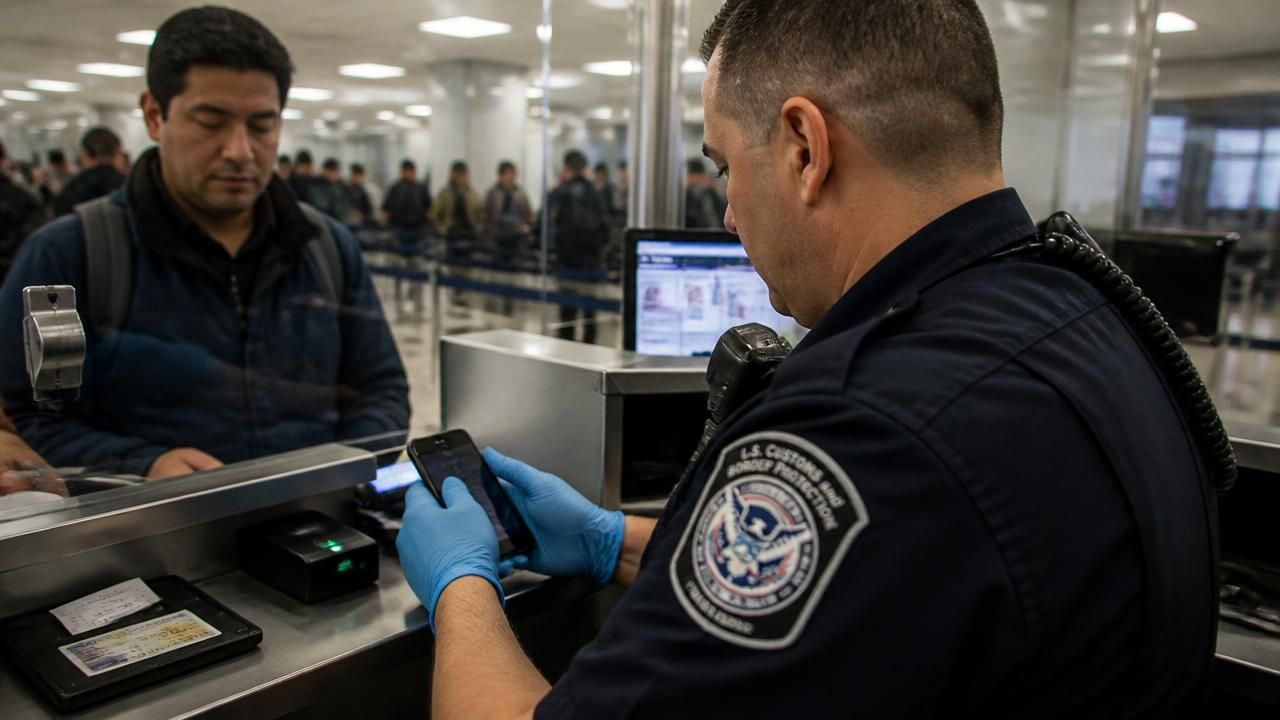
While the appellate ruling shapes the law in the Northeast, a personal lawsuit in Florida illustrates the human stakes. Thomas Kennedy, an Argentinian-American writer and immigration advocate, filed a seven-page complaint against the federal government earlier this month. According to Ars Technica, Kennedy was re-entering the United States at Miami International Airport when a CBP agent physically searched his bags, questioned him about his books and magazines, and then demanded that he hand over his phone.
“[The agent] threatened me, saying that if I didn’t give him my phone, my interrogation was going to take much longer and they could retain my phone indefinitely,” Kennedy wrote in the complaint. “I felt like I had no choice, so I handed my phone to the CBP agent.”
Kennedy’s lawsuit demands that the government delete any data it copied from his phone. The complaint does not specify whether the agent conducted a manual scroll or a forensic extraction, but the threat of indefinite retention is a common CBP tactic that critics say coerces travelers into complying. The case is part of a broader push by civil liberties groups to force transparency and accountability at the border.
Differing Perspectives
The government argues that warrantless device searches are essential to national security, helping agents detect contraband, terrorism, and immigration fraud. CBP has long maintained that it can search electronic devices without a warrant under the border search exception, and that such searches are “routine” when they are manual. For forensic searches, the agency often claims reasonable suspicion is required, but enforcement varies widely.
Privacy advocates and immigration lawyers counter that a phone search is fundamentally different from a luggage search. “A phone is not a suitcase,” said one digital rights attorney, speaking generally about the issue. “It contains the most intimate details of a person’s life—medical records, private conversations, location history. Allowing warrantless access at the border creates a loophole that swallows the Fourth Amendment.” The Second Circuit’s ruling, they warn, expands that loophole. Meanwhile, the Supreme Court petition highlighted by MSN suggests that the justices may soon weigh in on whether the border exception can survive the digital age.
What It Means for Travelers
For now, travelers entering the United States through New York, Connecticut, or Vermont should assume their phones can be searched without a warrant. That includes U.S. citizens, lawful permanent residents, and visa holders. While agents generally cannot deny entry to citizens, they can detain devices and copy data.
- Refusing to hand over a phone can lead to prolonged secondary inspection, missed flights, and in some cases, device seizure.
- Manual searches are typically quick, but forensic searches can extract emails, messages, photos, and location data.
- Civil liberties groups advise travelers to minimize the data they carry across the border and use encryption where possible.
Kennedy’s case in Florida could provide a counterweight. If a court finds that the government violated his Fourth Amendment rights, it could order the deletion of his data and set a precedent for others. But the Supreme Court’s involvement may ultimately decide the national standard. As the MSN headline put it, the case asks the Supreme Court “if that’s constitutional.”
The Road Ahead
Legal scholars expect the Supreme Court to take up the issue within the next term. In the meantime, legislators have introduced bills to require warrants for border device searches, but none have passed. Advocacy groups are advising travelers to know their rights and to be prepared for scrutiny. For Thomas Kennedy, the fight is both personal and political. His lawsuit seeks not just deletion of his data, but a judicial declaration that the government’s actions were unlawful. Whether his case or the Second Circuit ruling reaches the high court, the outcome will define how far the border search exception extends into the digital world.