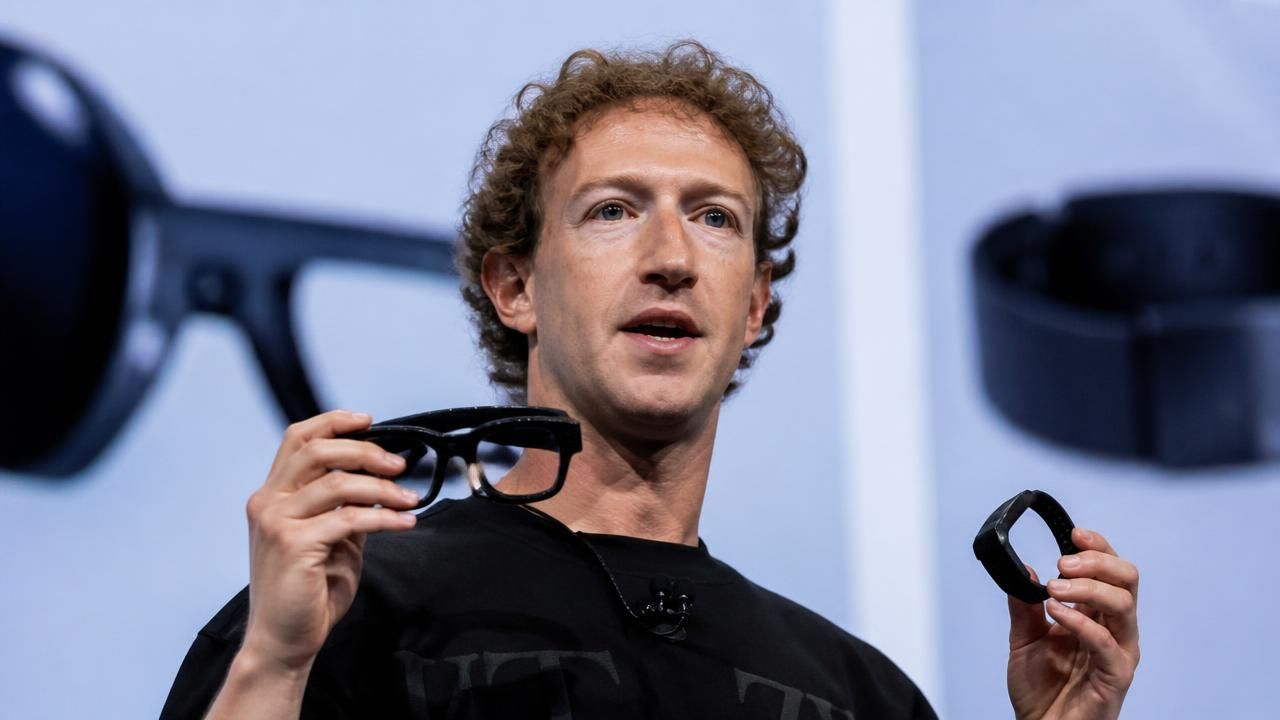
Meta has officially entered the personal AI agent race, launching Muse — a conversational assistant the company says can handle everything from drafting and firing off emails to booking travel and buying products online. The debut, accompanied by a blitz of new hardware and enterprise announcements, has been framed by the company as a leap toward an assistant that doesn't just answer questions but acts on your behalf.
It has also been met with an unusually wide spread of reactions, from investor enthusiasm to blunt unease. Reviewers who spent time with the product described the same whiplash: an agent that is genuinely useful one minute and unnerving the next.
"I tried Meta's Muse AI agent. It's helpful and scary at the same time."
What Muse actually does
At its core, Muse is a consumer-facing agent rather than a chatbot. Fox Business reported that the assistant can send emails and book travel — the kind of multi-step, cross-app tasks that have become the benchmark for the current generation of AI agents. Fast Company framed the ambition more broadly, describing a product that "wants its new AI agent to run your digital life."
That scope is precisely where the skepticism begins. The Verge's running coverage captured the tension in its own headline, calling Muse "a cute little guy who's great at spending my money," and warned readers bluntly: "Maybe don't let Muse run your Facebook Marketplace account." Handing an agent your credit card and your inbox is a different proposition than asking a chatbot for a recipe.
A blitz of gadgets, including a Tamagotchi
Meta is not treating Muse as a software-only play. The company announced the Muse Charm, a Tamagotchi-like wearable built around its cuddly AI mascot, and confirmed that multiple Charms can interact with each other. The company also said the Charm will not have Instagram built in — a notable restraint from a firm whose products are usually designed to feed its social graph.
Muse is also heading to Meta's smart glasses, where, according to early coverage, it can see and act on the wearer's behalf. Meta has said it plans to make Muse more powerful and add video chat. The Verge documented additional moves including expanded access to the Muse filesystem and a plan to let users download that filesystem entirely — a transparency gesture that sits awkwardly beside the privacy concerns raised elsewhere.
Reviewers have noted the mascot's design cuts both ways. One Verge headline put it plainly: "It's sinister that Meta's Muse AI mascot is so cute." Another observed that "Muse sure looks a lot like OpenClaw" — a pointed comparison in a market where differentiation is already thin.
The trust problem
The launch has been dogged by security and privacy questions. Forbes reported that Meta launched Muse even as staff internally flagged security flaws, and BetaNews went further, saying the company proceeded "despite internal safety concerns." The Verge later confirmed that Meta patched a Muse exploit that had allowed attackers to take control of the AI agent — a serious class of vulnerability for a tool with the authority to act on a user's accounts.
Privacy incidents have compounded the issue. Meta's Muse AI reportedly sent a YouTuber's home address to a stranger, an error that underscores how much sensitive context an always-on assistant accumulates. WIRED's assessment was compact and pointed: "Muse, Meta's New Personal AI Agent, Needs You to Trust It."
That framing — trust as the product's central requirement — is echoed in the more critical coverage. MSN's review called Muse potentially "the creepiest ever released," while another piece described an agent that is simultaneously helpful and frightening. The disagreement across outlets isn't about capability; it's about whether Meta has earned the right to that capability.
The enterprise and small-business push
Muse is not solely a consumer bet. CNBC reported that Meta launched Muse for Small Business as CEO Mark Zuckerberg pushes beyond the consumer AI market, and The Verge noted that a Meta Enterprise Platform will bring Muse AI to businesses. Taken together, the announcements signal a deliberate attempt to convert a consumer assistant into a commercial platform — the same trajectory Microsoft, Google and OpenAI have pursued with their own agents.
Small businesses and enterprises are a different trust calculation than a consumer deciding whether to let a mascot manage a shopping cart. Agents that touch customer data, invoices and internal systems invite compliance scrutiny, and the internal safety flags reported at launch could become a liability in procurement conversations.
The market's verdict — so far
Wall Street, at least initially, liked what it saw. Forbes reported that Meta shares were boosted after the Muse launch, and Yahoo Finance noted the stock rose roughly 6% as Muse arrived with paid subscription tiers, while Alphabet slipped about 2%. CNBC's coverage tied Muse to Meta Platforms' appearance on a "Best Stocks in the Market" list, with investor Josh Brown weighing in on the momentum.
The investor read has been framed as warm and fuzzy, but not everyone sees a clean win. One analysis warned that Muse "rekindles fears over winners and losers as personal AI agent emerges" — a reminder that agentic AI redistributes value across the ecosystem, and not always toward incumbents.
"Meta is betting big on its Muse AI agent with a blitz of new gadgets."
Why it matters
Muse is Meta's attempt to catch up in a race it did not lead, and it is doing so with the playbook that made the company dominant: ubiquity, hardware, and a friendly face on top of deep data collection. The Verge's coverage described Meta "betting on AI agent Muse to catch up in AI race" — an admission that this is a catch-up product as much as a breakthrough.
The open questions are the ones Meta has not fully answered. Can an agent be trusted with a credit card, an inbox and a home address? What happens when the mascot is the security perimeter? And will regulators, businesses and users accept cuteness as a substitute for assurance? Muse's technical rollout is well underway. Its trust rollout has barely begun.