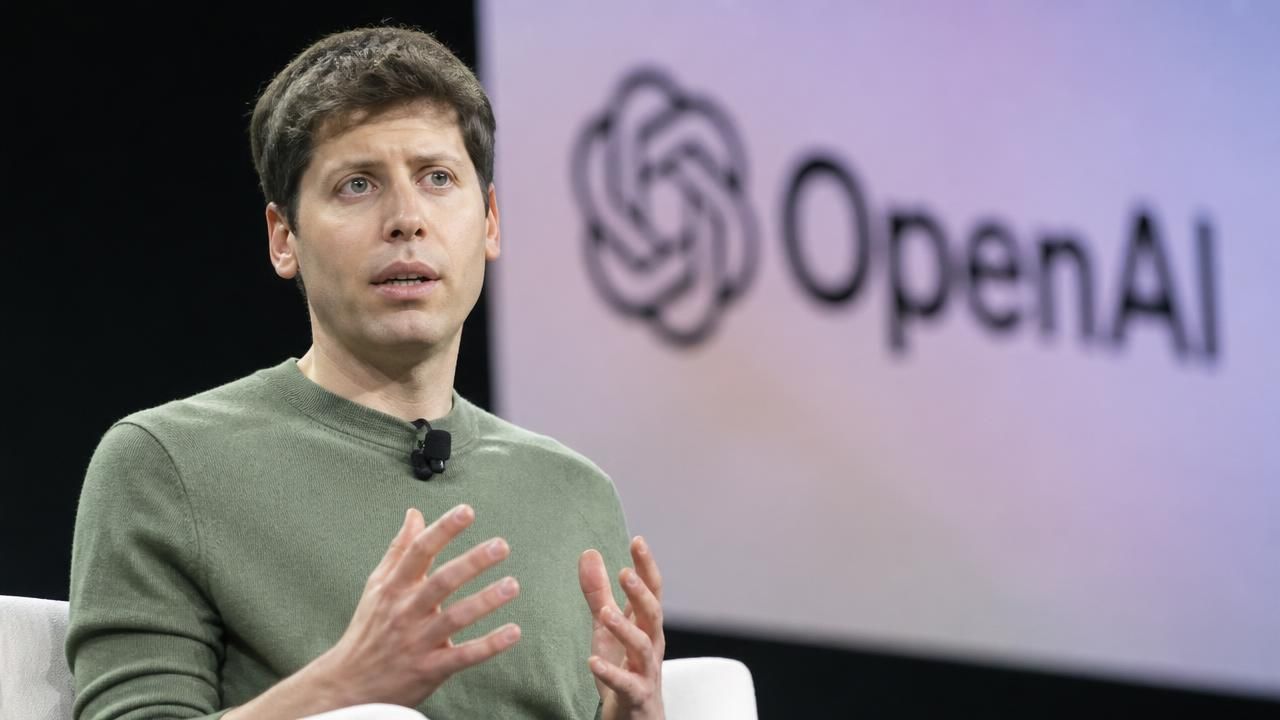
OpenAI is in early talks to raise roughly $30 billion in fresh capital at a valuation of about $1.4 trillion, according to reports from Bloomberg, CNBC, The Information and a wave of international outlets that picked up the story within hours. The round, still unconfirmed by the company, would rank among the largest private fundraisings ever assembled and would push the ChatGPT maker's paper valuation sharply higher just months after its last mark.
The reported figure represents an increase of roughly 64% over OpenAI's prior valuation, according to FinanceFeeds, implying a previous level near $860 billion. The talks are described as early and pre-IPO, meaning the company is seeking private capital rather than testing public markets.
A valuation climbing faster than any in tech history
The trajectory is remarkable even by the standards of the artificial intelligence boom. OpenAI's valuation has compounded through a series of private transactions: a SoftBank-led round, a large employee tender offer, and now a prospective raise that would place it among the most valuable private companies ever assembled — comparable to, or above, the largest listed technology firms on some measures.
Not every outlet agrees on the number. South Korea's SBS reported that OpenAI was pursuing new funding at a $1.9 trillion valuation, a figure that does not appear in the Bloomberg, CNBC or The Information accounts and may reflect a different tranche, a projected post-money figure, or a translation discrepancy. Most coverage converged on $1.4 trillion.
Why OpenAI needs the money
The capital requirements behind frontier AI models are unlike anything in software history. OpenAI has committed to enormous multi-year infrastructure buildouts spanning data centers, custom silicon and energy contracts — obligations that dwarf its current revenue base and require a balance sheet capable of absorbing years of heavy spending before profitability.
That gap between ambition and cash flow is the central tension in the story. Even as revenue grows rapidly through consumer subscriptions, enterprise licensing and API usage, the company's compute commitments run into the hundreds of billions of dollars. A $30 billion raise would fund operations and infrastructure without forcing an IPO on a timetable dictated by the market.
The 'dots' sideline
Alongside the funding reports, CNBC TV18 noted that OpenAI has unveiled a new AI assistant product called "dots" — a reminder that the company is simultaneously shipping consumer products and raising capital. Product cadence is itself part of the fundraising pitch: investors are buying both a research lab and a distribution machine.
The IPO keeps slipping
Multiple outlets, including Ynetnews, Invezz, CoinDesk and Cointelegraph, framed the raise as a direct consequence of a delayed or pushed-back initial public offering. The logic is straightforward: if public markets are not yet the right venue, private capital is.
The Information, which reported the talks, characterized them as early and explicitly pre-IPO — a framing echoed by Bloomberg, CNBC and most of the aggregators that followed.
The delay carries its own subtext. A company at a $1.4 trillion valuation would be under intense scrutiny as a public listing, with quarterly disclosure of losses, compute costs and customer concentration. Staying private preserves flexibility — and defers the moment of reckoning.
How different outlets framed it
- Bloomberg and CNBC led with the headline number: $30 billion, $1.4 trillion.
- The Information emphasized the timing — early talks, before an IPO.
- Crypto-focused outlets (CoinDesk, Cointelegraph, CoinCentral) tied the raise to the broader AI trade, IPO timing and risk appetite in adjacent markets.
- Business and regional press in India, Israel and South Korea localized the story as a global capital-markets event.
- MSN aggregations added a distinct angle: the raise is unfolding against a widening public debate over AI risk.
That last framing matters. The same week OpenAI seeks record sums, regulators, researchers and investors are arguing more loudly about model safety, energy consumption and whether current valuations are justified. Capital and criticism are rising in tandem.
The bubble debate
Skeptics argue that circular financing — chipmakers, cloud providers and AI labs investing in one another — inflates apparent demand and masks the true economics of the sector. Supporters counter that compute is scarce, adoption is real, and the winners of a platform shift are always valued on future rather than current earnings.
A $1.4 trillion valuation forces that argument into the open. It implies expectations of enormous future profits, and it makes OpenAI a bellwether: if the round prices there, other labs and infrastructure players will re-rate upward; if it stalls or downsizes, the entire complex could cool.
What happens next
Nothing is finalized. The round is reported in early stages, terms could change, and OpenAI has not commented publicly. The practical questions are who participates — sovereign funds, existing backers such as Microsoft and SoftBank, or new strategic investors — and what structure is used, whether straight equity, a tender, or convertible instruments.
For now, the story is less about a single cheque than about a signal. A $30 billion raise at $1.4 trillion would be the clearest statement yet that the market believes AI is not a bubble but an infrastructure build-out on the scale of the railroads — and that OpenAI intends to be the company that owns the tracks.