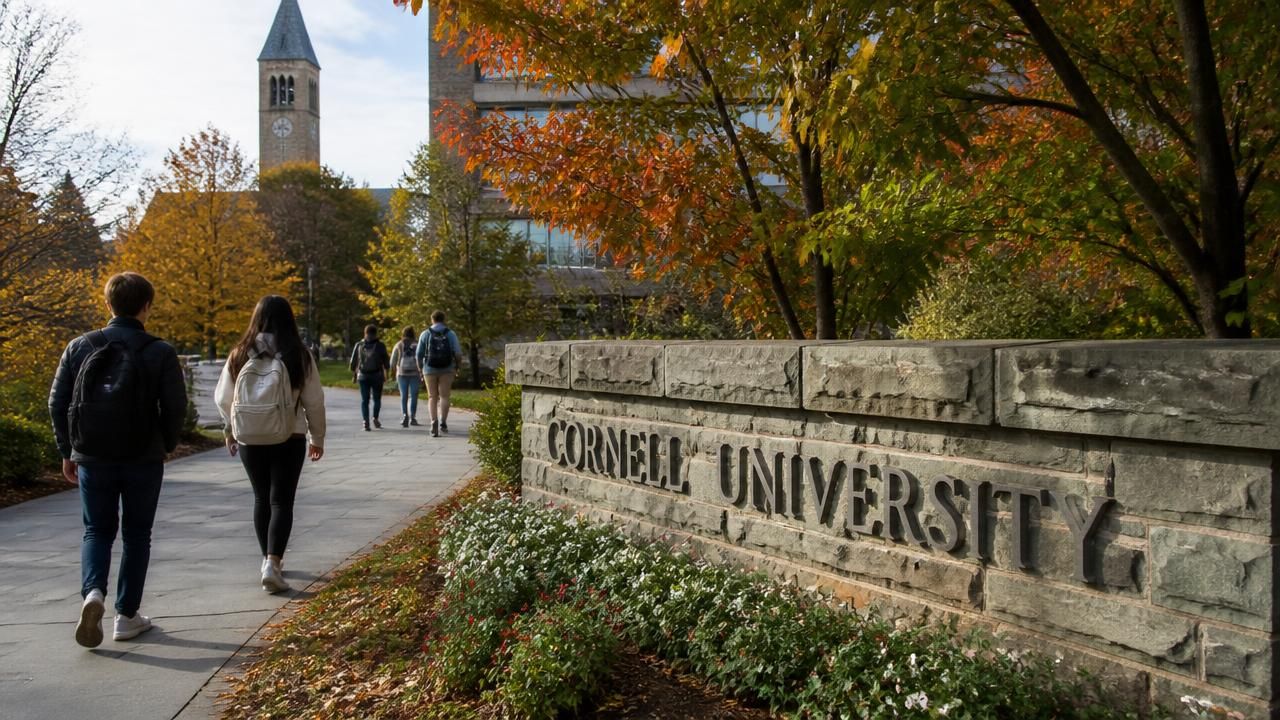
ITHACA, N.Y. — A federal lawsuit filed by a former Cornell University student who alleges she was raped in 2024 by seven male students has renewed long-standing concerns about how American colleges respond to sexual violence — and whether the federal law designed to protect students carries real force.
The case, reported by NPR and carried by member stations including Boise State Public Radio under the headline “The federal law aimed at protecting college students from sexual abuse,” has become the latest flashpoint in a debate that has simmered on campuses for more than a decade. It arrives at a moment when federal attention to higher education is trained largely on athletics, money and name, image and likeness deals rather than on campus safety.
What the Lawsuit Alleges
According to the accounts that have circulated nationally, the suit was brought by a woman who says she was assaulted in 2024 while she was a Cornell student, and that seven male students were involved. The complaint puts the university's handling of the episode at the center of the dispute: whether administrators investigated promptly, whether they supported the complainant, and whether anyone was held accountable.
The allegations have not been resolved in court, and the case remains pending. Cornell, a private Ivy League institution of roughly 16,000 students in upstate New York, has faced federal civil-rights complaints over sexual misconduct before, as have many of its peers. What makes this suit notable is the scale of the alleged assault and the fact that it has reanimated a policy argument that advocates say never really went away.
The Federal Law at the Center
Three overlapping statutes govern how colleges must handle sexual violence:
- Title IX of the Education Amendments of 1972, which bars sex discrimination at institutions receiving federal money and has been interpreted to require schools to respond to sexual harassment and assault.
- The Jeanne Clery Disclosure of Campus Security Policy and Campus Crime Statistics Act, which requires colleges to report crime data, issue timely warnings and maintain prevention programs. It is named for a Lehigh University student murdered in her dormitory in 1986.
- The Campus SaVE Act of 2013, which added stalking, dating violence and domestic violence to the Clery framework and mandated prevention training.
“No person in the United States shall, on the basis of sex, be excluded from participation in, be denied the benefits of, or be subjected to discrimination under any education program or activity receiving Federal financial assistance.”
— Title IX of the Education Amendments of 1972
Advocates have long argued that the promise embedded in that language is only as strong as its enforcement. Under the Trump administration's 2020 rule, schools were required to hold live hearings with cross-examination in many cases, a process critics said deterred reporting. The Biden administration's 2024 rewrite expanded protections and revised grievance procedures, but federal courts blocked it in a number of states, leaving colleges to navigate a patchwork of rules depending on where they sit.
Why Enforcement Falls Short
The Cornell case illustrates a recurring pattern. A 2019 Association of American Universities survey of more than 180,000 students found that roughly one in four undergraduate women reported experiencing nonconsensual sexual contact, yet only a fraction of incidents are ever reported to campus authorities or police — and fewer still result in discipline or prosecution.
Researchers point to several structural problems: investigations conducted by administrators rather than trained investigators; inconsistent sanctions; confidentiality rules that can leave complainants in the dark; and the fact that a school's incentive is often reputational rather than punitive. Survivor advocates also note that the burden of proof and the appeals process can leave complainants reliving the episode for years.
A Contrast in Congressional Attention
Against that backdrop, NBC News approached the same broad subject — federal regulation of college campuses — from a very different angle this week, reporting that there is “a major flaw” in the Protect College Sports Act, according to athlete advocates. The legislation, part of Congress's effort to impose a national framework on college athletics amid the upheaval of name, image and likeness payments, the transfer portal and conference realignment, has drawn criticism from those who say its architecture would shortchange the very athletes it claims to protect.
The juxtaposition is striking to policy analysts. Congress has held multiple hearings on college sports in recent sessions while comprehensive campus-safety legislation, including proposals to strengthen Title IX enforcement and standardize reporting, has stalled.
How the Story Is Being Framed
Coverage of the Cornell suit reflects those divergent priorities. NPR and its member stations, including Boise State Public Radio, foregrounded the policy question — framing the lawsuit as evidence that a federal law meant to shield students is failing them. NBC News, meanwhile, treated campus regulation as a question of sports governance and athlete rights. And in a reminder that education policy is also being contested on the campaign trail, Wikinews published an interview with R.J. Harris, a potential Libertarian Party presidential candidate — part of a broader political season in which third-party candidates are pressing their own platforms on federal institutions.
What Comes Next
Legal experts say the Cornell case could take years to resolve, and its outcome may hinge less on disputed facts than on how courts interpret a school's obligations under Title IX and the Clery Act. In the meantime, colleges face pressure from two directions: plaintiffs' lawyers, who have grown more sophisticated in building institutional-failure claims, and a federal enforcement apparatus whose priorities shift with each administration.
For students and families, the practical question remains unresolved. Federal law promises a campus free from sex discrimination, backed by the threat of losing federal funding. Whether that promise is enforced — in Ithaca or anywhere else — is a question the courts, and ultimately Congress, will have to answer.