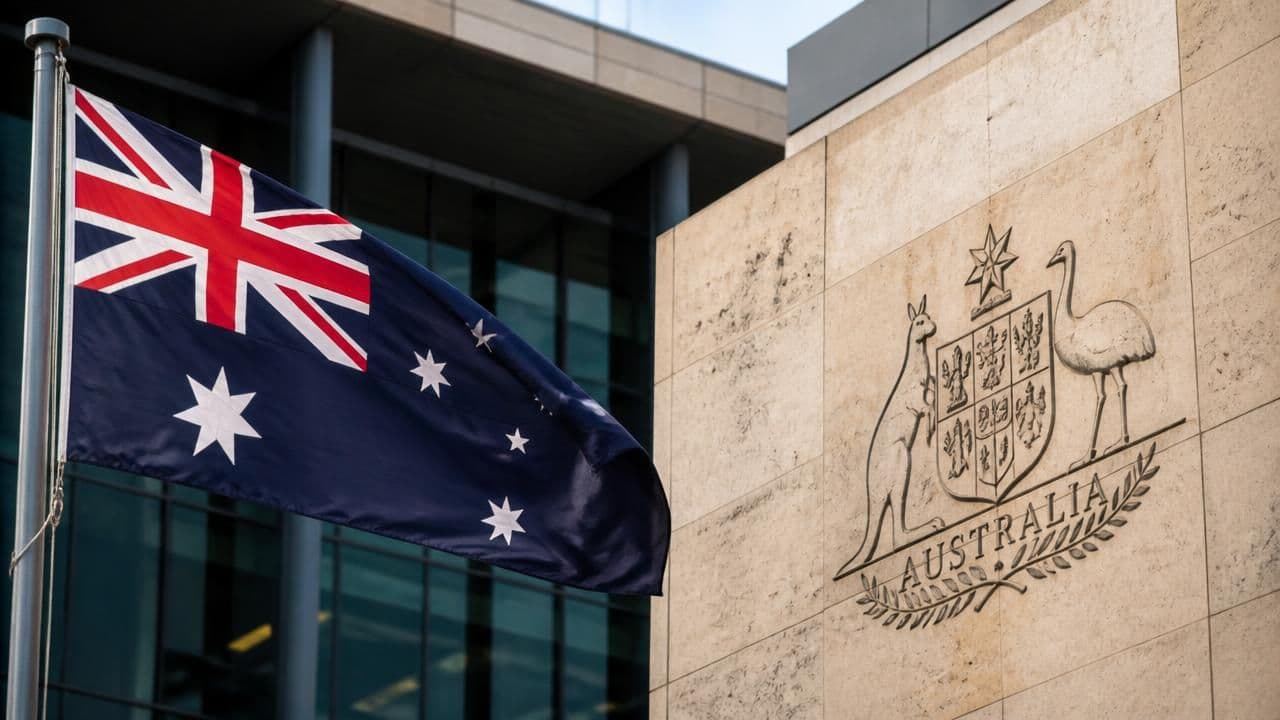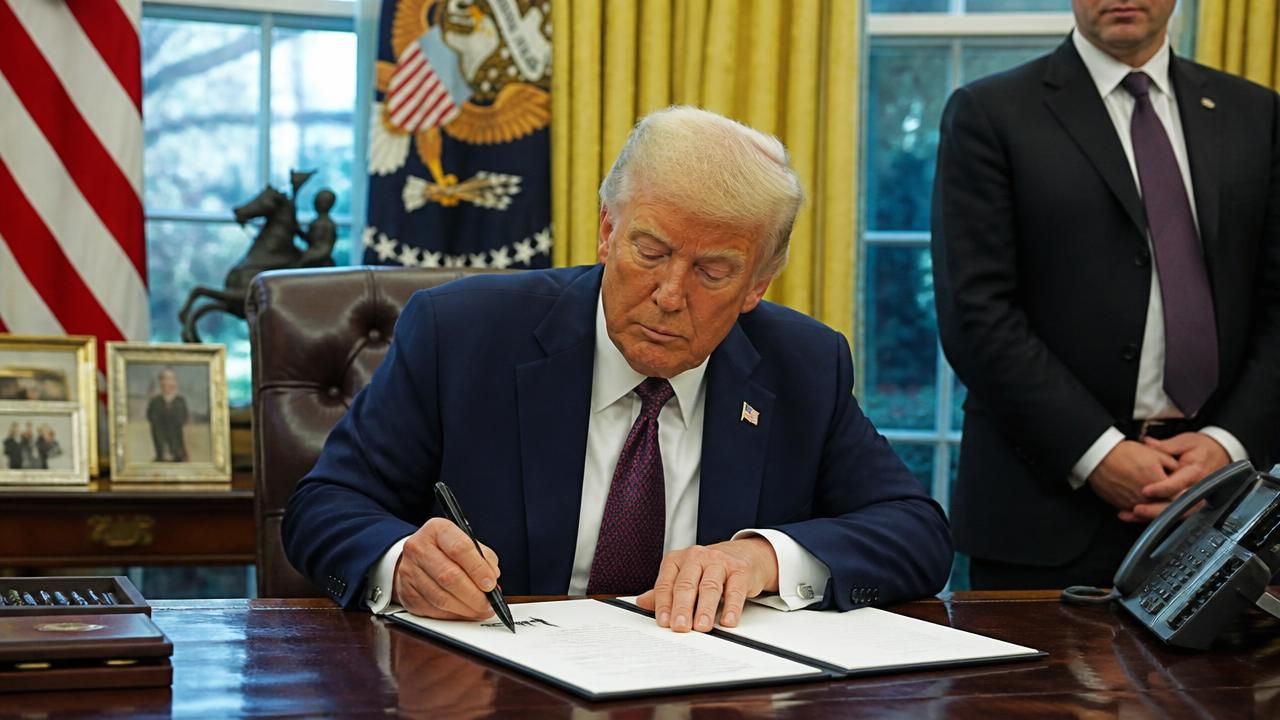
President Donald Trump has signed an executive order directing the US federal government to stop using the term "artificial intelligence" in official communications, replacing it with "Super Intelligence" across policy websites, policy documents, and press releases. The change, announced alongside the launch of a new government portal called America.gov, represents one of the more unusual rebranding efforts to come out of the executive branch — and one with potentially far-reaching implications for how Washington talks about, regulates, and negotiates over the most consequential technology of the decade.
Under the order, the executive branch will no longer formally acknowledge the existence of "artificial intelligence" as a category. Going forward, the phrase "Super Intelligence" is to be used instead — a shift that touches everything from agency guidance to public-facing materials.
What the Order Actually Does
According to reporting by The Verge, the directive applies to official policy websites, policy documents, and press releases issued by the executive branch. In practical terms, that means:
- Federal policy pages that previously referenced "artificial intelligence" will be updated to use "Super Intelligence" instead.
- New policy documents and guidance issued by agencies will adopt the new terminology.
- Press releases and public statements from the executive branch will follow the same convention.
The scope of the change — whether it extends to legislation, regulations already on the books, or the internal operations of independent agencies — remains unclear from the initial announcements. MSN's coverage framed the order simply as one that "will give AI a new name in government documents."
Why 'Super'? Trump's Explanation
Speaking at an event announcing the launch of America.gov on Tuesday, Trump offered a characteristically direct rationale for the change.
"The word super is the best word of all, and it's the simplest," Trump said. "We don't want to hear artificial. Because it's not artificial. It's very powerful, it's very brilliant. It's going to mostly be …"
Trump also said that Chinese President Xi Jinping, who visited the White House the previous week, "loves it" too — a remark that injects a diplomatic dimension into what might otherwise read as a purely semantic decision. WIRED, covering the same remarks, focused on Trump's framing that the new name simply "sounds much better" than the old one.
The President's argument appears to rest on a linguistic objection: that "artificial" implies something fake, imitation, or lesser, while the systems in question are powerful, capable, and — in his telling — brilliant.
A Rejection of International Oversight
Coverage from MSN also described the order as rejecting international oversight of AI — a framing that places the terminology change within a broader geopolitical posture. While the precise mechanisms of that rejection were not detailed in the initial reports, the signal is consistent with a wider pattern in which the United States has resisted binding multilateral frameworks for governing advanced computing systems, preferring bilateral deals and domestic advantage over treaty-based coordination.
The timing is notable. Xi's visit to the White House last week suggests the two powers are engaged in direct dialogue over AI, even as the US appears to be stepping back from international governance structures. Whether the shared vocabulary of "Super Intelligence" becomes a bridge or a branding exercise in a continuing competition remains an open question.
How Different Outlets Framed the Story
The coverage splits along recognizable lines. The Verge, which covers technology and its cultural texture, led with the linguistic and policy mechanics — the fact that the executive branch is, quite literally, no longer acknowledging the existence of "artificial intelligence" in its own documents. WIRED zeroed in on the President's aesthetic reasoning, headlining the story around his claim that the new name "sounds much better." MSN's multiple items took a straight-news approach, emphasizing the renaming itself and the accompanying stance on international oversight.
Taken together, the outlets describe the same event but tell subtly different stories: one about bureaucratic vocabulary, one about a President's ear for language, and one about America's posture toward the rest of the world.
The Larger Stakes
Terminology in government is rarely neutral. The phrase "artificial intelligence" carries decades of academic and technical history, from the Dartmouth workshop of 1956 onward, and is embedded in legislation, international standards bodies, research funding programs, and export-control regimes. Renaming the category in official US documents could complicate coordination with allies, muddle procurement language, and create ambiguity in contracts and compliance frameworks that reference AI by name.
There is also the question of what "Super Intelligence" means. In technical circles, the term is often reserved for a hypothetical system far beyond current capabilities — an intelligence that surpasses human performance across the board. Applying it to present-day machine learning systems, which are powerful but narrow, risks conflating what exists with what is imagined, and could make informed public debate harder rather than easier.
The order also raises practical questions: who enforces the new terminology, what happens to existing documents, and whether agencies will comply uniformly. For now, the US government's official answer to the question "what is AI?" appears to be: don't call it that.