The summit between President Donald Trump and Chinese President Xi Jinping was expected to be a defining moment for the global artificial intelligence trade. It wasn't. Export controls went unmentioned, neither side showed appetite for concessions, and an already fragile trade truce was extended by just two months. Yet in the shadow of those shaky talks, the most consequential movement came from Nvidia—and from Beijing.
The result is a paradox that now defines the world's most valuable chipmaker: Washington is loosening the gate just enough to let advanced AI silicon flow to China, Beijing is simultaneously flirting with buying more Nvidia hardware and racing to replace it, and a $400 million inventory charge is warning that the strategy may already be backfiring.
A Narrow Opening From Washington
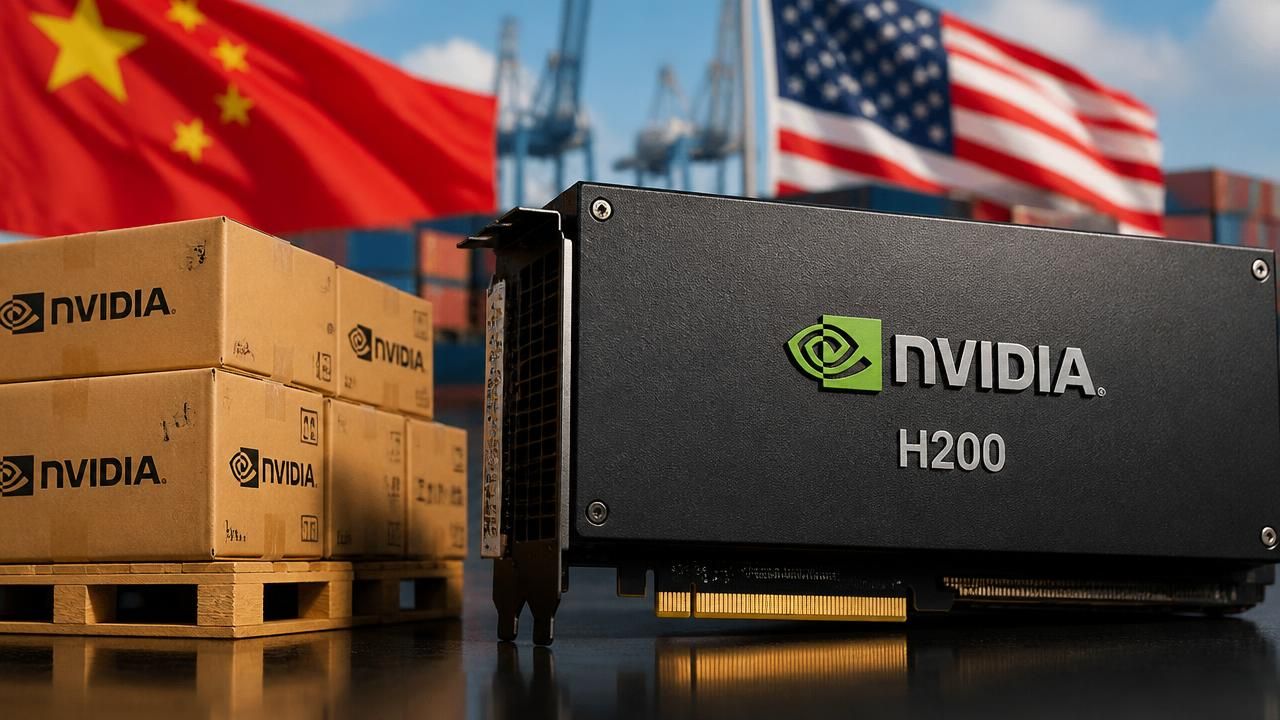
The Trump administration has opened a limited path for Nvidia's H200 AI chips to reach Chinese customers, a partial reversal of the sweeping restrictions that have defined U.S. tech policy toward Beijing for years. The move was framed as a calibrated concession—enough to keep American firms commercially engaged, not enough to hand China frontier capability.
Markets treated it cautiously. Nvidia's stock has been testing a key technical level as traders weigh Trump-Xi diplomacy against the mounting China challenge, with analysts noting that any new U.S. controls could quickly collapse the truce and trigger Chinese retaliation through rare-earth export cutoffs.
The H200 Stalls Anyway
Approval, it turns out, is not the same as demand. According to Digitimes, Nvidia's H200 sales into China have stalled, forcing the company to absorb a roughly US$400 million inventory charge. The write-down underscores an uncomfortable reality: Chinese buyers, burned by years of whiplash regulation and wary of buying hardware that could be rendered unsupported overnight, are hedging—or simply waiting for domestic alternatives.
That hesitancy is compounded by a policy vacuum. Beijing has not matched Washington's opening with a clear green light, leaving Chinese cloud and AI firms to guess whether procurement will be permitted, taxed, or quietly discouraged.
Beijing's Countermove: Gaming Chips for AI
In one of the story's strangest twists, China's Ministry of Industry and Information Technology has reportedly asked Alibaba and ByteDance to submit plans to purchase Nvidia's RTX Pro 5500 chips. On paper, these are gaming-oriented parts. In practice, Chinese planners appear to be exploring whether they can be deployed in servers to power the country's most in-demand AI models—a workaround that could theoretically unlock millions of additional Nvidia units over the next year.
Sources familiar with the talks told The Information that the requests were framed as procurement planning, not approval. Still, the signal is unmistakable: Beijing is willing to keep buying from Nvidia while it builds the capacity to stop.
China's AI Dragons Breathe Fire
That capacity is arriving faster than many in Washington expected. Reuters has characterized China's leading AI firms as "dragons" breathing fire on Nvidia's moat, developing custom silicon tailored to their own workloads rather than buying general-purpose accelerators. Huawei, meanwhile, used a high-profile launch to unveil new chip technologies, positioning itself as the standard-bearer of a domestic AI stack that can operate independent of U.S. supply chains.
The convergence matters. Nvidia's dominance has rested on two pillars: superior hardware and the CUDA software ecosystem that locks developers in. Chinese vendors are attacking both—designing chips optimized for domestic models and building alternative software stacks backed by state capital and captive demand.
"We are not intimidated" by custom AI chips, Nvidia CEO Jensen Huang has said, dismissing the competitive threat even as rivals multiply.
The Cloud Loophole and the Smuggling Crackdown
Huang's confidence is being tested on another front: enforcement. As Forbes has documented, U.S. efforts to keep advanced AI chips out of China collided with the cloud, which created a loophole. Rather than importing restricted hardware, Chinese firms can rent compute from overseas data centers—accessing the same capability without ever taking delivery of a chip.
Washington is now trying to close that gap. Bloomberg reports that U.S. authorities are probing a Singapore-based firm over alleged Nvidia chip smuggling, a case that signals a widening enforcement campaign targeting transshipment hubs across Southeast Asia. The investigation highlights how difficult it is to police a global market for hardware that fits in a suitcase and sells for tens of thousands of dollars per unit.
Huang Bets on Reinvention
Nvidia is not standing still. The company is making a $3.5 billion bet with MediaTek aimed at what Huang calls the "reinvention" of the Windows PC—an effort to extend its AI silicon beyond the data center and into the next generation of personal computers. It is a diversification play that reduces reliance on any single market, Chinese or American.
Still, the arithmetic is unforgiving. China remains one of the largest pools of AI demand on earth, and every quarter that H200s sit unsold is a quarter that Huawei, Cambricon, and a growing roster of domestic challengers use to gain ground.
What to Watch
- The truce clock: The two-month extension buys time, but pending U.S. controls could void it—and rare earths remain Beijing's sharpest retaliatory lever.
- MIIT's decision: Whether Alibaba and ByteDance receive approval to buy RTX Pro 5500 chips will reveal how serious Beijing is about the workaround.
- Huawei's roadmap: New chip technologies unveiled this month will be stress-tested against Nvidia's next generation.
- Enforcement: The Singapore smuggling probe could set precedents for how aggressively the U.S. polices cloud access and third-country transshipment.
The through-line is simple. Washington wants to slow China's AI ascent without crippling American chipmakers. Beijing wants Nvidia's silicon now and independence later. Nvidia wants both markets. For the moment, all three are getting just enough—and no one is getting what they really want.