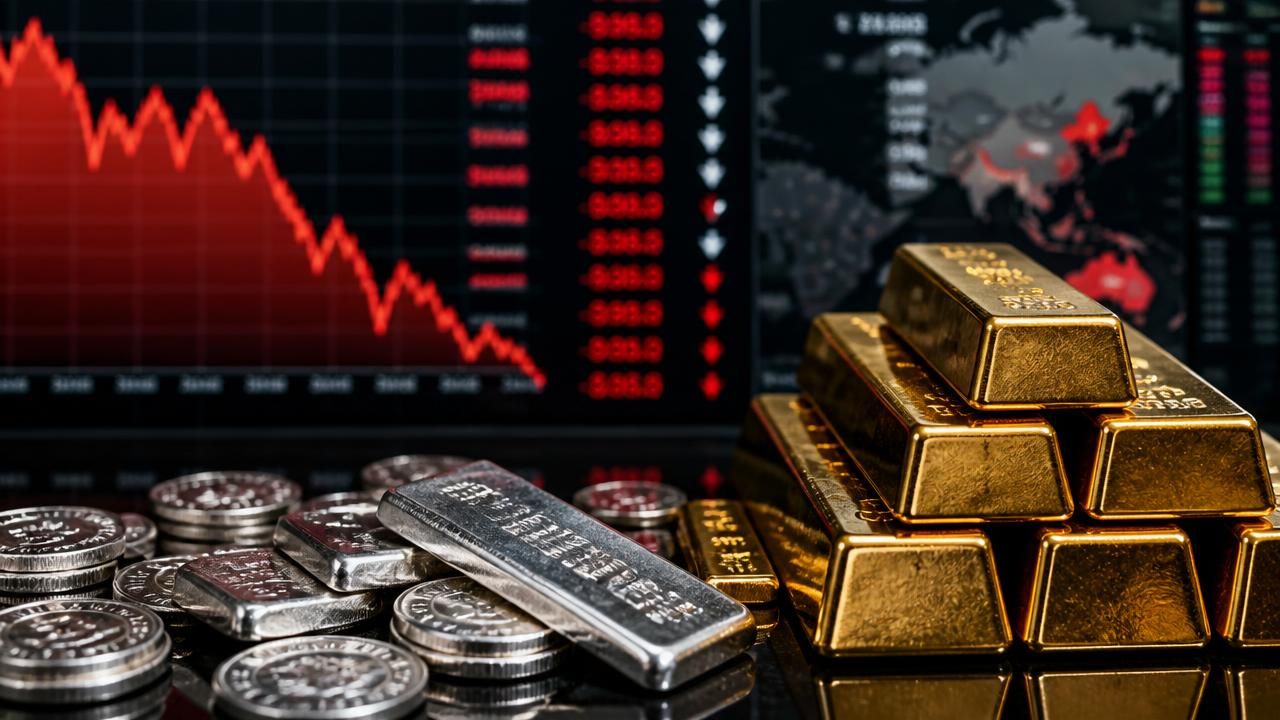
Gold extended its slide this week, breaking below $4,300 an ounce and wiping out a chunk of the metal's 2026 gains, as traders priced in a dramatically more hawkish Federal Reserve. Silver fell even harder, dropping roughly 6% in a single session, and the pain rippled outward — Japan's Nikkei slumped 3% and South Korea's KOSPI came under heavy pressure as crude oil lurched toward $110 a barrel.
The trigger was a familiar one: a run of hotter-than-expected US economic data. Strong payrolls, firm producer price inflation and sticky headline inflation have collectively extinguished hopes for near-term rate cuts and revived bets on additional Fed hikes. Because gold pays no yield, rising real yields and a strengthening dollar raise the opportunity cost of holding it — a mechanical relationship that has played out with unusual speed this cycle.
A repricing of Fed policy
Investopedia framed the move bluntly as gold and gold-related equities slumping after hot US jobs data dampened rate-cut hopes. Bloomberg's markets desk emphasized the same transmission channel — oil spiking, real yields climbing and markets pricing more Fed tightening — while noting a quieter counter-current: central banks in China, Asia and across emerging markets have continued to accumulate bullion.
MSN's coverage focused on the dollar and Treasury note yields, with higher crude prices adding a second inflation impulse. FXStreet tracked gold's descent in stages, first below $4,350 and then below $4,300, tying each leg to rising US yields and reinforced Fed hike expectations. CNBC reported gold falling more than 1% on the inflation print alone. Yahoo Finance, aggregating the broader tape, flagged the same combination of a stronger dollar and hawkish Fed pricing. CBS News took the retail angle, asking whether investors should wait until after the September Fed meeting before adding gold exposure — a question that captures how much of this trade is now a bet on a single institution.
Oil, Iran and the inflation overhang
What makes this episode distinctive is the source of the inflation pressure. According to finanzen.at, the Fed hike bets are intensifying amid an ongoing and intense US-Iran conflict — a geopolitical shock that has pushed crude toward $110 and reintroduced an energy-driven inflation impulse that monetary policy cannot easily address. That is an uncomfortable backdrop for gold: geopolitical risk normally supports haven demand, but when the same conflict drives oil higher, it also drives rate expectations higher, and the rates channel has dominated.
Asian equities bore the brunt of the cross-asset stress. CNBC TV18 reported the Nikkei's 3% decline and pressure on the KOSPI as crude inched toward $110, a dynamic that hits energy-importing economies hardest and complicates the calculus for regional central banks.
The contrarian tell
Not every session fit the bearish narrative. Reuters reported gold rising on dip-buying even as Fed hike bets increased after US inflation data, and a separate Reuters report described gold easing only modestly after strong jobs numbers. MSN also carried a session in which gold climbed to a one-week high and headed for a weekly gain on easing oil prices. MarketScreeners noted CME gold futures testing a five-session high after the Bank of Japan's own rate hike — evidence that the metal remains sensitive to every shift in the global policy mix rather than locked in a one-way decline.
Meanwhile copper rallied on supply tightness and dollar weakness, a reminder that industrial metals and precious metals are responding to different forces even within the same macro regime.
The longer view
Appearing on Bloomberg's metals spotlight, Nicky Shiels, head of research and metals strategy at MKS Pamp, characterized the retreat as short-term pain driven by the rates repricing, while arguing the longer-term bullish case for bullion remains intact — anchored by persistent official-sector buying and structural fiscal and geopolitical risk.
She also flagged a striking shift in retail behavior: speculative money that once flowed into gold has instead chased AI-related equities, leaving the metal with a narrower, more institutional investor base.
Goldman Sachs has weighed in on what the hiking cycle means for gold prices in 2027, underscoring how far forward the market is now discounting policy. CoinDesk, approaching the same story from the crypto side, assessed how markets broadly might react with a Fed hike now all but assured — a framing that places gold alongside other non-yielding assets facing the same headwind.
What to watch
- Real yields: The single most reliable driver of gold's day-to-day direction; further upside pressures bullion.
- Crude oil: Escalation in the US-Iran conflict would cut both ways — haven demand versus higher inflation and rate expectations.
- Official-sector demand: Continued central-bank accumulation provides a structural floor that speculators cannot easily overwhelm.
- The September Fed meeting: A hike is now largely priced; the guidance that follows may matter more than the decision itself.
- Silver's beta: A 6% single-session drop shows the white metal remains a high-volatility proxy for the same macro trade.
The deeper tension is that gold is being pulled by two opposing forces: a rates regime that punishes non-yielding assets, and a world of conflict, deficits and reserve diversification that rewards them. For now, the rates side is winning the argument — but the central banks quietly buying the dip appear to be betting that it will not win it forever.