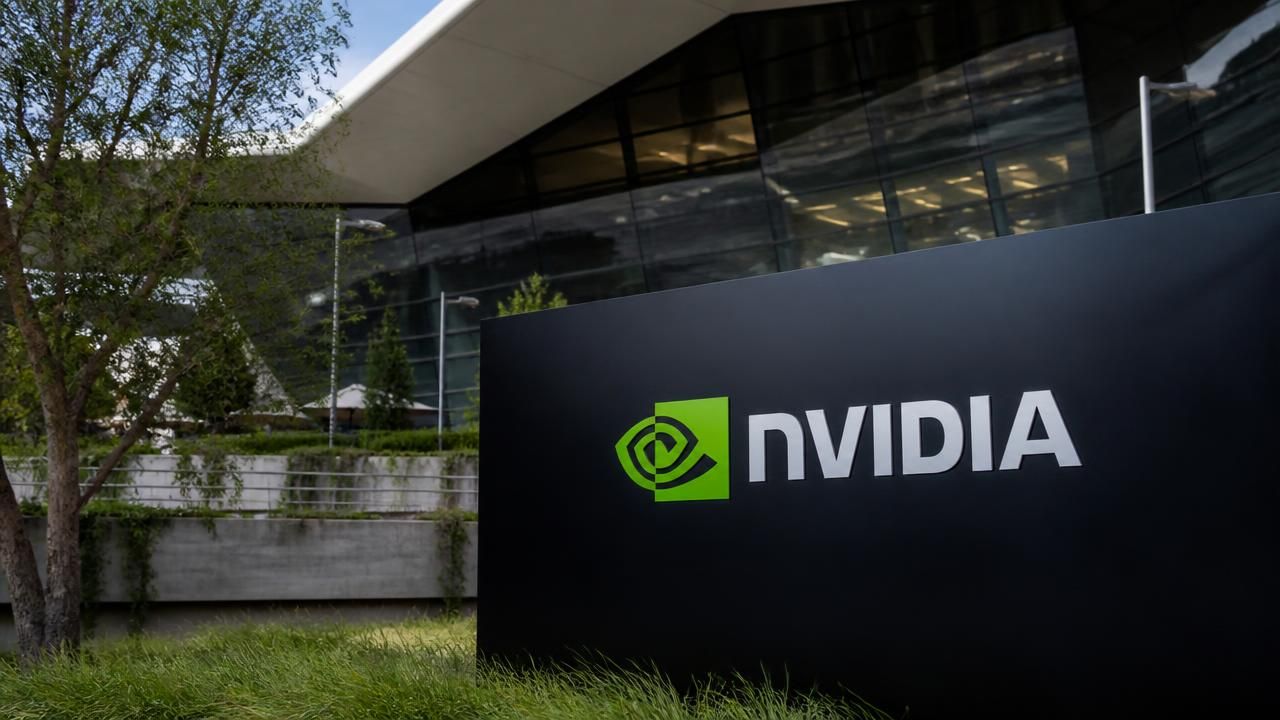
Nvidia Corp. deepened its commitment to returning capital to shareholders on Monday, boosting its share repurchase authorization by a record $150 billion and lifting the total remaining amount available under the program to roughly $235 billion. The Santa Clara, California-based chipmaker said the repurchases will be completed through fiscal 2028.
The announcement, disclosed in a company statement, is the largest single increase to a buyback program ever recorded and instantly became one of the most widely covered corporate finance stories of the day. It arrived alongside news of new Nvidia systems and a fresh AI agent safety platform, giving investors a double dose of product and capital-markets news.
A Record-Setting Authorization
Under the expanded program, Nvidia's board authorized an additional $150 billion for repurchases, on top of the roughly $85 billion that remained available from prior authorizations. The combined $235 billion pool gives the company one of the deepest buyback war chests in corporate history — a figure that rivals the entire market capitalization of most S&P 500 companies.
"Nvidia will complete the buyback through fiscal 2028," the company said in a statement.
Bloomberg was first to report the increase, and the story cascaded across financial newswires within minutes. MarketScreener, Yahoo Finance, Financial Post, MSN, Geo.tv, Shacknews, Investopedia, Invezz, MoneyCheck and CoinCentral all ran versions of the same headline, while CNBC approached the news from a commentary angle, highlighting Jim Cramer's call for an even larger, "half-trillion dollar, Apple-style" repurchase.
Market Reaction
Shares of Nvidia (ticker: NVDA) rose about 2.8% to 3% in the session following the disclosure, according to reports from Geo.tv, Invezz and IBTimes Australia. The gain added tens of billions of dollars to Nvidia's market value and reinforced the stock's status as the single most influential name in the AI-driven market rally.
The move was framed almost universally as a signal of confidence. A buyback of this magnitude is only possible for a company generating enormous free cash flow, and Nvidia's data-center business — the engine of the generative AI buildout — has produced exactly that. Analysts at Bloomberg Intelligence discussed the buyback on Bloomberg Markets alongside Nvidia's latest systems announcements, treating the two as connected proof points of the company's dominance in AI infrastructure.
Why the AI Boom Makes This Possible
Nvidia's rise from a graphics-card vendor to the world's most valuable semiconductor company has been driven by insatiable demand for its GPUs, which power the training and inference of large language models. That demand has translated into margins and cash generation rarely seen in the history of the chip industry.
The buyback expansion effectively tells investors that management sees no better use for a large slice of that cash than retiring its own shares. In practice, repurchases reduce the share count, lifting earnings per share even if net income stays flat — a mechanical tailwind that Wall Street rewards.
The company also unveiled an AI agent safety platform, a product that speaks to growing regulatory and enterprise concern about autonomous AI systems. IBTimes Australia linked the two announcements in a single headline, reflecting how Nvidia is simultaneously managing its capital story and its product narrative.
The Skeptical Case
Not everyone reads record buybacks as unambiguously good news. Critics argue that massive repurchase programs can signal a shortage of high-return investment opportunities, and that capital returned to shareholders is capital not spent on R&D, fabrication capacity, or acquisitions. Buybacks have also drawn political scrutiny in recent years, with lawmakers in Washington periodically proposing levies or restrictions on repurchases.
Others point to valuation risk. Nvidia's stock trades at a premium multiple that assumes years of continued hypergrowth. If AI infrastructure spending slows, a buyback executed at elevated prices could destroy value rather than create it — a classic cautionary tale from earlier tech cycles.
There is also the question of scale. CNBC's Jim Cramer argued Nvidia should go further still, advocating a half-trillion dollar, Apple-style buyback program. Apple has been the gold standard for buyback-driven shareholder returns, retiring hundreds of billions of dollars in stock over the past decade. Whether Nvidia follows that playbook or uses its cash for capacity and ecosystem investments remains an open question.
What to Watch
- Execution pace: How quickly Nvidia actually repurchases shares through fiscal 2028, and at what average price.
- Dividend policy: Whether the buyback expansion is accompanied by a dividend increase.
- Capital expenditure: Whether heavy buybacks crowd out spending on capacity amid ongoing supply constraints.
- AI demand signals: Hyperscaler capex guidance, which remains the key swing factor for Nvidia's revenue.
- Regulatory attention: Any political response to the size of the authorization.
How the Story Was Framed
Coverage split into three broad camps. Financial wire services and market data outlets — Bloomberg, MarketScreener, Yahoo Finance, Financial Post — led with the hard numbers: $150 billion added, $235 billion total, fiscal 2028 completion. Retail-facing outlets such as Geo.tv, Invezz, MoneyCheck and CoinCentral emphasized the immediate stock reaction, headlining the roughly 3% gain. CNBC took the opinion route, using the news as a hook for Cramer's argument that Nvidia should be even more aggressive.
Taken together, the coverage underscores a simple reality: Nvidia is no longer just a chip story. It is a capital-allocation story, a market-structure story, and — given its weight in the major indexes — a story about the retirement savings of millions of Americans. The $150 billion question is whether the AI boom that funded this buyback has enough runway left to justify it.