CVS Health will break itself in two, separating its roughly 9,000-store retail pharmacy business into an independent, publicly traded company while keeping its Aetna insurance arm and Caremark pharmacy-benefits division together under one roof — a landmark reversal for a company that spent two decades assembling one of American health care’s largest conglomerates.
The move, confirmed by CVS chairman and chief executive David Joyner, unravels the central premise of the company’s “bigger is better” era: that owning the pharmacy counter, the drug-benefit manager and the health insurer would let CVS steer patients toward cheaper, better-coordinated care and capture profit at every step. Instead, the company is now betting that two simpler, more focused businesses will be worth more than one sprawling one.
What the deal actually does
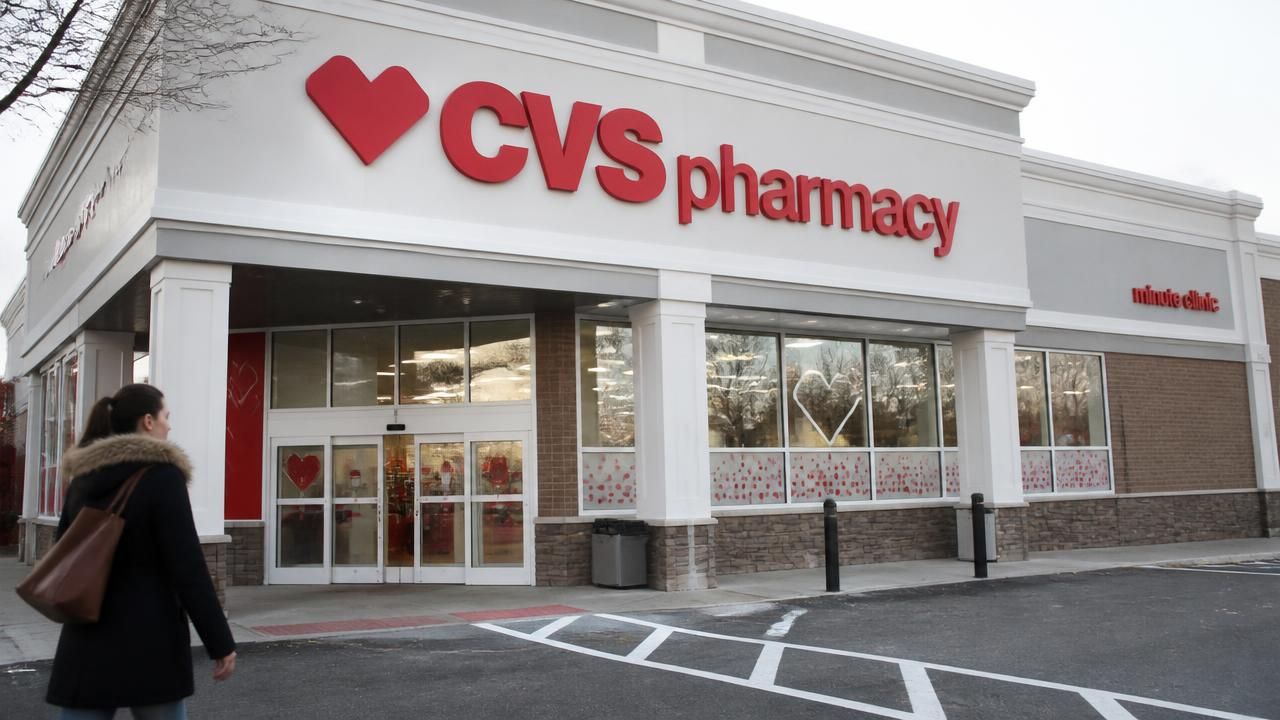
Under the plan, the retail pharmacy segment — CVS’s front-of-store and prescription counters, its MinuteClinics and its consumer-facing brand — becomes a standalone company. Aetna, the insurer CVS bought for $69 billion in 2018, and Caremark, the pharmacy-benefit manager (PBM) that fills and administers prescriptions for employers and health plans, remain together.
The timeline is the murkiest part of the announcement. CVS has publicly targeted completing the separation by 2028, while Joyner’s own remarks suggested the retail unit could be spun off sooner — as early as the first half of next year — a gap that underscores how preliminary the planning still is.
“No offers have been received” for the retail pharmacy business, Joyner said in an interview with Bloomberg’s “The Close,” adding that Aetna and Caremark are “staying together.”
That admission is significant. It confirms the spin-off is the default path rather than a fallback, and it leaves open the possibility — though not the expectation — of a sale if a buyer emerges during the process.
How the company got here
CVS’s acquisition spree was the defining corporate strategy of the 2000s and 2010s. The 2007 merger with Caremark transformed a drugstore chain into a vertically integrated health care player, and the 2018 Aetna deal — then one of the largest health care transactions in U.S. history — was sold as a way to reinvent the company as a “health hub” managing care, not just dispensing pills.
But the pieces increasingly pulled in different directions. Aetna has been battered by rising medical costs, unfavorable Medicare Advantage trends and weaker star ratings; CVS took repeated earnings hits and shuffled leadership, culminating in Joyner’s elevation. The retail side, meanwhile, faces thinning reimbursement, rising pharmacy-labor costs, shifting consumer behavior and competition from Walmart, Amazon and discounters.
Activist investors — most notably Starboard Value, which built a stake in late 2024 and pressed for a separation — argued that the market was undervaluing Aetna and Caremark because they were buried inside a low-margin retail operation. Regulators added pressure of their own: PBMs are under scrutiny from the Federal Trade Commission and Congress, and critics argue that an insurer owning its own PBM creates conflicts of interest that a leaner corporate structure would not solve.
The end of the empire era
The Seattle Times framed the decision bluntly as CVS “ending its bigger-is-better era” — a characterization that captures how far the narrative has shifted. A decade ago, vertical integration was the consensus answer to fragmented, expensive American health care; today, investors and analysts are more likely to reward focus, capital discipline and transparency.
Trade press coverage, including from AJMC, emphasizes the clinical and operational dimension: separating the pharmacy counter from the PBM and insurer changes who bears the risk for drug pricing and adherence programs. Business outlets, by contrast, fixate on valuation — the theory that Aetna, once isolated with Caremark, can be valued like a managed-care peer rather than discounted inside a retail conglomerate.
- For investors: a potential sum-of-the-parts unlock, plus a cleaner story for each management team.
- For patients: uncertain. The pharmacy network, formularies and insurance products likely remain linked by contract even after the corporate split.
- For regulators: the spin-off declines the vertical-integration question while doing nothing to defuse PBM scrutiny.
- For employees: duplicated corporate functions, an inevitable source of cost cutting.
The hard questions ahead
A spin-off of this size takes years of tax, capital-structure and regulatory work. CVS must decide how the two companies contract with one another, how debt is apportioned, who keeps the valuable brand and how pharmacy reimbursement is set when the counterparties are negotiating at arm’s length for the first time.
There is also a strategic irony worth noting: the retail business CVS is shedding remains the most visible symbol of the company — the corner drugstore — even as the higher-margin insurance and PBM assets become the growth story. And should Aetna’s costs stabilize, the insurer-Caremark pairing may prove the more durable half of the old empire.
For now, the message from headquarters is unmistakable. After two decades of buying scale, CVS is selling simplicity — and betting that Wall Street prefers two manageable companies to one hard-to-predict giant.