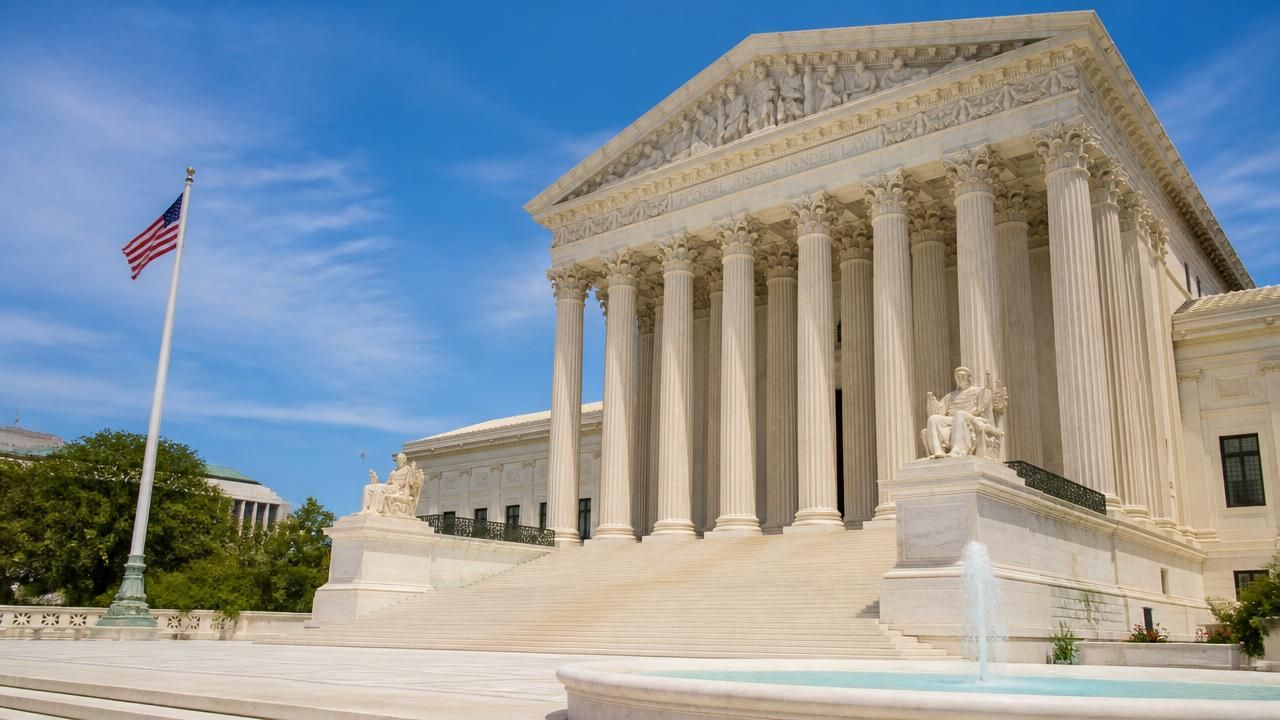
WASHINGTON — The U.S. Supreme Court on Friday barred Missouri from using a redrawn congressional map designed to benefit Republicans in November's midterm elections, acting for the third time in a fierce and increasingly tangled legal battle over the shape of the state's House delegation. The order handed a fresh setback to President Donald Trump's party as it fights to preserve its narrow majority in Congress, and it left in place a court-ordered map that Republicans had spent months trying to displace.
The justices' action, reported in near-identical terms by CNBC, Reuters, USA Today, The Guardian, the St. Louis Post-Dispatch and others, was the latest chapter in a redistricting dispute that has ricocheted between the Missouri Supreme Court, a federal trial court and the nation's highest bench. Each of the three trips to Washington ended the same way: with the Republican-backed map left on the shelf.
A Third Refusal, and an Immediate Effect
Friday's order does not resolve the underlying constitutional questions. It does something more immediate and, for election administrators, more consequential: it keeps the state from conducting its August primaries and November general election under a map that a Missouri court had already rejected. Election officials across the state's eight congressional districts had been preparing for either outcome, printing deadlines looming and absentee timelines tightening.
Three times now, the justices have declined to let the Republican-drawn configuration take effect, leaving the court-ordered version of the map in force for the fall campaign — a result Republicans had hoped the high court would reverse.
How Missouri Got Here
The dispute traces to Missouri's once-a-decade reapportionment following the 2020 census. Republicans, who control the governor's mansion and both chambers of the legislature, sought to redraw the state's eight House seats in a way that would have converted a competitive district into a reliably Republican one, producing what critics described as a 7-1 advantage. The state's current delegation is split 6-2, with Democrats anchored in Kansas City and St. Louis.
The GOP map ran into a wall of opposition from voting-rights groups and grassroots organizers, who invoked Missouri's constitutional protections against partisan gerrymandering. A state court blocked the map and ordered that the question be put to voters, a decision that Republicans immediately appealed. The Missouri Independent reported that GOP lawyers asked a federal court to revive the gerrymandered map and to block the referendum — a two-front strategy aimed at keeping the matter away from the ballot box entirely.
A Parallel Fight Over Contempt
As the federal case moved forward, the state's own high court opened a second front. The Missouri Supreme Court ordered Secretary of State Denny Hoskins to answer a contempt charge, according to the Daily Journal Online, in a proceeding tied to the administration of the referendum. The order underscored how deeply the map fight has drawn in the state's election machinery, with the official who certifies ballots and initiatives now personally on the hook before the bench.
Meanwhile, a temporary federal order instructed Missouri to proceed with a redrawn voter map after the Supreme Court declined to intervene, according to KOMU — a signal that the practical machinery of the 2026 cycle was already shifting toward the court-sanctioned boundaries.
- Who: The U.S. Supreme Court; Missouri Republican legislators and Secretary of State Denny Hoskins; voting-rights plaintiffs; President Donald Trump, whose party stands to lose a seat.
- What: A third refusal to allow a Republican-drawn congressional map to be used in elections.
- When: Friday, with primaries and the November midterms approaching.
- Where: Missouri's eight U.S. House districts, litigated in state and federal courts.
- Why: The map was challenged as an unconstitutional partisan gerrymander; a referendum to overturn it is also in play.
The National Stakes
The Missouri case matters far beyond the state's borders. With control of the House likely to turn on a handful of seats, every district drawn in 2021 and 2022 has been scrutinized for its partisan tilt. Missouri Republicans had hoped a favorable ruling would add a seventh safe seat to their column, easing the party's national arithmetic. Instead, the repeated rebuffs have become a case study in how state courts, ballot initiatives and an increasingly skeptical Supreme Court have combined to frustrate even well-laid redistricting plans.
The framing across outlets has been notably consistent, though the emphasis varies. Business-oriented coverage at CNBC foregrounded the electoral stakes for Trump's party; The Guardian and The Pitch KC emphasized the word "gerrymandered"; the St. Louis Post-Dispatch and Union Leader led with the procedural rarity of a third trip to the high court. Left-leaning outlets cast the ruling as a victory for voters; conservative-leaning coverage stressed that the merits remain unresolved and that the litigation is far from over.
What Happens Next
Republicans have signaled they will keep pressing. The federal case seeking to revive the map and halt the referendum continues, and the contempt proceedings against Hoskins remain live. Legal experts caution that Friday's order is procedural rather than a final judgment on the map's constitutionality — meaning the fight could return to the justices yet again, even as voters prepare to cast ballots under boundaries Republicans insist are unlawful.
For now, Missouri will hold its elections under the court-ordered map. For a party defending a fragile House majority, that is a setback measured not in legal doctrine but in districts — and the clock is running out.