Italy's dominant fuel retailer has moved to put a ceiling on the price of petrol and diesel, offering motorists a measure of relief and handing Prime Minister Giorgia Meloni a rare piece of good economic news as her government scrambles to contain the cost-of-living squeeze.
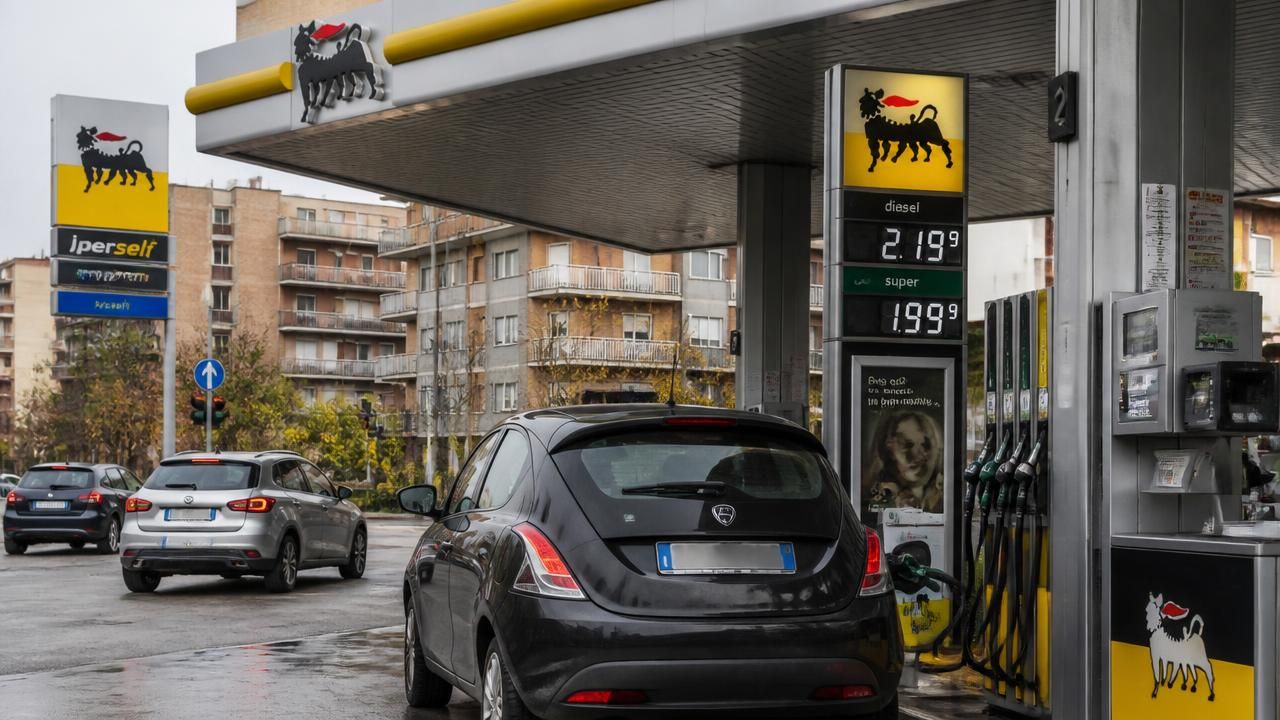
Eni SpA, the state-controlled energy major, set a price cap of €2.19 per litre for diesel and €1.99 per litre for petrol, according to reports carried by MSN. The Bloomberg Markets news service described the move as cutting pump prices for at least a month, framing it explicitly as political oxygen for a premier under pressure from spiralling costs.
“Italy's Eni SpA cut pump prices for at least a month, offering some respite for Prime Minister Giorgia Meloni, who is trying to shield consumers from spiraling costs ahead of a general election next year.” — Bloomberg Markets
A price ceiling, and a political calculation
The timing matters as much as the number. Fuel prices are among the most visible prices in Italy, posted on thousands of roadside signs and monitored obsessively by motorists, hauliers and the tabloid press. When they climb past psychological thresholds — €2 a litre for petrol, €2.20 for diesel — the anger translates quickly into politics, and the phrase caro benzina (expensive petrol) returns to front pages.
Bloomberg's framing is blunt: the cap is not merely an energy story but an electoral one. With a general election on the horizon, Meloni's coalition is seeking to demonstrate that it can act on household costs, an issue that has eroded support for incumbent governments across Europe since energy prices spiked after Russia's full-scale invasion of Ukraine.
The same reporting notes that Meloni has been “struggling to tame rising costs” — a reminder that a single retailer's ceiling, however welcome, does not address the underlying drivers of Italian pump prices.
Rome turns to the refiners
Eni's cap is only one arm of the strategy. According to reports aggregated by MSN, the Italian government is also seeking refiners' help to boost domestic fuel production in a bid to ease prices at the pump. The logic is straightforward: if more refined product is produced and sold at home rather than exported, domestic supply tightens less and retail prices face less upward pressure.
That approach reflects a long-standing frustration in Rome. Italy has substantial refining capacity, yet its retail fuel market is among the most expensive in the European Union, largely because of taxation rather than the ex-refinery price. Successive governments have found it easier to shame or cajole oil companies than to cut the excise duties that make up roughly half of what drivers pay.
Why Italian fuel is so expensive
Italy's excise duties on petrol and diesel are among the highest in Europe, and value-added tax is applied on top of the duty — meaning tax is charged on tax. The result is that the state, not the oil majors, captures the largest single share of the price motorists see on the forecourt.
- Tax burden: excise plus VAT typically accounts for a large minority, and at times close to half, of the retail price of a litre.
- Historical precedent: the government of Mario Draghi cut excise duty by about 30 cents a litre in 2022 to cushion the energy shock; the measure was allowed to lapse at the end of that year as fiscal costs mounted.
- Fragmented retailing: Italy has one of Europe's densest networks of service stations, with more than 20,000 outlets, a structure that economists say inflates distribution costs and weakens price competition.
- Transparency rules: Rome has previously required operators to display regional average prices, part of a long-running effort to name and shame outliers.
Against that backdrop, a voluntary cap by the market leader functions partly as a signal. Because Eni's network is large and its prices are watched as a benchmark, a ceiling can pull the market's visible average down — or at least stop it drifting higher — without a single euro of forgone Treasury revenue.
How the story is being framed
The four dispatches covering the decision diverge in emphasis. Bloomberg Markets treats it as a political story first: a rescue package for a prime minister facing voters. The MSN aggregation feed foregrounds the mechanics, headlining the government's appeal to refiners to raise domestic output. A third headline pits Eni against a premier who “struggles to tame rising costs,” while a fourth reduces the news to its most consumer-friendly form: a hard number, €2.19 for diesel and €1.99 for petrol.
Read together, they describe a government using a mix of moral suasion, industrial policy and headline-friendly price caps — instruments that are fast, visible and fiscally cheap, but which leave the structural problem untouched.
What to watch
The central question is durability. A cap announced for “at least a month” creates an expectation that it will be extended, and any subsequent increase would carry a political cost. If refiners lift output as requested, supply-side pressure may ease; if global crude and refined-product markets tighten again, Eni will face a choice between absorbing margin and unwinding a popular measure.
For Meloni, the calculation is simpler. Every month the cap holds is a month in which fuel — the price Italians see every day on their way to work — is not the story. Whether that quiet lasts until election day is another matter.