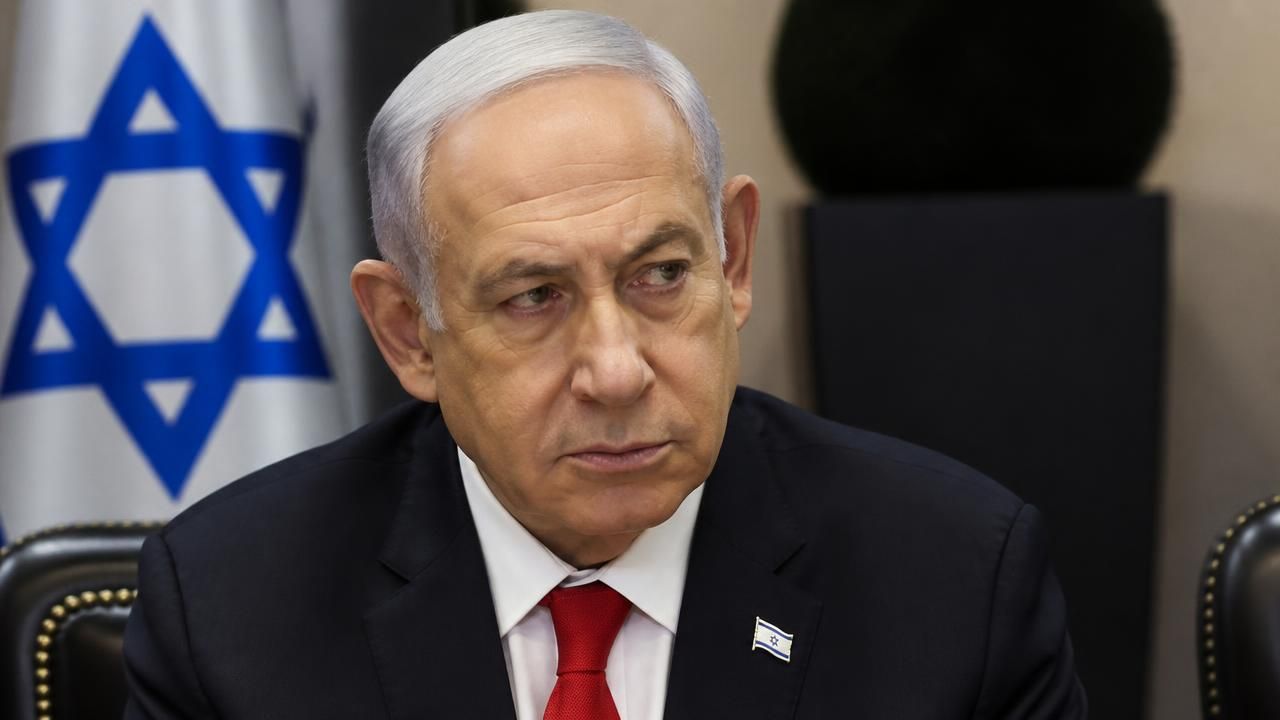
JERUSALEM — A new book by Israeli journalists has reignited one of the most politically charged questions surrounding the October 7, 2023 Hamas massacre: what did Prime Minister Benjamin Netanyahu know in advance, and what did he do with that knowledge?
The claim, first reported in detail by the Israeli daily Haaretz, holds that President Sheikh Mohammed bin Zayed of the United Arab Emirates telephoned Netanyahu roughly ten days before the attack to warn him that Hamas was preparing a large-scale assault. Within hours, the dispute had escalated into a legal threat, an opposition offensive and a fresh test of how Israel's political class confronts the worst intelligence failure in its history.
What the Report Alleges
According to accounts carried by Haaretz, The Times of Israel and Ynetnews, the Emirati leader's warning reached Jerusalem through an unusual channel — described variously as an approach to the Shin Bet security service or a direct message to the prime minister — rather than through the standard military-intelligence pipeline.
Ynet reported that Netanyahu then kept the information from the chiefs of Israel's security establishment, including during a meeting convened days before the assault. The Guardian, summarizing the book's findings, framed the episode as a warning that was received and then effectively shelved.
Conflicting Accounts of the Warning
Not every outlet described the episode the same way, and the differences are central to the fight now raging in Israel.
The New York Times, citing Israeli officials, reported that the Emirati warning lacked specific details about the nature or timing of an attack and that it never reached the chiefs of Israel's security establishment — a framing that shifts responsibility away from Netanyahu and toward the machinery of Israeli intelligence.
Israeli media, by contrast, emphasized the opposite reading: that the prime minister personally received a credible heads-up and failed to pass it on. The Tehran Times went further, describing "conflicting interpretations" of the alleged warning and noting that each version serves a distinct political constituency, both inside Israel and across the region.
Netanyahu's Response: Denial and Litigation
Netanyahu's office issued a categorical denial, calling the claim a "malicious libel" and announcing that the prime minister would sue Haaretz over the report. The threat of legal action against a domestic newspaper by a sitting prime minister marked an unusual escalation, and it drew immediate scrutiny from press-freedom advocates.
Netanyahu's office described the allegation as a "malicious libel" and said he would sue the newspaper over what it called a fabricated account.
The lawsuit threat, reported by outlets ranging from The Daily Mail to Yahoo News and MSN, effectively guaranteed that the underlying allegation would continue to dominate Israeli news cycles rather than fade.
Political Fallout
Opposition figures seized on the report almost immediately. The New York Times reported that Netanyahu's rivals called him "unfit" for office in the wake of the disclosure. CBS News described the episode as fueling a "pre-election furor," with the 2023 attack now sitting at the center of the campaign debate over leadership, accountability and the still-unresolved question of who bears responsibility for October 7.
Victims' families and their advocates were blunter. The outlet Global Village Space carried statements from bereaved relatives accusing Netanyahu of having "deliberately enabled" the Hamas attack — an accusation the prime minister's office rejects as defamation.
Why the Emirati Channel Matters
The UAE is not a routine interlocutor in Israeli security affairs. The two countries normalized relations in 2020 under the U.S.-brokered Abraham Accords, and Abu Dhabi has since become one of Israel's most consequential regional partners — a relationship Netanyahu has repeatedly presented as a signature diplomatic achievement.
That makes the alleged warning doubly awkward: it suggests that a key Arab ally tried to flag an imminent threat, and that Jerusalem either mishandled the tip or ignored it. Emirati officials have not publicly confirmed or denied the account.
- The claim: UAE President Sheikh Mohammed bin Zayed warned Netanyahu days to ten days before October 7 that Hamas was planning war.
- The dispute: Israeli officials told The New York Times the warning was vague and never reached security chiefs; Israeli media reported Netanyahu withheld it.
- The response: Netanyahu's office denies the report and says it will sue Haaretz.
- The stakes: An Israeli election campaign, ongoing inquiries into the October 7 failure, and the credibility of the Abraham Accords partnership.
The Larger Reckoning
October 7 already stands as the deadliest single day in Israeli history, with roughly 1,200 people killed and some 250 taken hostage, according to Israeli tallies — the trigger for a war in Gaza that has since reshaped the region. The intelligence failure that allowed it has been the subject of multiple internal reviews, but a politically binding reckoning has repeatedly stalled.
The new book's allegation cuts to the heart of that unfinished accounting. If the prime minister received a warning and did nothing, the failure is one of leadership. If the warning was too vague to act on, the failure lies deeper in Israel's intelligence apparatus. Both versions cannot be true, and no independent mechanism has yet been empowered to determine which one is.
For now, the fight is being waged in headlines, television studios and, potentially, an Israeli courtroom — with an election on the horizon and a public still demanding answers about the morning the country was caught unaware.