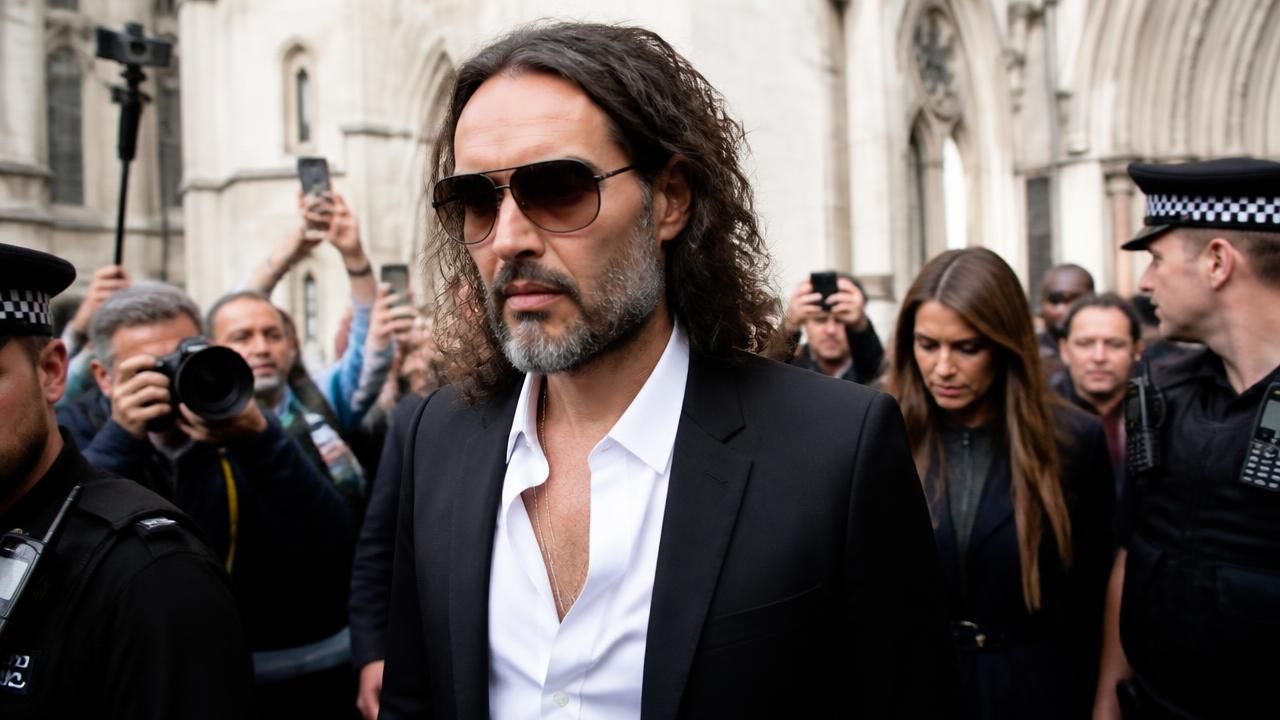
Russell Brand, the British comedian, actor and broadcaster who spent two decades as one of the most recognizable personalities in British entertainment, has been sentenced to 10 years and six months in a British prison after being convicted of one count of rape and three counts of sexual assault. The sentence, reported in near-identical terms by wire services, broadcasters and entertainment trade outlets, closes one chapter of a case that has reshaped how Britain's media and comedy industries reckon with allegations of sexual misconduct.
Brand was found guilty following a trial. The prosecution case was brought by six women; the convictions relate to four of them, according to accounts from the New York Post and other outlets that emphasized the number of victims in their headlines.
The Verdict and the Sentence
According to NPR, Brand was "found guilty on one count of rape and three counts of sexual assault in a case brought by six women." The Associated Press, whose dispatch was widely syndicated, framed the outcome around the length of the custodial term: 10½ years in a British prison. The Hollywood Reporter, Rolling Stone and Consequence, covering the story as an entertainment-industry event, led with the same figure — "more than 10 years" — while The New York Times put the number precisely at "10 and a Half Years."
The convergence of so many outlets on the same arithmetic is unusual and reflects the unusual breadth of interest in the case: it is simultaneously a crime story, a celebrity story and a story about how the British press, broadcasters and streaming platforms handled allegations against one of their own biggest stars.
From Comedy Darling to Defendant
Brand's rise was rapid. He broke through as a stand-up comedian and became a fixture of British television in the 2000s, hosting programs on the BBC and Channel 4 and later crossing into Hollywood with roles in films including Forgetting Sarah Marshall and Get Him to the Greek. For a period he was among the most written-about celebrities in Britain, his marriage to Katy Perry and his public reinventions as wellness influencer and political commentator generating a steady stream of coverage.
That trajectory reversed in September 2023, when a joint investigation by Channel 4's Dispatches and The Times and The Sunday Times published allegations of sexual assault and emotional abuse spanning years. Brand denied the allegations categorically at the time, saying in a video posted to social media that he had received "a litany of astonishing, rather baroque attacks" and that he "absolutely refute[d]" all of the claims.
"I absolutely refute" the allegations, Brand said in a video statement posted in September 2023, describing the reporting as a "coordinated attack" on his character.
Within days, the BBC said it had removed some of Brand's material from its iPlayer archive, Channel 4 followed suit, and YouTube suspended advertising on his channel, citing violations of its content policies. London's Metropolitan Police subsequently opened an investigation, and the file eventually reached prosecutors, culminating in the charges that produced this week's verdict.
How Different Outlets Told the Story
The coverage shows how a single legal outcome can be refracted through very different editorial lenses. The considerations varied by outlet type:
- Wire services and broadcasters (AP, NPR, Yahoo, NTD) prioritized the sentence length, the British jurisdiction and the mechanics of the conviction, keeping the language formal and largely identical across syndication.
- Entertainment trade outlets (The Hollywood Reporter, Rolling Stone, Consequence) foregrounded career consequences — the collapse of Brand's mainstream profile, the removal of his archives, the loss of monetization.
- Tabloid and mid-market titles (the New York Post) led with the victims, putting "rape, sexual assault of four women" directly into the headline.
- Legacy broadsheets (The New York Times, the Los Angeles Times) emphasized the precise custodial term, treating the sentencing as a judicial milestone rather than a celebrity event.
The consistency of the core facts across all 16 reports is notable. There is no meaningful dispute among them about the charges, the verdict or the sentence — a marked contrast to the sharply divergent framings that surrounded the original 2023 allegations, when Brand's supporters and critics contested nearly every detail in public.
Why It Matters
The sentencing is a significant moment for Britain's justice system, which has faced sustained criticism over low prosecution and conviction rates in sexual offence cases. High-profile convictions are rare, and cases involving celebrities often hinge on questions of consent and credibility that juries find difficult. A sentence of more than a decade is substantial by British standards for offences of this kind, though sentencing guidelines depend heavily on the specific counts and aggravating factors, which were not fully detailed in the initial round of reporting.
It also has implications for the platform economy that Brand came to inhabit. After his mainstream television career faded, he rebuilt an audience through podcasts and YouTube, where his videos regularly reached millions of viewers and where his political commentary earned him a new, often controversy-adjacent following. That second act depended on platforms' willingness to distribute and monetize his work — a willingness that eroded quickly once the 2023 reporting landed and that is now unlikely to return.
For the women who brought the case, the verdict represents the conclusion of a process that took years to reach a courtroom. Their allegations were first aired in journalism rather than in a court, a sequence that has become increasingly common in British sexual-misconduct cases and that has itself been the subject of debate about whether media investigation helps or hinders prosecution.
Brand is expected to have grounds to appeal. As of the initial wave of coverage, no further legal proceedings had been scheduled and no statement from Brand or his representatives had been widely circulated. The story, in other words, is likely to continue — but the man who once built a career on provocation now faces a decade behind bars.