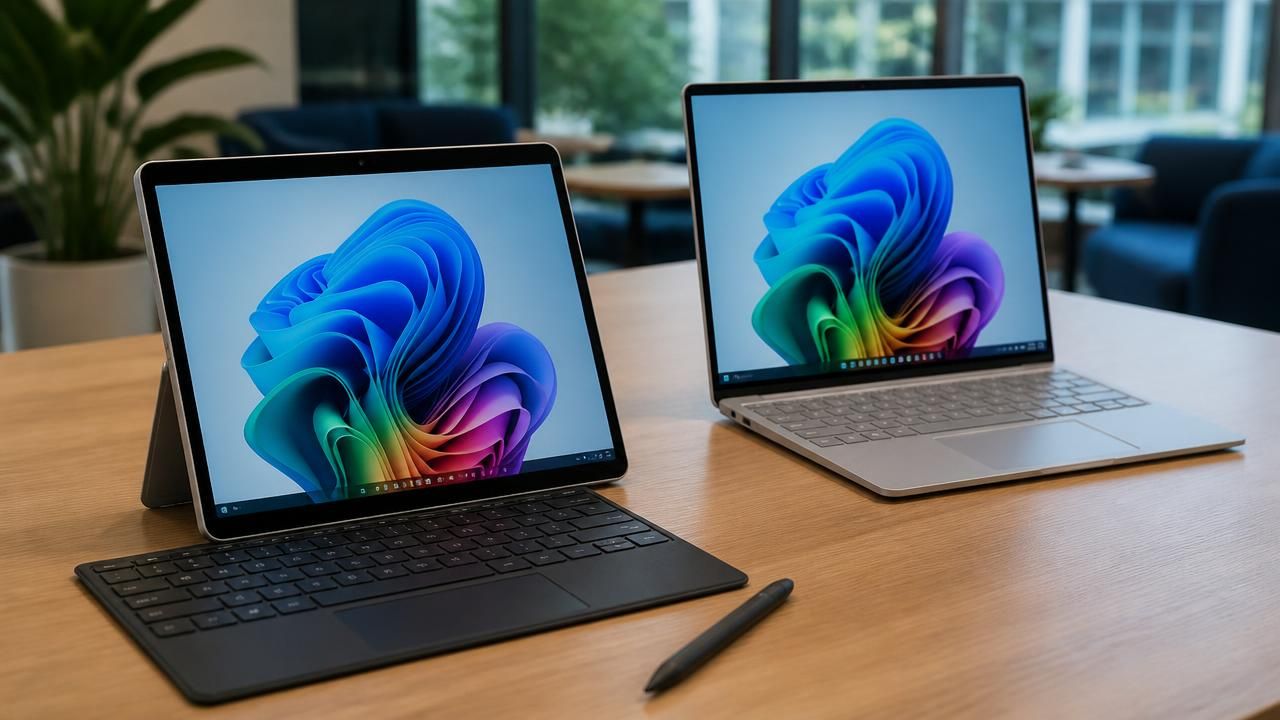
Microsoft has quietly stopped calling its newest computers "Copilot Plus PCs," a retreat that effectively ends a branding push the company spent more than two years building around the promise of on-device artificial intelligence. The change surfaced in reporting from Windows Central's Zac Bowden, who noted that the newly announced 12-inch Surface Pro and 13-inch Surface Laptop meet every technical requirement for the Copilot Plus designation — yet no longer carry the name.
"These are not called Copilot Plus PCs," Microsoft Surface corporate vice president Brett Ostrom told the publication, a terse confirmation delivered without a formal announcement, launch event, or press briefing. The Verge characterized the moment bluntly: two and a half years after Microsoft CEO Satya Nadella took the stage to tell the world that Copilot Plus PCs were the machines to buy, Microsoft and Qualcomm "seem to be admitting the brand is already dead."
A label built to sell AI hardware
The Copilot Plus branding arrived in 2024 as the centerpiece of Microsoft's pitch that a new generation of computers would run AI workloads locally rather than in the cloud. To earn the badge, a machine had to hit a specific bar: a neural processing unit capable of at least 40 trillion operations per second, 16GB of RAM, and 256GB of storage. It was, in effect, a certification program — a way to tell shoppers which laptops were "AI PCs" and which were merely PCs.
That strategy depended on retailers, reviewers, and consumers repeating the phrase. Instead, the language never fully escaped the tech press. Chip vendors leaned on it heavily, PC makers used it as a marketing hook on spec sheets, and then, as the AI features themselves arrived slowly and unevenly, the term became a liability rather than an asset.
The Surface signal
The clearest evidence of the shift is Microsoft's own hardware. The new Surface Pro and Surface Laptop are built on the same silicon generation and meet the same NPU threshold as the machines the company once branded Copilot Plus. If the flagship first-party devices no longer qualify for the label in marketing — despite qualifying on paper — the label no longer describes anything useful to a buyer.
"These are not called Copilot Plus PCs." — Brett Ostrom, Microsoft corporate vice president for Surface
Qualcomm moves in step
Qualcomm was the most invested partner in the original pitch. Its Snapdragon X series chips powered the first wave of Copilot Plus hardware and needed the branding to differentiate Arm-based Windows laptops from entrenched x86 rivals. Kedar Kondap, a Qualcomm senior vice president, was cited alongside Microsoft's remarks in the same reporting, underscoring that the chipmaker appears to be aligned with — or at least resigned to — the quiet pivot. For Qualcomm, the risk is real: without a shared umbrella term, it must sell its processors on battery life and performance benchmarks alone.
Mico, gone in under a year
The retreat extends beyond hardware naming. Microsoft is also killing Mico, the animated Copilot mascot it introduced last October. The character — a smiling, expressive avatar designed to give the assistant a friendlier, more memorable personality — lasted less than a year. Its removal reads as part of the same correction: Microsoft is stripping away the layers of AI marketing it added after Copilot's initial launch rather than doubling down on them.
Why now: Copilot fatigue and a messaging rethink
Several pressures appear to be converging. Recall, the flagship Copilot Plus feature that continuously snapshots a user's screen, drew immediate privacy backlash and regulatory scrutiny before being delayed and reworked. Other signature features, from Cocreator image generation to live translation, landed with muted enthusiasm. Meanwhile, the industry-wide flood of AI branding — AI PCs, AI phones, AI browsers — has trained consumers to treat the phrase with suspicion rather than excitement.
Aggregator headlines captured the ambiguity. One framed the news as Microsoft having "officially killed the Copilot+ PC branding without any explanation." Another described it as "Copilot PC branding fades out as Microsoft rethinks Windows 11 AI messaging." The common thread across all coverage is the absence of a stated rationale: Microsoft has not published a rationale for retiring the term, and its spokespeople have confirmed the change only when asked directly.
What actually changes for buyers
- Nothing changes technically. The 40 TOPS NPU requirement remains a real hardware threshold; the machines simply stop being marketed as a category.
- AI features tied to those NPUs will still ship through Windows 11 updates and Copilot app releases.
- Retail signage and spec sheets will increasingly describe processors and battery life rather than AI capability tiers.
- Expect Microsoft to fold AI into the existing Windows and Copilot brand names instead of inventing a third one.
The bigger picture
Microsoft's reversal is a notable admission about the AI PC cycle: the hardware arrived before the demand did. Vendors spent two years selling a capability most users had no immediate use for, and the certification label ended up advertising a promise rather than a benefit. The lesson for the broader industry is that branding cannot outrun usable software — and that when the features finally do mature, they are likely to be marketed as simply how computers work, not as a separate category requiring its own badge, its own acronym, and its own mascot.