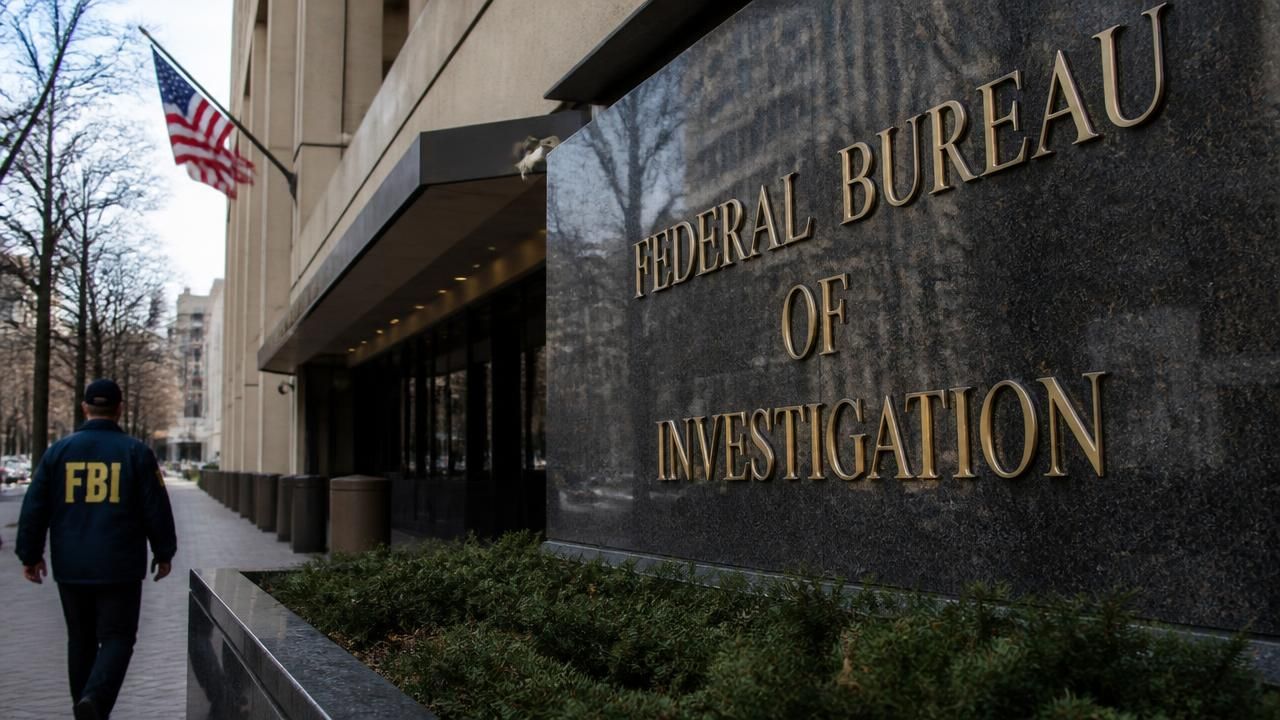
The FBI is investigating claims by the hacking group ShinyHunters that it breached an agency recruitment website and made off with two to three terabytes of personal data belonging to thousands of current and former employees, according to reports from Ars Technica, Reuters, Bloomberg and The New York Times.
The episode began on Tuesday, when the group defaced FBIJobs.gov — the bureau's public-facing careers portal — and replaced its homepage with a banner reading "THIS SITE HAS BEEN SEIZED BY SHINYHUNTERS." The site was taken offline, and ShinyHunters then began advertising its haul to journalists.
ShinyHunters told The New York Times it had exfiltrated roughly two to three terabytes of material. None of the data has been published or leaked publicly so far, but the group described its contents in broad terms: names of current and former agents, job applicants, home addresses, phone numbers, spouses' names, and some medical information.
A Breach of Unusual Sensitivity
What has alarmed investigators most is not the volume of records but their character. According to Bloomberg, samples of the stolen material appear to include professional details revealing the focus of individual FBI employees' work — including counter-intelligence assignments targeting China, Russia and Iran, as well as investigations into street gangs.
Reuters framed the story around precisely that dimension, reporting that the compromised data contains sensitive information about employees' intelligence roles. That framing shifts the incident from a conventional credential leak into something closer to an operational security crisis.
"THIS SITE HAS BEEN SEIZED BY SHINYHUNTERS."
Security analysts note that combining a home address with an employee's specialization is far more dangerous than either element alone. Such a pairing could allow foreign intelligence services, organized crime groups or ideologically motivated actors to identify, approach or threaten specific personnel — and, potentially, their families. Bloomberg reported that the data "could be used to potentially retaliate against agents," a concern that helps explain the urgency behind the bureau's response.
How the Story Unfolded
The first account came from 404 Media, which reported that ShinyHunters had taken down the jobs site and posted the seizure banner. Ars Technica followed with details of the FBI's investigation into whether the claims were genuine, noting that the group said it exploited a previously unknown vulnerability on the recruitment website.
From there, the story spread rapidly through mainstream outlets. Reuters, MSN and Yahoo News aggregations carried headlines emphasizing the sensitivity of the data and the sheer scale of the alleged theft — "2-3TB of sensitive information about FBI employees," as one headline put it. The Boston Herald and other regional outlets focused on the dual nature of the incident: both a defacement of a federal website and a claimed theft of sensitive personnel records.
The variation in coverage reflects genuine uncertainty. Some outlets reported the breach as established fact; others carefully hedged, describing it as a claim under investigation. That distinction matters — hacker groups have a long history of exaggerating both the volume and the quality of what they hold in order to inflate their leverage.
Who Is ShinyHunters?
ShinyHunters is not a new entrant. The group emerged around 2020 and quickly built a reputation for high-volume data theft, selling databases on now-defunct criminal forums. It gained far wider notoriety in 2024 through a sprawling campaign that exploited stolen credentials to raid cloud storage accounts at dozens of major corporations, a wave widely covered as one of the largest coordinated data-theft operations in recent years.
The group's typical playbook combines opportunistic exploitation of weak authentication with aggressive public relations: notifying journalists, posting samples, and threatening disclosure to pressure victims. That pattern appears to be repeating here.
What the FBI Has Said — and What It Hasn't
The bureau has confirmed it is investigating but has released few details. It has characterized the potentially compromised material as "very sensitive," without confirming the scope of the breach or the number of individuals affected.
Key questions remain unanswered:
- Was the vulnerability real? The FBI has not confirmed whether ShinyHunters exploited a genuine zero-day flaw on FBIJobs.gov or leveraged previously stolen credentials.
- How many people are affected? Estimates have ranged from "thousands" of current and former employees to far larger figures implied by the data volume.
- What happens if the data is leaked? The group has so far held the material, a posture that could indicate an extortion attempt or simply a desire to maximize attention.
- Were applicants' records included? Multiple reports suggest the data spans not only agents but people who merely applied for bureau jobs — a far broader population.
The Broader Implications
The incident raises uncomfortable questions about the security posture of government recruitment infrastructure. Jobs portals are often treated as low-risk, public-facing systems — precisely the kind of asset that can be overlooked in hardening efforts, even as they accumulate detailed personal information from applicants.
It also underscores a hard truth of modern breach response: attribution and verification take time. The FBI now faces the difficult task of determining, quickly, whether terabytes of claimed data are genuine, how far the exposure reaches, and whether the people named in it need to be warned — all while the group that made the claim controls the narrative.
For now, the story remains unresolved: a claim, a defaced website, and a federal law enforcement agency racing to establish what, exactly, has been taken.