In a year defined by a global pandemic, the fastest bear market in Wall Street history and a rebound that caught most forecasters flat-footed, David Booth has a message for investors that fits on a bumper sticker: control what you can control.
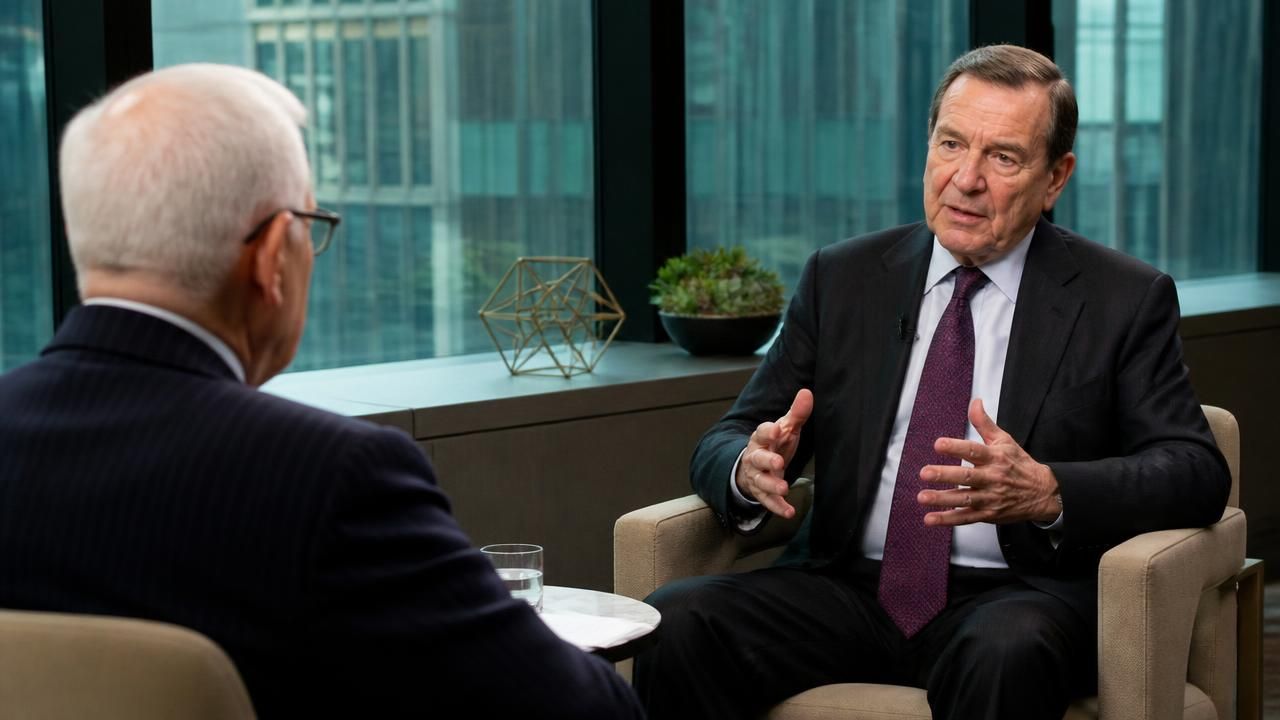
The founder and chairman of Dimensional Fund Advisors sat down with David Rubenstein for this week's episode of The David Rubenstein Show: Peer to Peer Conversations, recorded Aug. 10 in New York, to explain why he stayed calm during the 2020 pandemic panic — a period when markets collapsed and investors fled for the exits — and why that calm is less a personality trait than a discipline.
The conversation, distributed by Bloomberg, is the latest installment of Rubenstein's long-running interview franchise, which pairs the Carlyle Group co-founder with prominent figures from finance, business and public life. In this case, the subject was less a market call than a philosophy of investing — and of temperament.
What 'Control What You Can Control' Actually Means
Booth's core argument is that the sources of investment success are overwhelmingly things an individual investor can actually govern. The direction of the market is not one of them.
- Controllable: asset allocation, diversification, cost, tax efficiency, savings rate, and the decision to stay invested through drawdowns.
- Uncontrollable: interest rates, elections, pandemics, recessions, geopolitics, and the daily direction of stock prices.
It is a framing that runs against the instincts of a media ecosystem built on forecasting. Cable business channels and market newsletters are structurally oriented toward prediction; Booth's philosophy is oriented toward process. The distinction sounds like a platitude until it is tested, and 2020 was the test.
The Crash That Tested the Thesis
Between Feb. 19 and March 23, 2020, the S&P 500 fell roughly 34%, the swiftest decline of that magnitude in the index's history. The selloff was driven by a real-world shock — a novel coronavirus that shut down economies worldwide — and it triggered margin calls, forced liquidations and a wave of retail selling.
Booth did not panic. That, in his telling, was the point. Investors who sold near the bottom locked in losses and, in many cases, missed one of the most powerful recoveries on record: the S&P 500 reclaimed its prior peak by mid-August 2020, less than six months after the trough.
Control what you can control.
A Career Built on Evidence, Not Forecasts
Booth co-founded Dimensional Fund Advisors in 1981 with Rex Sinquefield, building the firm around academic research on market efficiency rather than star-manager stock picking. DFA's intellectual lineage runs directly through the University of Chicago, where economists including Eugene Fama and Kenneth French developed much of the empirical work on factor returns — size, value, profitability — that underpins the firm's approach.
The firm, now based in Austin, Texas, oversees hundreds of billions of dollars. Booth's influence extends beyond asset management: in 2008 he donated $300 million to the University of Chicago's business school, which was renamed the University of Chicago Booth School of Business in recognition. It remains one of the largest gifts ever made to a business school.
That institutional pedigree helps explain why Booth's calm is not merely stoicism. It reflects a belief — grounded in decades of data — that markets price information quickly and that the expected return for bearing risk is earned through time in the market, not through timing it.
How the Story Is Being Framed
Coverage of the interview has largely emphasized the behavioral dimension rather than any specific market view. Bloomberg's framing positions Booth as a steady hand and the interview as a lesson in leadership under stress — a familiar arc for the Peer to Peer format, which tends toward personal philosophy over tactical advice. Syndication partners and aggregators, meanwhile, have reduced the episode to its headline aphorism, which is arguably the most quotable and least complicated part of the message.
Both framings undersell the harder claim underneath: that most of the value investors can add comes from avoiding self-inflicted wounds.
The Behavioral Backing
The research literature broadly supports Booth's position. Morningstar's annual "Mind the Gap" studies have repeatedly found that the average investor's realized returns trail those of the funds they own, because money tends to flow in after strong performance and out after declines. Behavioral economists from Daniel Kahneman to Richard Thaler have documented the loss aversion and recency bias that drive those decisions.
Booth's prescription is essentially an institutional countermeasure to those instincts: pre-commit to an allocation, keep costs low, diversify broadly, and treat volatility as the price of admission for long-term returns rather than as a signal to act.
The Takeaway
With markets again navigating uncertainty — and with retail participation at elevated levels — the interview lands as a caution against the temptation to trade headlines. Booth's argument is not that markets always recover quickly, or that risk can be wished away. It is that the investor's real edge lies in the small set of decisions they fully own.
Everything else, as he puts it, is noise.