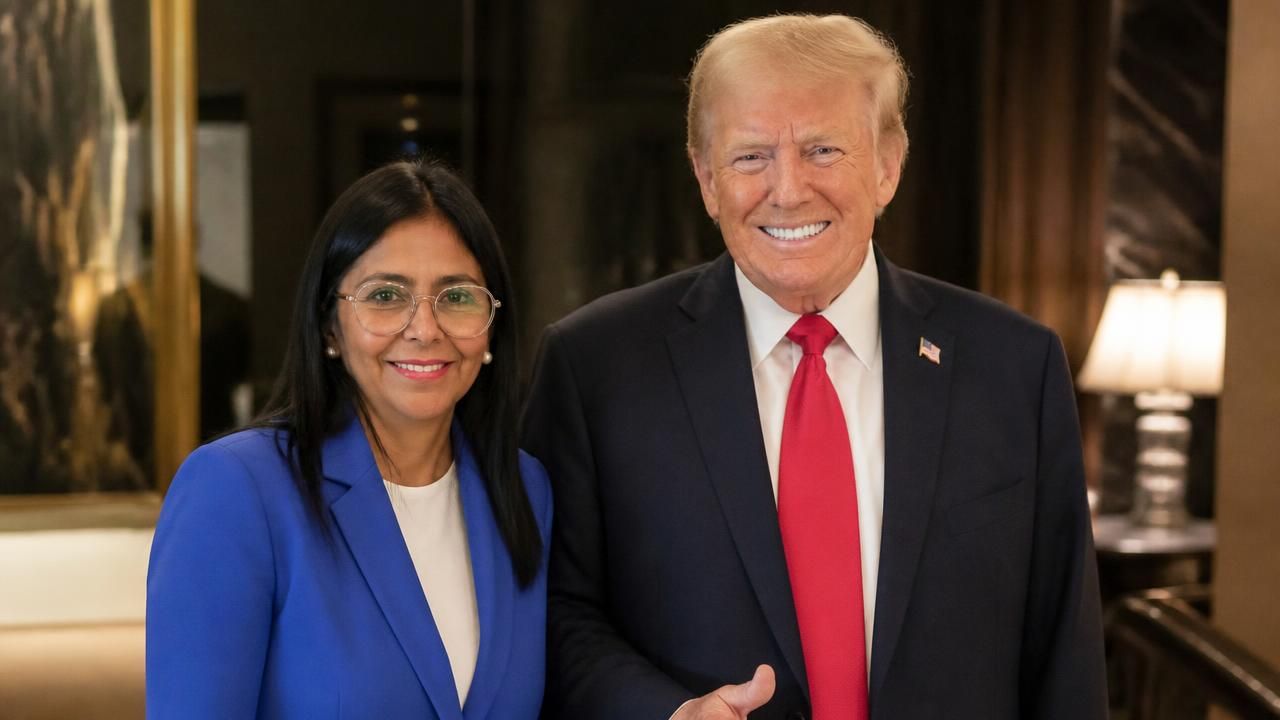
Venezuela's interim president, Delcy Rodríguez, met Donald Trump at a five-star hotel in Manhattan late on Tuesday, describing the encounter as a "historic" step less than nine months after the US president ordered the capture of her predecessor and former boss, Nicolás Maduro.
The meeting, held a few blocks from Trump Tower on the sidelines of the United Nations General Assembly, produced the image that both sides appeared to want: a smiling Rodríguez standing beside the US president, a photograph that circulated within hours across international broadcasters and aggregators from Beirut to Miami. According to the Guardian, the hotel where they met sits roughly seven miles from the Brooklyn prison where Maduro has been held since he was seized during a special forces raid on Caracas.
Rodríguez did not say whether she intended to visit Maduro in custody, leaving one of the most politically charged questions of her trip unanswered.
A meeting months in the making
The encounter had been trailed for days. WLRN, citing the White House, reported earlier in the week that Trump would meet the acting Venezuelan president in New York during the UN's high-level session. MSN's aggregation of the same story line emphasises the diplomatic novelty: this was Trump's first face-to-face with Rodríguez since Maduro's capture, and White House officials framed it as an opportunity to lock in arrangements with a leader they once treated as an adversary.
Other outlets struck a sharper note. MSN's headline described Rodríguez as "arriving in the US ahead of a controversial meeting," while Lebanon's LBC framed the event plainly as "Trump met with Venezuela's interim leader at UN" — a reminder that the meeting was read differently in different capitals, as a normalisation in Washington, a controversy in the Venezuelan diaspora, and a curiosity elsewhere.
"It was a historic meeting." — Delcy Rodríguez, speaking to reporters after the talks
Oil at the centre of the rapprochement
The diplomatic choreography rests on an economic foundation. Rodríguez has agreed a deal with Washington involving 65bn barrels of oil, an arrangement that reframes Venezuela — holder of the world's largest proven crude reserves — from a sanctioned pariah into a supplier of strategic weight.
For the Trump administration, the logic is transactional: access to Venezuelan heavy crude in exchange for a working relationship with whoever actually controls Caracas. For Rodríguez, the calculation is starker still. The deal offers a route to revenue, reconstruction and international legitimacy for an interim government whose authority rests, in part, on the very raid that removed her predecessor.
Maduro's shadow
The optics of the Manhattan meeting are difficult to separate from the fate of Maduro himself. Held in a federal facility in Brooklyn since the Caracas operation, he remains the central figure in Venezuelan politics even in detention — the reason Rodríguez holds office, and the reason any deal she signs will be contested.
Legal experts and regional diplomats have raised unanswered questions about the basis for his continued detention, about due process, and about what Washington intends to do with him. Rodríguez's refusal to say whether she will visit him keeps that ambiguity intact, and it is likely to be read by supporters of the former president as evidence of a rupture, and by the government as diplomatic prudence.
The UNGA backdrop — and a fight at home
The meeting unfolded against a combustible General Assembly week. In his address to the body, Trump defended his actions in Iran and Venezuela amid rising tensions with traditional allies, using the podium to press a case that his administration's interventions — military, legal and economic — were justified.
The domestic press landscape added another layer. AP reported that Trump said he was banning CNN, MS NOW and Politico from the White House over their coverage, a move that sits uneasily alongside the same week's diplomatic outreach and that drew immediate criticism from press-freedom advocates. The juxtaposition — a president courting foreign leaders at the UN while barring domestic outlets from his own briefing room — shaped how several outlets framed the Venezuela story as much as the substance of the talks themselves.
What happens next
- The oil agreement: implementation timelines, pricing terms and which companies will lift the crude remain undisclosed.
- Maduro's status: no date has been set for a consular or family visit, and his legal position is unresolved.
- Recognition: whether Washington moves from meeting Rodríguez to formally backing her administration will determine the deal's durability.
- Reaction inside Venezuela: opposition and Chavista factions alike will test how much legitimacy the New York photograph confers.
For now, both governments have a picture they can use. Whether a single handshake in a Manhattan hotel can convert seventy years of accumulated distrust and nine months of extraordinary rupture into a working relationship is the question that will define the coming months — in Caracas, in Washington, and in a Brooklyn cell where the previous president still waits.