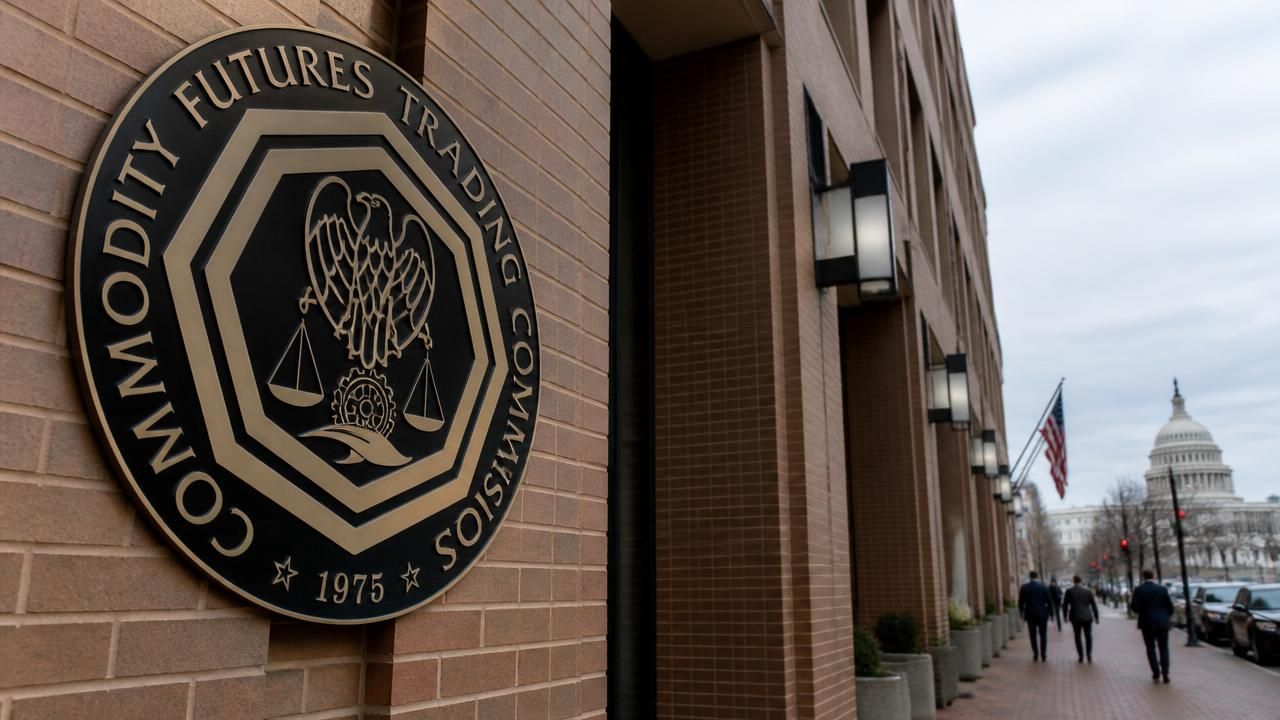
Federal derivatives regulators are tightening the leash on one of the fastest-growing and most legally contested corners of American finance. In new staff guidance, the Commodity Futures Trading Commission warned prediction-market operators that wagers on what high-profile people might say in public — known in the industry as "mention" contracts — carry an elevated risk of manipulation and may only be listed under limited circumstances.
The guidance lands at a delicate moment for the sector. Platforms that let users trade on everything from elections to Federal Reserve decisions have expanded rapidly, drawing billions of dollars in volume, institutional capital and the attention of both Washington regulators and state gaming authorities. Now the CFTC is signaling that a subset of those offerings — contracts whose payout hinges on a single phrase escaping a politician's or celebrity's mouth — sits closer to gambling than to legitimate hedging.
Why 'mention' markets worry regulators
The core concern is surveillance. A contract that settles on whether a public figure utters a specific word is exceptionally easy to move, regulators argue, because the underlying "event" can be triggered by the very people who trade it — or by someone with a few seconds of advance knowledge. Unlike an agricultural futures contract tied to harvests or a rate contract tied to central bank policy, a mention market has an outcome that can be engineered in a green room, a rally speech or a podcast appearance.
"Prediction market wagers involving bets on what high-profile people might say in public present heightened manipulation risk and can only be offered in limited circumstances." — CFTC staff guidance
That framing matters legally. By describing mention contracts as permissible only in narrow circumstances, the agency is effectively carving them out from the broader class of event contracts it has allowed to trade, while leaving the door open to bespoke approval for well-designed products.
A regulatory committee takes up the question
The guidance dovetails with discussions inside the CFTC's Innovation Advisory Committee, which convened to examine emerging risks across prediction markets. The committee's remit — advising the agency on how new technologies interact with derivatives oversight — has become central as platforms push into novel contract designs faster than rulebooks can adapt. The panel's deliberations reflect a broader tension: regulators want to encourage financial innovation and the price-discovery benefits that event markets can provide, but they are wary of becoming the de facto regulator of what many critics see as gambling in a fintech wrapper.
The legal fight heading to the high court
Underneath the technical guidance sits a constitutional and jurisdictional battle that could redraw the boundaries of American betting. As Politico has framed it, a coming Supreme Court clash over prediction markets could reshape the industry — determining whether federally regulated event contracts can operate nationwide, or whether states retain the power to shut them down under their own gaming laws.
The dispute turns on a familiar question of preemption. Platforms such as Kalshi and Polymarket argue that CFTC-regulated event contracts are federally sanctioned financial instruments, immune from state gambling statutes. State regulators counter that a wager on an election outcome is a bet, whatever federal paperwork accompanies it, and that state attorneys general retain authority over sportsbooks and casinos operating within their borders. Lower courts have split, setting up the possibility that the justices will ultimately decide which regulator — federal or state — governs the category.
The stakes extend well beyond one product line. A ruling against the platforms could fragment the market into a patchwork of state-by-state permissions, raising compliance costs and choking off liquidity. A ruling for the platforms could open the floodgates to election, entertainment and cultural contracts nationwide, forcing the CFTC to build a surveillance apparatus far larger than it currently operates.
Pennsylvania as a test case
Those concerns are already playing out at the state level. In Pennsylvania, local coverage has asked a pointed question: could prediction-market bets on state politics lead to corruption? The worry is that political operatives, legislative staffers and campaign hands possess material, non-public knowledge about timing, polling and strategy — information that translates directly into trading edge. A market that pays out on whether a bill reaches a floor vote creates an incentive to leak, or even to maneuver, in ways that traditional campaign-finance and lobbying rules were never written to police.
Corporate America's new exposure
Legal analysts are also warning that prediction markets create novel risks for corporations that have little to do with gambling. As Law.com put it, the evolving regulatory landscape means companies may find themselves exposed through the conduct of employees who trade on inside information about their own firms — product launches, merger talks, earnings surprises — that happens to be the subject of a listed contract. Compliance departments accustomed to policing stock trades may soon need policies governing event-contract positions as well.
- Heightened insider-trading and material non-public information risk as employees wager on outcomes they influence or know in advance
- Reputational exposure for brands that become the subject of tradable contracts
- Uncertain jurisdictional obligations as federal and state regulators assert overlapping authority
- Increased surveillance and record-keeping burdens for platforms seeking to stay compliant
What comes next
For now, the CFTC's message is one of constrained tolerance: mention markets are not categorically banned, but they will be scrutinized, and platforms that list them carelessly do so at their own peril. The bigger question — whether prediction markets become a permanent, federally protected feature of American finance or a short-lived experiment reined in by states and courts — will be answered not by staff guidance but by the justices and by the regulators who must enforce whatever framework survives.