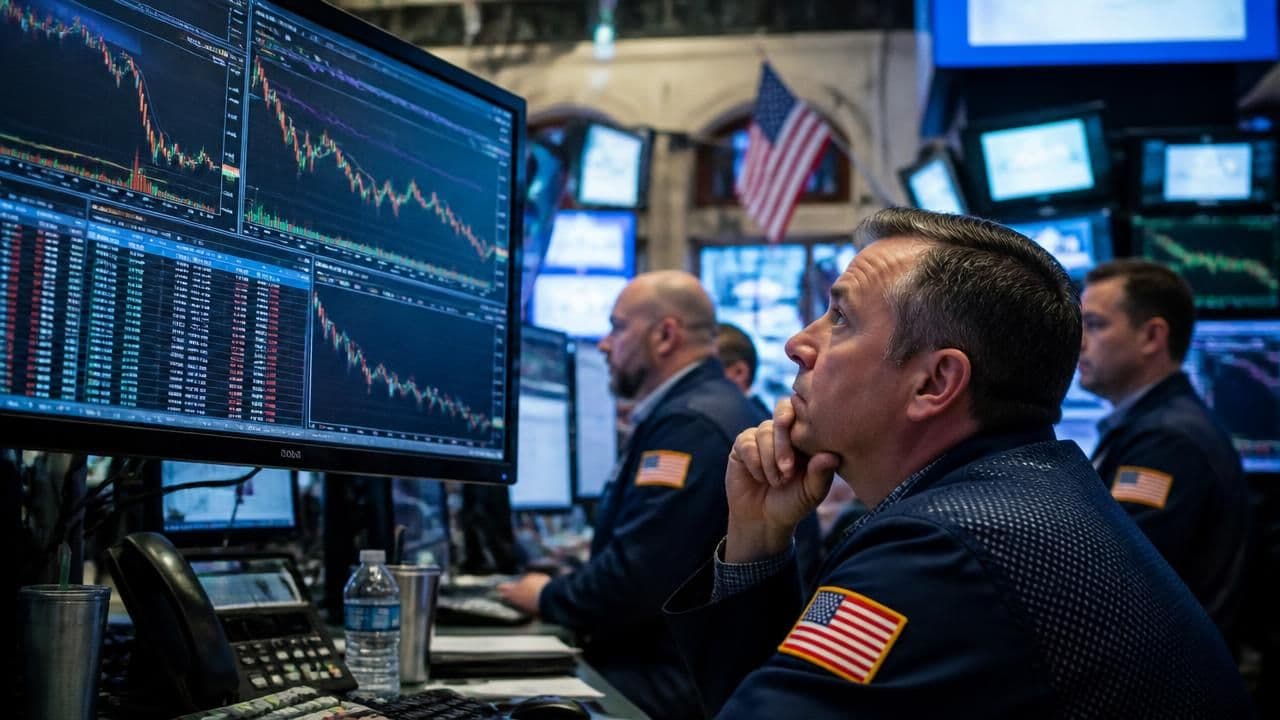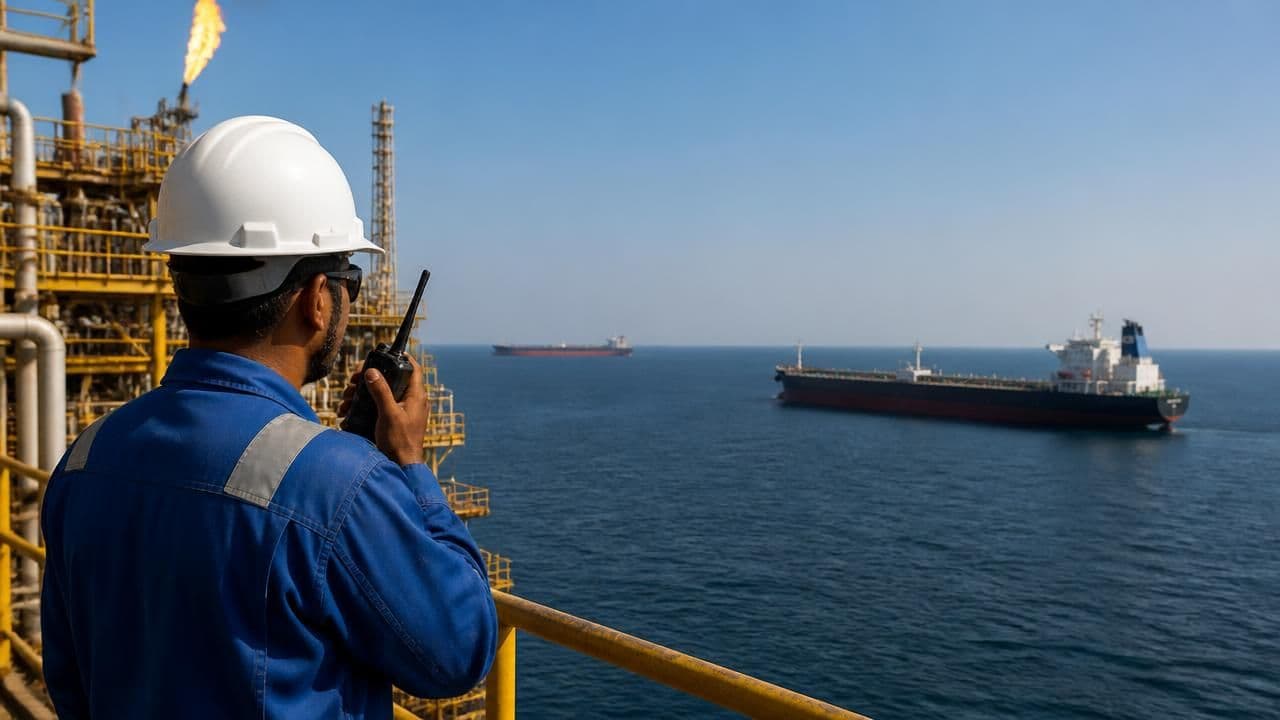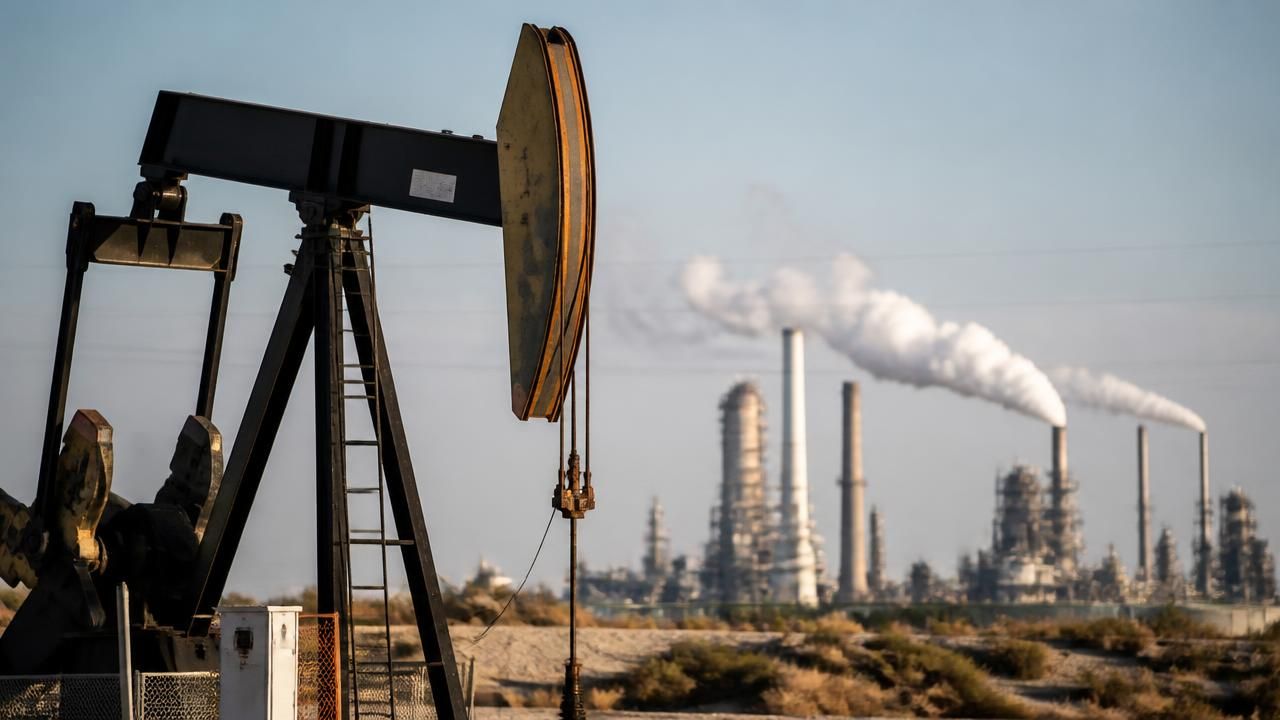
Oil prices climbed to their highest level in six weeks on Monday, approaching the $100-a-barrel threshold, as escalating hostilities between Washington and Tehran and reports of strikes on Saudi Aramco facilities injected a fresh geopolitical premium into crude markets. The move rippled immediately through equities: energy majors and shale producers rallied to multi-week and 52-week highs, even as the broader S&P 500 continued to trade within striking distance of its all-time record.
The divergence — a benchmark index shrugging off a supply shock while its energy component surges — has become the defining feature of this market moment, and it is drawing renewed attention from traders, strategists and policymakers alike.
The Numbers Behind the Spike
According to CNBC, crude rose to a six-week high after Iran and the United States exchanged blows and reports emerged that Saudi Aramco facilities had been hit. Forbes reported that oil was pushing toward $100, hitting multi-week highs on "fresh U.S.-Iran tensions." The combination of direct state-on-state confrontation and an attack on the infrastructure of the world's largest crude exporter is precisely the scenario that energy traders have spent years pricing as a tail risk.
Equity markets responded in kind. Phillips 66 (PSX) traded near its 52-week high as crude spiked on Gulf tensions, while Diamondback Energy (FANG) held near its own highs, according to ad-hoc-news.de. Refiners and Permian producers occupy opposite ends of the crude complex — refiners typically prefer cheaper feedstock, while producers benefit from higher realizations — but in a geopolitical rally both have tended to be bid as investors rotate into hard-asset exposure.
A Tale of Two Narratives on Wall Street
How the story is being framed depends heavily on where you sit. Bloomberg Markets, through its flagship Bloomberg Surveillance program, framed the session as a resilient tape rather than a fearful one, with the S&P trading near record highs as oil prices eased at the margin. The show's stated premise — daily access to "leaders and decision makers from Wall Street to Washington" — reflects an institutional view that geopolitical shocks are, for now, being absorbed rather than amplified.
No other program better positions investors and executives for the trading day than "Bloomberg Surveillance."
Forbes, by contrast, led with the proximate cause: the headlines driving crude higher. Its emphasis on the multi-week high in oil, and specifically on U.S.-Iran tensions, speaks to a retail-facing readership more attuned to fuel prices and inflation than to index levels. CNBC's coverage fused both strands, tying the six-week crude high to the reported strikes on Saudi Aramco infrastructure — a detail that, if confirmed, would represent a direct hit to global spare capacity.
Historical Echoes: 2006, 2008 and Beyond
Longtime oil watchers will find the pattern familiar. Wikinews archives show that oil prices hit a then-record high in 2006 on fears of a Turkish incursion into northern Iraq, with traders citing the threat to pipelines running through the Kirkuk-Ceyhan corridor. That same year, a sustained day of attacks across Israel and Lebanon pushed crude to what were, at the time, unprecedented levels, as markets priced the risk of a wider regional war.
The difference today is the supply backdrop. In 2006, OPEC held meaningful spare capacity that could be called upon within weeks. Today, with sanctions constraining Iranian barrels and inventories below their five-year average in several key hubs, the buffer is thinner — which is precisely why a headline about Aramco facilities moves the tape so violently.
The risk premium is also no longer confined to the front month. Producers have capitalized on the rally by hedging forward output, and refiners such as Phillips 66 are seeing crack spreads that reward any sustained elevation in the crude price — a dynamic that can persist long after the initial headline fades.
Litigation and Infrastructure Risk: A Cautionary Tale
Separately, a class action launched by Australian bushfire survivors against SP AusNet offered a reminder that energy infrastructure operators face liabilities that have nothing to do with geopolitics. That litigation — arising from the devastating 2009 Black Saturday fires — eventually settled for roughly A$494 million, the largest class-action settlement in Australian legal history. For utilities and grid owners globally, it stands as a benchmark for how catastrophic asset failure can translate into balance-sheet exposure measured in the hundreds of millions.
Also circulating in the news cycle this week were a Wikinews roundup of the year 2008, led by the NFL's Brett Favre being traded to the New York Jets, and an archive entry for "Australia/2006" — the kind of items that surface when aggregators sweep the wire during a heavy geopolitical news stretch. They serve as a reminder that while markets fixate on a single narrative, the information environment is a torrent.
What to Watch
- The Strait of Hormuz: roughly a fifth of global seaborne crude passes through it daily. Any credible disruption — even a brief one — would remove the six-week rally's ceiling.
- Aramco confirmation: independent verification of damage to Saudi facilities would determine whether $100 becomes a floor or a ceiling.
- Energy equity rotation: whether Phillips 66 and Diamondback can hold their 52-week highs if the broader S&P weakens.
- Diplomatic signaling: historically, sustained oil spikes on Middle East headlines have been unwound by de-escalation as quickly as they were built.
The immediate read is straightforward: markets are betting the conflict remains contained, and that energy equities are the cleanest way to express a hedge while staying long risk. The historical read is less comfortable. Every major oil shock of the past two decades began as a headline that investors believed would pass — until it did not.