The September 2026 release calendar has crystallised into one of the densest lineups of the year, with major outlets converging on a familiar verdict: this is the last great window for publishers to make their mark before the year's most anticipated launch reshapes the market. From NPR's seasonal roundup to IGN, GameSpot, GamingBolt and MSN's aggregated guides, the framing is remarkably consistent — September is a staging ground, not a destination.
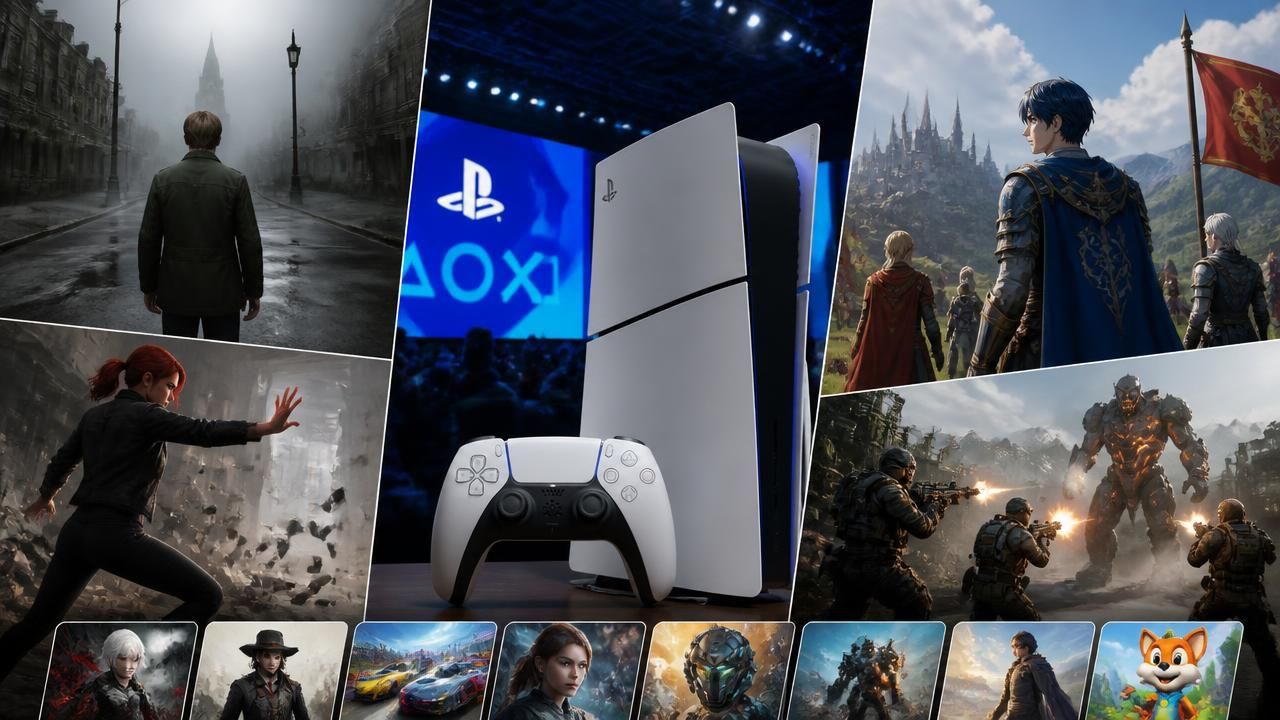
NPR News set the tone with its review package, The best and biggest games of September, singling out three titles as the month's anchors: Konami's Silent Hill: Townfall, Remedy Entertainment's Control Resonant, and Nintendo's Fire Emblem: Fortune's Weave. The outlet noted the slate lands "as autumn begins, ahead of the titanic GTA6 release" — a phrase that captures how the entire industry is now periodised around Rockstar's long-delayed blockbuster.
A calendar built around a countdown
That framing echoes across aggregators. GamingBolt's 15 Biggest Games Launching in September 2026, IGN's The Biggest Game Releases of September 2026, GameSpot's The Biggest New Game Releases Of September 2026, and MSN's 8 best games releasing in September 2026 all attempt to impose order on a month that is unusually top-heavy. Where they differ is emphasis: GamingBolt leans on volume and genre spread, MSN on curatorial brevity, and the larger outlets on platform-by-platform analysis.
"Ahead of the titanic GTA6 release" — the phrase now functions as the industry's shared calendar reference point.
The practical consequence is a squeeze. Publishers with titles that cannot realistically compete for attention in October or November are bunching releases into the first three weeks of September, compressing marketing spend and review coverage into a narrow band.
State of Play sets the tone
PlayStation's September State of Play provided the month's structural spine. GameSpot's live recap, PlayStation State Of Play September 2026: All The Biggest Announcements, Games, And Trailers, catalogued a showcase that mixed first-party reveals with third-party multiplatform trailers — a pattern Sony has refined over several years as it balances a shrinking internal slate against partner titles.
The showcase's significance extends beyond individual reveals. As Xbox and PlayStation increasingly converge on subscription models, the State of Play has become a scheduling instrument: titles shown there tend to be the same titles that anchor platform subscription drops within weeks.
Game Pass Wave 1 and the co-op surge
That convergence is visible in Microsoft's September rollout. IGN's Xbox Game Pass September 2026 Wave 1 Lineup Announced covers the first tranche of additions, while MSN's 20 best online co-op games on Xbox Game Pass right now (September 2026) speaks to what has become the subscription era's dominant genre: persistent, shareable, low-friction multiplayer.
The shift matters commercially. Co-op titles retain players longer, driving the engagement metrics that justify subscription pricing. For smaller studios, a Game Pass debut can substitute entirely for a conventional retail launch.
Notable titles in the September conversation
- Silent Hill: Townfall (Konami) — a franchise revival entry positioned as the month's horror headline act.
- Control Resonant (Remedy Entertainment) — the Finnish studio extends its connected-universe ambitions.
- Fire Emblem: Fortune's Weave (Nintendo) — a first-party strategy release anchoring the Switch calendar.
- Game Pass Wave 1 — Microsoft's September slate, paired with a deep co-op catalogue.
Beyond the trailers: community and the wider news cycle
Not every dispatch arriving alongside the release calendar came from the trade press. Wikinews's archive offers a reminder that gaming culture is sustained by events far from the State of Play stage. Its report on Animeleague's summer Anime & Gaming Con in Birmingham, UK, documents the convention circuit that functions as a testing ground for indie developers and a meeting point for fan communities.
The same archive surfaced a strand of coverage that connects to a growing conversation inside the industry about accessibility: Wikinews's interview with Duncan Campbell, co-founder of wheelchair rugby, its reporting on wheelchair rugby at the London Paralympics, and its interview with Deepa Malik, India's first female Paralympic medallist. Those stories predate the current news cycle, but they resonate with a design debate now central to gaming hardware — adaptive controllers, remappable inputs, and the push to make mainstream releases playable without compromise.
Sport and gaming also share a governance question. A separate Wikinews dispatch on a 2020 Melbourne Lord Mayor campaign illustrated how local politics can intersect with cultural and sporting institutions — a dynamic familiar to anyone watching cities compete for esports events and convention revenue.
What to watch
Three signals will define how September 2026 is remembered. First, whether Silent Hill: Townfall and Control Resonant deliver critically or merely commercially — franchise revivals carry outsized reputational risk. Second, whether Game Pass's co-op-heavy lineup converts into sustained subscriber retention rather than a one-month spike. Third, whether the compressed calendar produces genuine breakout hits or a logjam in which even strong titles get buried.
The larger question is structural. An industry that schedules its year around a single competitor's release date is an industry with a concentration problem — and September 2026, for all its abundance, is evidence of it.