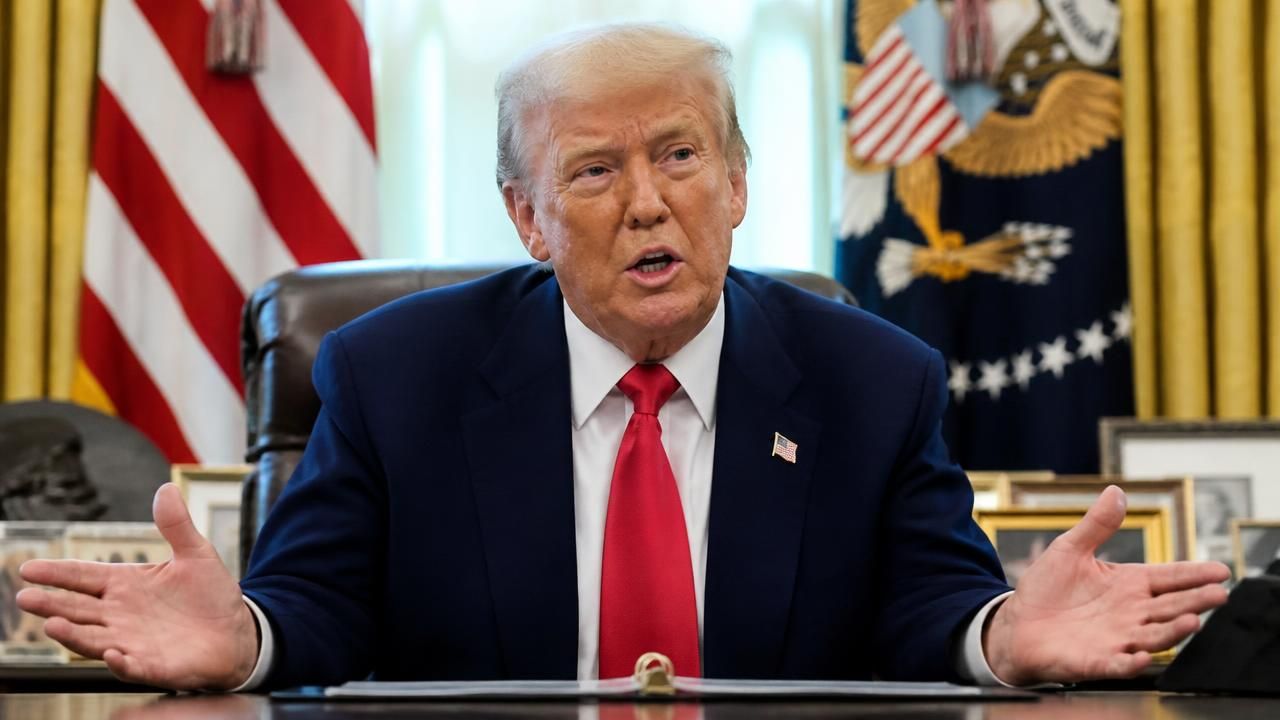
President Donald Trump said he intends to create a new federal body called the “AI Force” and appoint an artificial intelligence czar to lead it, announcing the plan in a meandering Truth Social post that promised the government would not stand in the way of the technology industry.
The announcement, reported in near-simultaneous bulletins by The Verge, UPI, NBC News, Cointelegraph, NTD, Outlook India and a wave of MSN syndications, contained no details on the force's size, budget, legal authority or timeline — and no indication of who might fill the czar role.
“We will not in any way hinder or stifle the Growth of this incredible Industry. Rather, we will cherish it, help it, and watch over it, as it grows!”
What Was Announced
According to accounts of the post, Trump framed the new entity as a promotional and oversight vehicle rather than a regulator. He described data centers as “wealthy and prestigious” and asserted — without evidence — that they raised salaries, lowered taxes and made for safer streets in the communities where they are built.
The president also continued to dismiss public anxiety about rapid AI development as a “hoax,” a characterization that has become a recurring theme in his commentary on the sector. That framing is the source of much of the immediate pushback: even outlets that covered the announcement straight, such as MSN's aggregation of wire copy, paired it with headlines asking whether Trump had actually changed his mind on AI guardrails.
Why It Landed Awkwardly
The timing was notable. The post arrived amid growing calls — from across the political spectrum and, unusually, from inside the AI industry itself — to slow the pace of development and build safety frameworks before capabilities outrun oversight.
The statement also sits uneasily alongside Trump's earlier personnel moves. In December 2024 he named venture capitalist David Sacks as the White House's AI and crypto czar, a role that already spans much of the portfolio a new “AI Force” would appear to cover. The new post left open whether the president intends to create a second position, elevate an existing one, or rebrand an effort that is already underway.
That ambiguity was picked up quickly by industry observers. Blue Virginia's Sunday news roundup flagged commentary that the “tech industry scratches its head over Trump 'AI Force' proposal,” alongside criticism from watchdogs warning of a “White House shields the AI gold rush” posture — the argument being that an entity dedicated to “watching over” an industry while promising never to hinder it is structurally conflicted.
A Contrast in Sacramento
The clearest counterpoint came from California. Governor Gavin Newsom issued an executive order targeting AI companies and called for a “kill switch” capability, urging federal adoption of California-style regulations. The divergence sets up a familiar dynamic in American tech policy: state-level rules advancing while Washington signals deregulation.
Also this week, NBC News reported that Americans give AI in schools a poor grade — a finding that complicates any political strategy built on the assumption that voters share the industry's enthusiasm. And Stat News reported that Trump officials have pitched AI as a savior for rural health care, a claim some leaders in the field say they simply do not believe, citing thin infrastructure, workforce shortages and unproven tools.
Little Precedent, Many Questions
The United States has no standing federal agency devoted to AI. The Biden administration's October 2023 executive order on AI — the most sweeping attempt to date to set safety, testing and reporting expectations — was rescinded at the start of Trump's second term. What replaced it has been a mixture of deregulatory directives and ad hoc czar appointments.
Whether an “AI Force” would function as a coordination council, a procurement shop, a clearinghouse for federal data-center permitting, or something closer to a regulator remains unanswered. Key questions include:
- What statutory authority, if any, would the force hold?
- Would it review AI systems used in schools, hospitals and government services, or only promote adoption?
- How would it interact with existing agencies such as the FTC, NIST and the Commerce Department?
- Who would lead it, and would the role require Senate confirmation?
For now, the announcement's most concrete effect is rhetorical. It reinforces a clear governing philosophy — acceleration without constraint — at a moment when the industry's own leaders, safety researchers and a significant share of the public are asking for the opposite. The sprawling, unfiltered nature of the post also fed a broader media narrative about the president's messaging style; The New York Times' opinion pages this week ran a piece bluntly titled “Trump Has Finally Lost the Plot,” and coverage of his escalating fight over the Kennedy Center — where he has floated a “nuclear option” — has similarly emphasized improvisation over process.
What to Watch
Three signals will indicate whether the AI Force is a real institution or a slogan. First, whether the White House names a czar and defines the role in writing. Second, whether it requests money from Congress, which would force a debate over mission and limits. Third, whether it articulates any standard an AI company could actually fail — the test that separates “watching over” an industry from promoting it.
Until then, the plan stands as an ambition announced in a social media post: broad in promise, empty of mechanics, and arriving precisely when the question of who governs artificial intelligence has become one of the defining political fights of the decade.