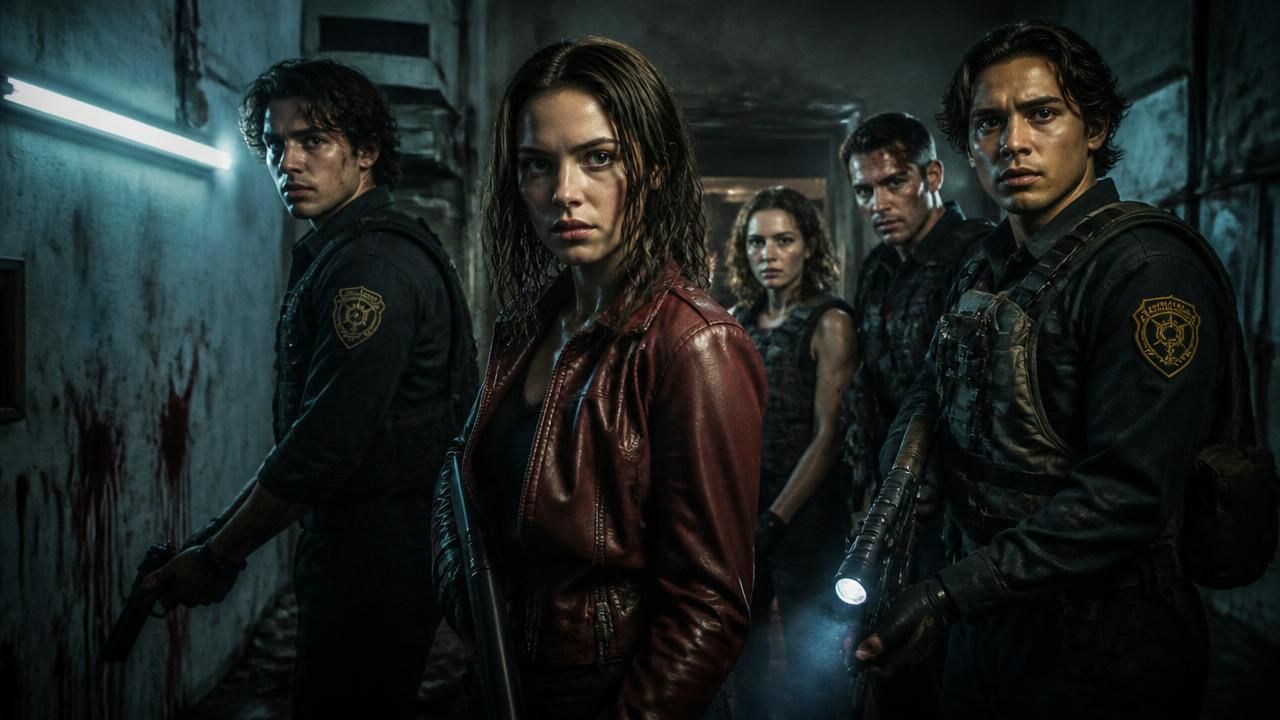
For roughly thirty years, the video game movie has been Hollywood's most dependable punchline — a genre defined by misfires, studio meddling and the sneering shorthand of the “video game movie curse.” That narrative took a direct hit this week, as a new adaptation of Resident Evil from writer-director Zach Cregger arrived to a 97% score on Rotten Tomatoes, a figure that critics and trade outlets are describing as unprecedented for a film based on a game.
TechSpot reported the 97% aggregate, calling it the strongest critical reception any major video game adaptation has received. Forbes framed the result even more broadly, noting that the reviews “set a decades-long record for video game adaptations” — a benchmark that stretches back to the genre's earliest studio experiments. The result has turned a horror franchise into an unlikely referendum on how Hollywood should treat interactive source material.
The Numbers Behind the Noise
The reception has been unusually uniform across outlets that rarely agree on anything. MSN declared that Resident Evil is “already the greatest video game movie of all time, and it's not even close,” while Yahoo's review credited Cregger — best known for Barbarian and the recent hit Weapons — with delivering what it called the best video-game movie of all time. Another MSN critic described it as “Zach Cregger's heart-stopping video game movie” and his best work yet, and a third MSN piece argued the film “officially cracked the code on how to make a video game movie.” Digital Trends struck a slightly more measured tone, calling it “one of the best video game movies ever made,” a reminder that even a 97% score invites hedging.
The Resident Evil Movie Understands Video Games Are Ridiculous, and That's Why It's Great.— IGN
That headline, from IGN, may be the most revealing piece of criticism published about the film so far. Where earlier adaptations strained to justify their source material — sanding down the silliness, inventing mythology, apologizing for the premise — Cregger's version reportedly leans into it. ComingSoon highlighted a “bold filming choice” that reviews singled out for praise, framing it as something a higher-profile, more self-serious video game vehicle — specifically the kind anchored by Dwayne Johnson — could never have attempted. Whatever the technique is, critics seem to agree it signals a filmmaker treating the material as cinema rather than as licensed product.
A Curse With a Long Memory
The record matters because the genre's history is so bleak. The 1993 Super Mario Bros. film is still studied as a cautionary tale of adaptation by committee; the 1995 Mortal Kombat, by contrast, remains beloved precisely because it resisted that impulse. Dread Central revisited Paul W.S. Anderson's Mortal Kombat this week, calling it a “flawless victory” and one of the greatest video game adaptations of all time — a useful reminder that the bar was set high, in its own way, three decades ago.
Between those poles lies an uneven modern renaissance. Detective Pikachu, the Sonic the Hedgehog films, The Last of Us, Fallout and Arcane have collectively persuaded studios that game IP can carry prestige as well as box office. Kotaku's running ranking of the 17 best video game movies and shows reflects how crowded — and how contested — that field has become. MSN published its own top-ten list alongside the Resident Evil coverage, a sign of how thoroughly the conversation has shifted from “can this work?” to “which one worked best?”
Why This One Landed
Several factors converge. Cregger's background in horror-comedy gives him fluency in tonal whiplash — the register Resident Evil has always traded in, with its zombie outbreaks, bioweapon conspiracies and gleefully absurd corporate villainy. The franchise is also unusually adaptation-friendly: it has already survived a long-running film series, reboots and a Netflix show, meaning audiences arrive with fewer fixed expectations than they would for, say, a beloved narrative epic.
Critics also appear to be responding to craft rather than fidelity. The praise circulating this week centers on staging, tension and formal risk — the sort of things that separate a film from a feature-length trailer. And there is a cynicism caveat worth flagging: aggregate scores can be inflated by low expectations. When a genre has spent decades producing misfires, merely competent can read as revelatory. The 97% is real; how much of it is relief is an open question.
What It Means for Hollywood
The immediate implication is that studios now have a template that does not depend on slavish recreation. A director with a distinct voice, given latitude rather than a franchise bible, can produce something critics treat as art-house-adjacent genre filmmaking. That argument has been made before — by Arcane's animators, by The Last of Us's showrunners — but a certified critical record gives it new weight in boardrooms.
The longer-term question is whether the record holds. Rotten Tomatoes scores decay as reviews accumulate, and the genre's next high-profile entries will inevitably be measured against this one. For now, though, the story is straightforward: the punchline got the last laugh, and an industry that spent thirty years apologizing for video games is suddenly taking notes on how to make one sing.