It was supposed to be the next logical step in A24's quiet conquest of internet-born horror. Instead, the studio's newly announced SCP Foundation film has turned into a case study in what happens when Hollywood reaches for a fan-built universe without knocking first.
According to Deadline, A24 has boarded an SCP Foundation feature from producers Spooky Pictures and Image Nation, with the studio set to distribute and a theatrical release penciled in for 2027. The project is being positioned as an extension of the V/H/S anthology franchise — trading under the title V/H/S: SCP — following A24's successful adaptation of The Backrooms, another creepypasta that began life on 4chan before becoming a mainstream property.
There is one problem. As several outlets reported within hours of the announcement, the SCP Foundation wiki — the sprawling, volunteer-run archive that actually houses the canon — says nobody from the production ever contacted it.
What Is the SCP Foundation?
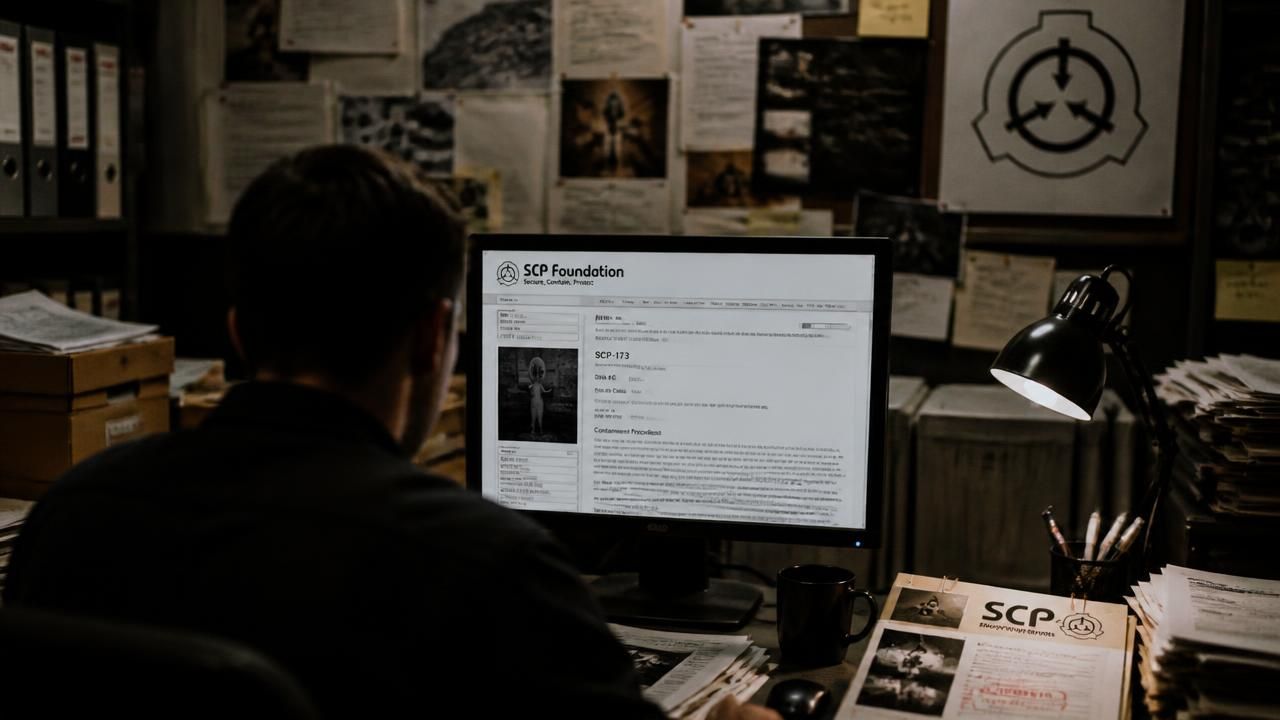
SCP stands for Special Containment Procedures. The fictional Foundation documents, captures and contains paranormal anomalies, and its stories are told primarily through wiki entries written to mimic the dry, bureaucratic language of government case files: containment protocols, redaction bars, clearance levels, incident logs. The format is the point. It is horror delivered as paperwork.
The universe began in 2007 on 4chan's /x/ paranormal board with SCP-173, "The Sculpture," and migrated to its own wiki, where thousands of contributors have since built one of the largest collaborative fiction projects on the internet. Alongside The Backrooms, it is one of the few pieces of web-native horror to achieve genuine cultural ubiquity — referenced in games, memes and merchandise far beyond the wiki itself.
The Dispute
Outlets including Fiction Horizon, MSN and Yahoo aggregated the same core revelation: the SCP Wiki's official channels stated that A24 never reached out about the film. The framing across fan-facing sites was blunt — a studio adapting a community-owned property without the community.
The Verge framed the story differently, casting it as a reputational gamble. "A24's reputation is on the line with the SCP Foundation movie," the outlet wrote, noting that backlash began almost immediately after the announcement and that the project "already appears to be on shaky ground." The Verge drew a direct line between this project and The Backrooms, arguing the studio is attempting to "cash in" on another internet horror craze — a strategy that works only as long as the internet doesn't turn on you.
“It looks like A24 is trying to cash in on yet another internet horror craze.” — The Verge
Coverage from Soap Central was more curious than combative, framing the film as the next chapter in "A24's next internet-born spooky mystery," while IMDb's listing page carried the same skeptical headline as everyone else: A24 is making an SCP Foundation movie — that's news to the SCP Foundation.
The Licensing Elephant
Beneath the public-relations damage sits a harder, legal question. SCP Wiki content is published under a Creative Commons Attribution-ShareAlike license, a framework that permits adaptation but obligates the adapter to credit contributors and license derivative works under compatible terms. That condition is difficult to satisfy in a commercial film developed outside the wiki's governance structures.
There is precedent for how seriously the community treats attribution. The wiki previously removed the image associated with SCP-173 — the founding entry — after a dispute over the original artwork's rights, demonstrating a willingness to police its own canon on principle rather than convenience.
None of this makes an SCP film impossible. It makes an unauthorized-feeling one legally exposed and culturally expensive.
Why A24, Why Now
Studios have spent the past several years mining the open web for pre-validated IP: properties with built-in audiences, established lore and zero acquisition cost. The Backrooms proved the model. V/H/S provides a low-risk anthology wrapper that lets a studio test a concept without committing to a full standalone franchise.
The SCP Foundation is arguably the richest untapped target in that category — an enormous, deeply documented mythos with a global fanbase and a visual language already embedded in internet culture.
But the same qualities that make it attractive also make it volatile. The wiki's contributors are not passive rights-holders; they are the audience, the archivists and, effectively, the quality control. Alienating them before a single frame is shot creates a promotional environment no marketing budget can easily fix.
What Happens Next
- Outreach: Whether A24, Spooky Pictures or Image Nation opens a formal dialogue with the SCP Wiki's administrators and licensing team.
- Attribution: How — or whether — the film credits the thousands of anonymous authors whose work forms its foundation.
- Fan response: Whether the backlash stays contained to social media or escalates into organized campaigns around the film's 2027 release.
- Precedent: Whether this becomes a template for community-IP adaptations, or a warning label.
For now, the studio has a release date and a title. The Foundation, as ever, has the files — and it has not yet signed off on the containment procedure.