Twenty years after the United Nations expanded the mandate of its peacekeeping force in southern Lebanon, the fragile ceasefire between Israel and Hezbollah is once again the subject of urgent diplomacy. As talks continue over a new UN resolution on the Lebanon war, international bodies are expressing deep concern over the Israel-Hezbollah conflict, according to reports from NPR and Wikinews.
The United Nations first deployed the United Nations Interim Force in Lebanon (UNIFIL) in 1978. Nearly three decades later, after a devastating 34-day war in 2006, the Security Council adopted Resolution 1701, expanding UNIFIL’s mission to monitor the cessation of hostilities, support the Lebanese Armed Forces, and facilitate humanitarian access. Hezbollah, the Iran-backed militant group created in 1982 to counter a second Israeli invasion, has since evolved into a heavily armed military force and a powerful political party within Lebanon.
The lines that define southern Lebanon
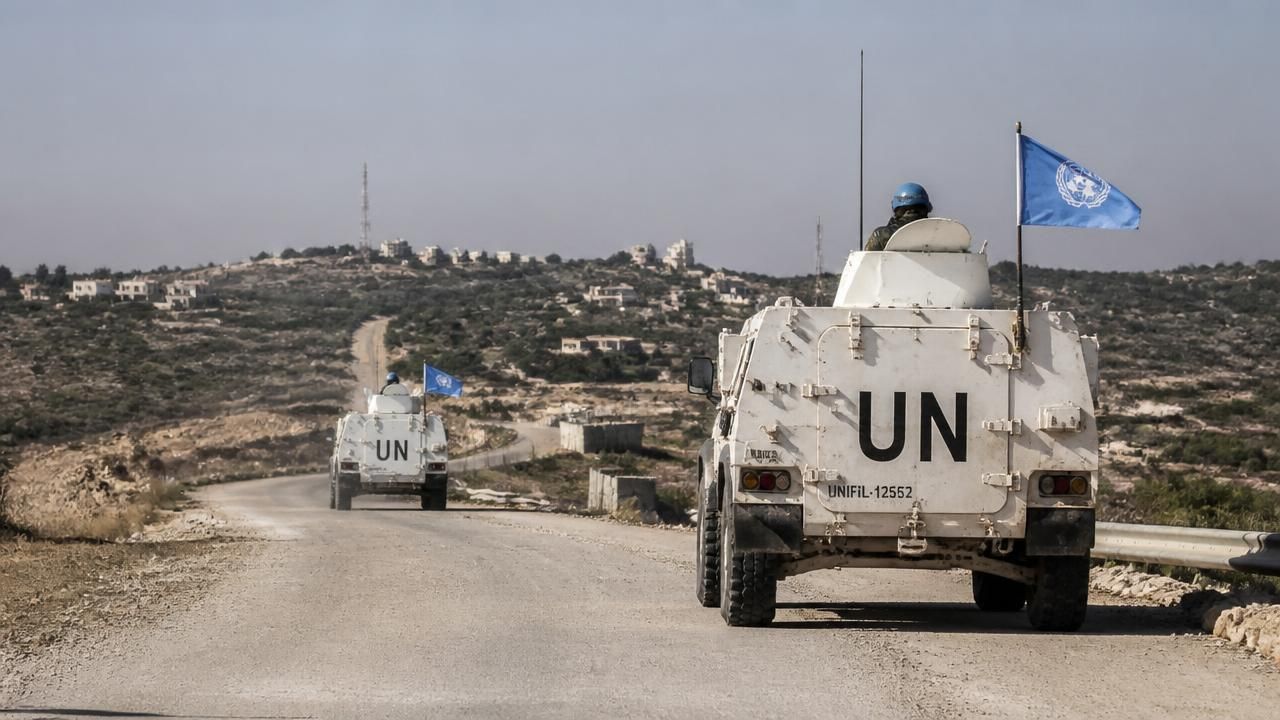
NPR’s reporting focuses on what it calls “the new lines of southern Lebanon.” These are not merely cartographic boundaries. They are fences, surveillance towers, and informal checkpoints that separate Israeli communities from Hezbollah’s strongholds. UNIFIL patrols these areas, but its ability to enforce the ceasefire has long been questioned by both sides.
“The U.N. expanded the United Nations Interim Force in Lebanon's mandate 20 years ago to include monitoring adherence to a ceasefire in fighting between Israel and Lebanon's Iran-backed Hezbollah — the militant group created in 1982 to counter a second Israeli invasion.” — NPR
That expansion transformed UNIFIL from a traditional peacekeeping force into a verification mission. Its mandate includes monitoring the Blue Line, the de facto border between Israel and Lebanon, and ensuring that no armed groups operate south of the Litani River. In practice, however, Hezbollah’s presence and Israel’s aerial surveillance have made the Blue Line a zone of constant tension.
Diplomatic talks and international concern
Meanwhile, Wikinews reports that talks continue over a UN resolution on the Lebanon war. The negotiations, involving Security Council members and regional stakeholders, are aimed at consolidating the ceasefire and preventing a return to full-scale conflict. Separately, Wikinews reports that international bodies have expressed concern over the Israel-Hezbollah conflict, reflecting fears that a single incident could ignite a wider war.
The diplomatic track has been complicated by long-standing disputes: Hezbollah’s disarmament, the status of the Shebaa Farms, the return of prisoners, and the scope of UNIFIL’s rules of engagement. Each of these issues has frustrated previous rounds of talks. The current discussions are no exception, with diplomats cautioning that progress remains slow and fragile.
Differing frames
The sources reveal two distinct ways of framing the story. NPR’s coverage is grounded in southern Lebanon, emphasizing the daily reality of peacekeepers and civilians living along the Blue Line. It highlights the physical infrastructure of separation and the human cost of prolonged conflict. Wikinews, by contrast, focuses on the diplomatic arena, where resolutions are drafted and international bodies issue statements.
Together, the two perspectives show that the Lebanon question is both a local security dilemma and a global diplomatic puzzle. What happens on the ground—a patrol, a protest, a rocket—can quickly become a matter for the Security Council. Conversely, decisions made in New York and Geneva filter down to the villages of southern Lebanon, where they are felt in the form of checkpoints, aid convoys, and the ever-present possibility of escalation.
Why it matters
Twenty years after Resolution 1701, UNIFIL remains a central actor in the region. The force has been criticized by both sides. Israel argues that UNIFIL has failed to prevent Hezbollah’s military buildup, while Hezbollah and its allies accuse the peacekeepers of colluding with Israel. These accusations have made UNIFIL’s mandate renewal an annual political battle.
International bodies—including the United Nations, the European Union, and humanitarian organizations—have warned that the conflict’s spillover effects could destabilize the broader Middle East. Lebanon is already grappling with a catastrophic economic crisis, political paralysis, and the aftermath of the 2020 Beirut port explosion. A new war would overwhelm the country’s fragile institutions and displace hundreds of thousands of civilians.
Analysts note that the current diplomatic talks are taking place against a backdrop of heightened regional tensions. Iran’s support for Hezbollah, Israel’s security concerns, and the broader competition for influence in the Levant all shape the calculus. A new UN resolution, if it emerges, would need to address these realities without repeating the ambiguities of Resolution 1701.
A separate tremor
In unrelated news, Wikinews reported that a 6.4 magnitude earthquake struck Taiwan. The quake caused shaking across the island, though details on damage and casualties were not immediately available in the source. The event serves as a reminder that even as diplomats focus on Lebanon, other crises—natural and man-made—continue to demand global attention.
For now, UNIFIL’s blue helmets remain in place, monitoring a ceasefire that has held—uneasily—for two decades. Whether the new lines of southern Lebanon will harden into permanent borders or remain temporary frontlines depends on the outcome of talks that are still very much in progress.