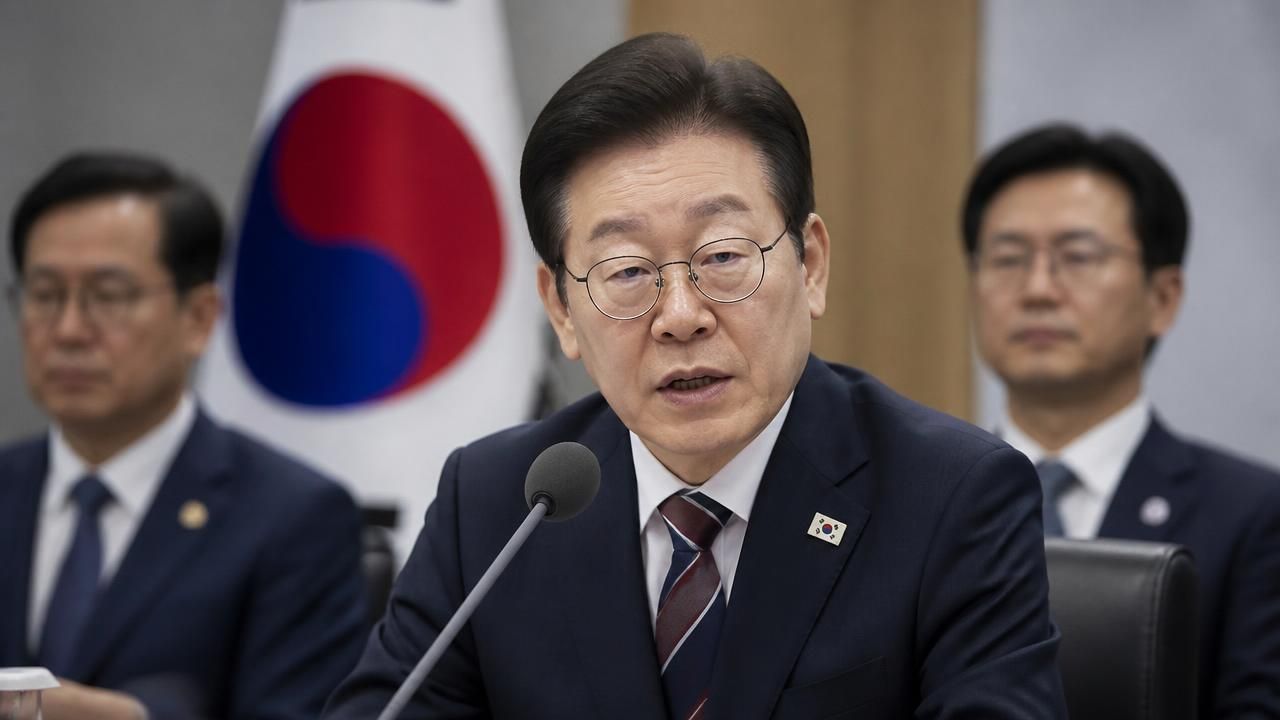
SEOUL — South Korea’s nominee for justice minister withdrew from consideration before a confirmation hearing could be held, becoming the second ministerial pick to fall in a week and handing President Lee Jae-myung a fresh setback as he tries to staff a government only months old.
The withdrawal was reported by Bloomberg Markets and picked up in Korean coverage aggregated by MSN, which framed the episode bluntly as “S Korea’s justice nominee withdraws in Lee’s second cabinet setback.” A separate MSN item recorded that a women’s party had publicly demanded the nominee’s withdrawal before the decision was announced — a reminder that in South Korean politics, a nomination can be killed as much by civil-society pressure and media scrutiny as by a formal parliamentary vote.
A vacancy never filled
Under South Korea’s system, cabinet ministers do not require the National Assembly’s binding approval the way a prime minister does. Instead, nominees face confirmation hearings that are formally advisory but politically decisive: a nominee who stumbles in front of lawmakers, or who is engulfed by disclosures before the hearing, is expected to step aside to spare the president the cost of defending them.
That is the path this nomination followed. The pick never reached a vote, and the government is now searching for a third candidate to run the Ministry of Justice — the department that oversees prosecutors, prisons and the criminal justice system, and one of the most politically charged portfolios in the country.
The Women’s Party and the politics of gender
The clearest of the four source threads is the demand from a women’s party that the nominee quit. South Korea’s small feminist parties, including the Women’s Party, have little legislative power but outsized influence in shaping the news cycle, particularly when a nomination turns on questions of gender policy, past remarks or conduct allegations.
The party’s public call effectively set the terms of debate: rather than waiting for the hearing to expose problems, it forced the presidential office to answer questions about the nominee on its own timetable.
The nomination, the party argued in its public statement, could not be allowed to proceed — a position that within days became the outcome.
That sequence matters. In Seoul’s political culture, an organized civic campaign that lands before the hearing stage often proves more damaging than opposition questioning inside the chamber, because it denies the nominee the chance to explain himself on his own terms.
A second setback in a week
What gives the episode its weight is its repetitiveness. Bloomberg noted that this was the second ministerial nominee to pull out in a single week, following a cabinet reshuffle — a pattern that suggests the problem is systemic rather than personal.
Personnel vetting failures carry real costs for a new administration:
- Policy delay. Vacant ministries cannot issue regulations, sign off on enforcement actions or represent South Korea in bilateral negotiations.
- Political oxygen. Every failed nomination consumes days of presidential attention and forces the Blue House into defensive messaging.
- Opposition ammunition. The conservative People Power Party can point to each withdrawal as evidence of an unprepared government.
- Market signal. Investors watch governance capacity closely; a backlog of unfilled senior posts feeds the perception of a policy-making apparatus running behind schedule.
For markets, the justice portfolio is not abstract. The ministry sits at the center of the administration’s plans to rebalance the prosecutor’s office, and it is adjacent to the commercial and capital-markets agenda that foreign investors follow — corporate governance reform, the treatment of minority shareholders, and the enforcement regime that underpins both.
Assembly showdown looms
The withdrawals are colliding with a broader parliamentary confrontation. Korea Herald reported that the National Assembly is gearing up to grill the Lee government, with economy, housing and foreign policy in focus. Those three headings describe the terrain on which the administration will be judged:
- Economy: sluggish domestic demand, export exposure to United States tariff policy, and pressure to deliver on growth pledges.
- Housing: supply shortages and price run-ups in greater Seoul that have become the single most reliable driver of voter anger.
- Foreign policy: a security and trade posture being recalibrated between Washington, Beijing and Tokyo.
Each of those hearings will now take place against the backdrop of an unfilled justice ministry and a president who has lost two nominees in seven days.
How the outlets frame it
The three surviving source threads tell subtly different stories. Bloomberg Markets casts the withdrawal as a governance and reshuffle story — a mechanical failure in the machinery of presidential appointments, with implications for how reliably the administration can execute policy. MSN’s two headlines split the frame: one centers the Women’s Party and civil-society pressure, the other centers Lee, counting cabinet setbacks as a political scorecard. Korea Herald widens the lens to the institution that will soon hold the government to account.
Read together, the picture is of a presidency that won power with a mandate for competence and is now being tested on exactly that — not by a single scandal, but by the cumulative cost of nominations that cannot survive contact with scrutiny.
The immediate question is who Lee names next. The larger one is whether the pattern breaks before the confirmation hearings begin in earnest.