A federal judge on Thursday declined to halt the Department of Homeland Security's demands that states screen their voter rolls, handing the Trump administration a procedural defeat while leaving the underlying legal fight over alleged noncitizen voting unresolved. Judge James E. Boasberg ruled that the states and Democratic plaintiffs challenging the effort had largely succeeded in rebuffing the administration's push to disqualify voters, and that the plaintiffs had not demonstrated they suffered direct, immediate harm from the government's requests.
The decision landed in a cluster of related disputes over a Department of Justice lawsuit that sought to force California election officials to set aside ballots cast by roughly 20,000 voters the government claims are noncitizens. Boasberg's order declines to freeze the administration's information demands, but it also does not give the government what it most wanted: a court-sanctioned mechanism for pulling ballots from the count.
What the Ruling Actually Does
According to The New York Times, Boasberg found that the states had "largely succeeded in rebuffing the Trump administration's efforts to disqualify voters," and that the Democratic plaintiffs had not shown they were directly affected by the federal demands. In practice, that means the litigation continues, but without the emergency relief the plaintiffs sought.
Coverage of the ruling diverged sharply in emphasis. The New York Times framed the outcome as a measured win for the states, noting the judge's conclusion that the administration's disqualification push had been effectively stalled. Politico, by contrast, led with the California-specific impact, describing the order as a judge blocking the Trump administration from forcing California to set aside ballots. Both readings are accurate; the difference is one of framing — a national story about federalism and election administration versus a state-level story about California's exposure.
The Evidence Problem
Perhaps the most consequential thread in the coverage concerns the government's underlying evidence. One report summarized the ruling as a judge blocking the California ballot challenge while "question[ing] evidence against 20,000 voters." That skepticism matters: the DOJ's theory rests on matching voter files against citizenship databases, a methodology that election administrators and civil rights lawyers have long argued produces false positives at scale.
The practical stakes were illustrated in San Diego County, where local officials rebuffed a DOJ request to set aside alleged noncitizen ballots. County election offices are the front line in this dispute — they hold the ballots, run the certification process, and must decide in real time whether a federal letter constitutes a lawful directive or an informal request they can decline.
The states had largely succeeded in rebuffing the Trump administration's efforts to disqualify voters, and the Democratic plaintiffs hadn't suffered direct impacts.
Why the Administration Is Pushing
The Trump administration has argued that federal law requires ensuring only citizens vote, and that DHS and DOJ have an obligation to pursue credible allegations of noncitizen registration. Critics counter that the effort is a solution in search of a problem, and that the timing — ahead of the 2026 midterms — is designed to sow doubt about election results rather than to correct them.
The legal architecture is unusually tangled. States run elections; the federal government has limited, largely statutory authority over registration and list maintenance. When DHS sends demands to state election offices, it tests the boundary between federal information-sharing and de facto federal control of the ballot. Judges have so far treated those demands cautiously, neither endorsing them nor enjoining them outright.
The Broader Election Context
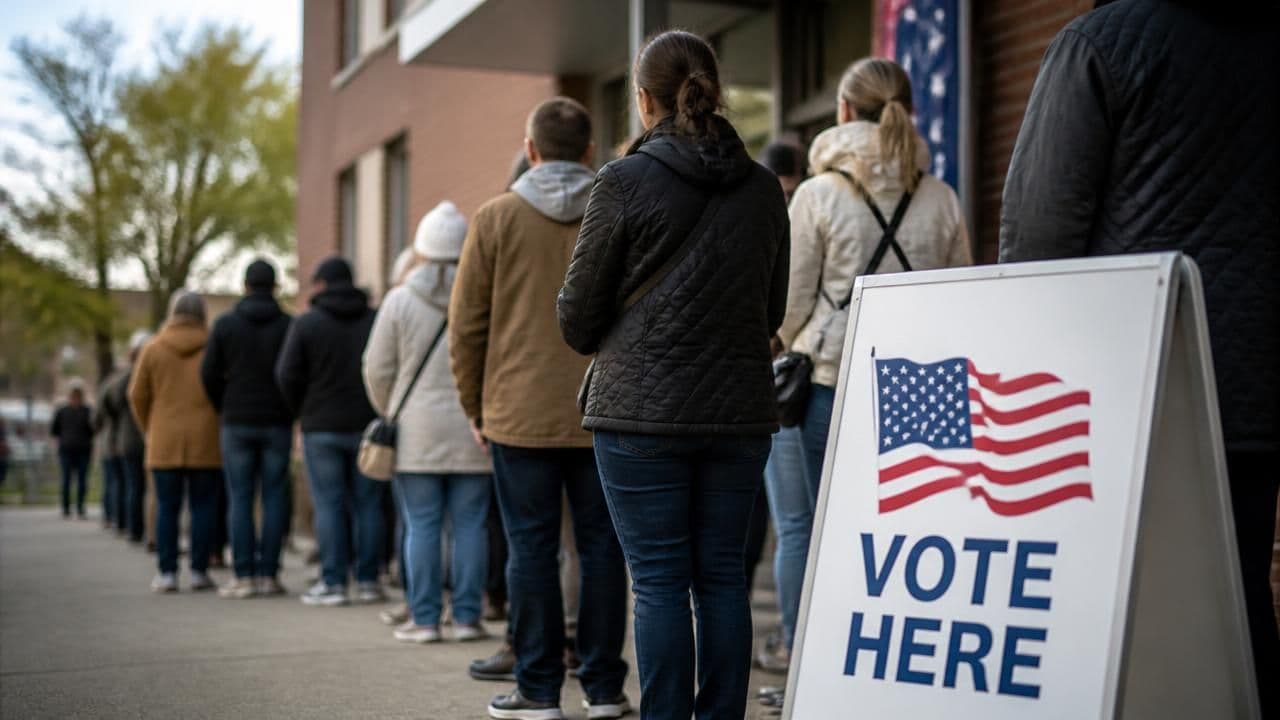
The ruling arrives as the 2026 cycle moves into its early-voting phase, with tracking efforts already monitoring turnout patterns in midterm primaries and special elections. Those same data pipelines — voter files, registration lists, turnout histories — are the raw material at the center of the litigation, which is part of why election administrators have been unusually vocal about the need for clear rules before ballots are cast in volume.
The dispute also echoes down to the most local level. Ballots in jurisdictions across the country carry not only candidate contests but bond measures and school funding questions — in Mukilteo, Washington, voters are weighing a $400 million bond that would cost the typical homeowner about $130 a year. Every such measure depends on the integrity and finality of the count; litigation that leaves ballots in limbo can delay certification for entire communities, not just the voters named in a federal complaint.
Meanwhile, the atmosphere around local election administration remains charged. In Portland, the police bureau quietly removed a press release critical of a city councilor after the state declined to investigate, a small but telling illustration of how allegations aired during election season can outrun the institutions asked to verify them.
What Happens Next
- California: State and county officials, including San Diego County, have declined to set aside ballots, meaning the DOJ's request has no enforcement mechanism unless a court orders one.
- The plaintiffs: Having lost the emergency request, Democratic plaintiffs must now litigate on the merits, where the sufficiency of the citizenship-matching evidence will be central.
- The administration: DHS retains its information demands, but Boasberg's skepticism about demonstrated harm cuts both ways — it limits the plaintiffs' relief and complicates any federal claim of urgent necessity.
- Voters: For now, ballots cast in California and elsewhere will be counted under existing state procedures.
The through-line across the coverage is a judiciary unwilling to referee an election-administration fight on an emergency posture. Boasberg's ruling does not settle whether the administration can compel states to hand over voter data or set aside ballots; it signals instead that courts want a fuller factual record — including harder evidence than database matches — before they intervene in how America counts its votes.