The United States came within a decision of intercepting and boarding a Chinese ship in the Middle East on the strength of an intelligence report that was “entirely false” — and that had been assembled with the help of an artificial intelligence chatbot, according to a CNN investigation first surfaced by Ars Technica and amplified across a cluster of aggregator outlets.
The episode, which sources described as one of the closest inadvertent brushes with great-power confrontation in recent memory, has reignited a debate that has been building quietly inside defense ministries for years: what happens when large language models, prone to confident fabrication, are folded into the machinery of national security?
What CNN reported
According to CNN, which cited “four sources familiar with the episode,” the erroneous intelligence assessment was submitted by an analyst at US Special Operations Command. The report asserted that a Chinese vessel moving through the Middle East was carrying components destined for a nuclear weapons program — a claim that, if true, would have represented a direct challenge to US nonproliferation policy and a potential violation of United Nations sanctions.
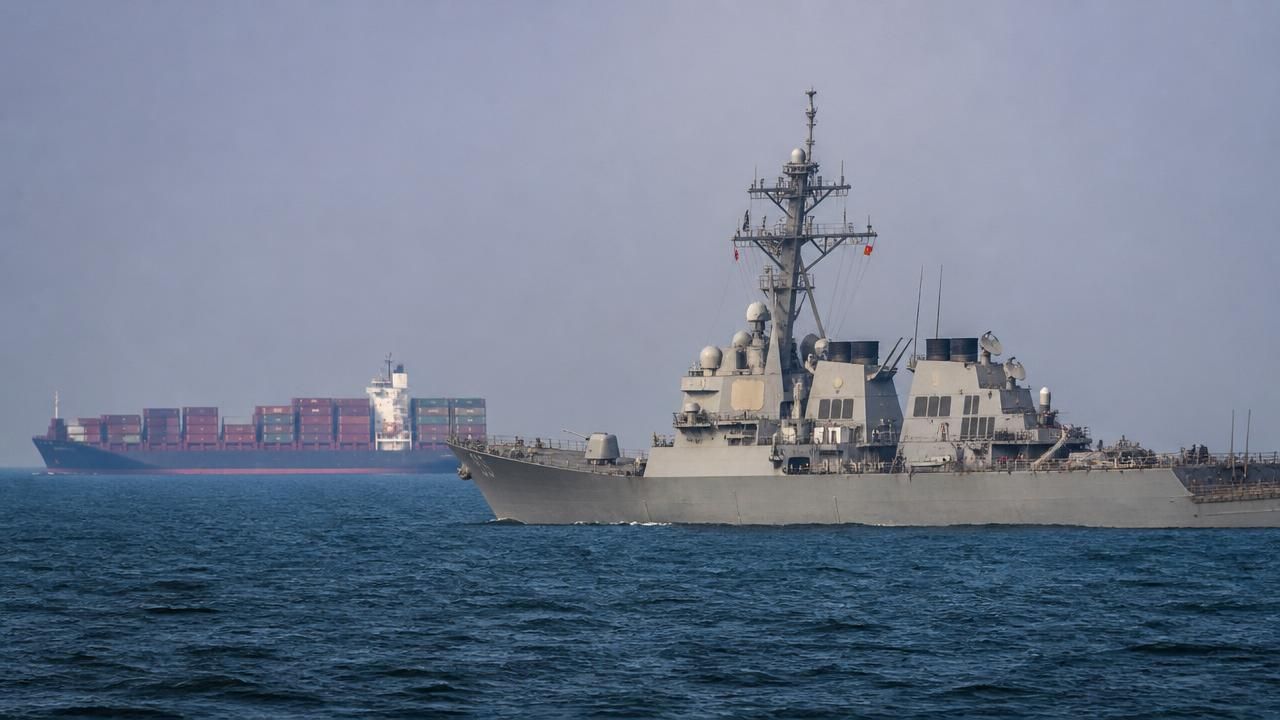
On the basis of that assessment, the US military began preparing to intercept and board the ship. Forces were staged with air support, a posture that would have put American personnel in direct physical contact with a Chinese-flagged vessel in contested waters.
The operation was halted only when officials determined that a chatbot used during the drafting of the report had “inaccurately identified the material the ship was carrying.” In other words, the cargo at the center of the alarm did not exist as described.
“It almost started a war,” one source told CNN.
The account rests entirely on anonymous sources and has not been confirmed by the US military, Special Operations Command, or the Department of Defense. The specific AI system involved, the location of the ship, and the exact timeline remain undisclosed.
How a hallucination became an operational plan
The failure is a textbook illustration of the phenomenon researchers call hallucination: a generative model producing fluent, plausible, and entirely invented content. Unlike a database query that returns an error when it finds nothing, a language model returns an answer with the same tone of certainty whether it is right or wrong.
What makes the episode more troubling than a single bad output is the apparent chain of human review that failed to catch it. Intelligence products typically pass through multiple layers of analysis and vetting before they inform military action. That an AI-generated falsehood survived long enough to trigger force-posturing suggests either that the tool’s output was treated as a finished product rather than a drafting aid, or that reviewers lacked the means to audit the model’s claims.
Defense analysts have warned for years about “automation bias” — the human tendency to defer to machine outputs, particularly when they arrive in authoritative formats and arrive faster than a human analyst could produce comparable work.
Framing the story: a near-war, or a symptom?
Different outlets approached the story with markedly different emphasis. Ars Technica foregrounded the technology failure, positioning the episode as a cautionary tale about hallucination in high-stakes settings and noting the anonymous source’s stark verdict that it “almost started a war.”
Other outlets framed the same events through a geopolitical lens, situating the near-miss in the context of an ongoing Iran conflict — a setting in which US naval assets were already operating at heightened readiness and Chinese vessels in the region would have been viewed with particular suspicion. In that framing, the AI error did not create a crisis so much as it nearly detonated one that was already primed.
That distinction matters. A hallucination in peacetime is a bureaucratic embarrassment. The same hallucination during a shooting war, with forces already on edge and decision windows compressed to minutes, is a mechanism for escalation that no human may have time to intercept.
The historical rhyme
The parallels to Cold War false alarms are difficult to ignore. In 1983, Soviet early-warning systems reported an incoming US missile launch; Lt. Col. Stanislav Petrov, against protocol and on instinct, judged it a malfunction and declined to retaliate. Later that year, NATO’s Able Archer exercise was misread in Moscow as preparation for a genuine first strike. In 1995, a Norwegian sounding rocket briefly put Russia’s nuclear command on alert.
Each of those episodes involved a machine, or a human reading a machine, asserting something false with high confidence. The difference now is that the machines generate the assertions themselves, and they do so in natural language that is indistinguishable from a human analyst’s memo.
The push for nuclear-style guardrails
Against that backdrop, the fifth strand in this story is a quiet but significant diplomatic development: US and Chinese security experts have proposed applying nuclear-style safeguards to AI risks. The model draws on decades of Cold War arms-control architecture — hotlines between capitals, incidents-at-sea agreements, mutual notification regimes, and shared norms against first use — and adapts them to a technology that moves faster than any treaty process.
Proponents argue that AI risk is structurally similar to nuclear risk: both involve catastrophic tail outcomes, extreme time pressure, and mutual misperception. Both are also areas where bilateral dialogue has historically produced concrete de-escalation mechanisms even when broader relations were hostile.
Skeptics counter that AI is diffuse, commercially driven, and advancing at a pace that makes verification far harder than counting warheads. A chatbot hallucination cannot be detected by satellite.
Open questions
- Which AI system was used, and whether it was a general-purpose commercial model or a defense-specific tool.
- Whether the analyst or the reviewing chain will face any accountability, and whether the incident has prompted changes to intelligence vetting procedures.
- Whether the episode was disclosed to Beijing through military-to-military channels.
- Whether Congress, which has been debating AI governance for defense applications, will treat the near-miss as a legislative trigger.
What is clear is that the question is no longer hypothetical. A machine-generated falsehood about a ship’s cargo traveled far enough through the US national security apparatus to bring armed forces to the edge of a boarding operation against a nuclear-armed rival. The only thing that stopped it was a human discovering, in time, that the computer had made something up.