President Donald Trump said the United States and Denmark have reached an agreement that would expand the American military footprint in Greenland while leaving the island in Danish hands — a deal the president cast as a historic victory after months of open threats to take the territory by force from a NATO ally.
The announcement, reported by NPR News and confirmed in headlines carried across MSN's network, marks an abrupt reversal in a standoff that had unnerved Copenhagen, alarmed European capitals and strained the Western alliance. The New York Times reported the development bluntly under the headline "U.S. Has Reached Security Deal on Greenland, Trump Says," a measured framing that stood in contrast to the more triumphal language circulating elsewhere.
As the president described it, the agreement would give the United States "permanent" military rights and a "large Military presence" on the island — without transferring sovereignty over Greenland to Washington.
From threats to a deal
For months, Trump had publicly floated acquiring Greenland outright, reviving an idea he first raised during his first term in 2019, when he suggested the United States might simply buy the island. Danish Prime Minister Mette Frederiksen rejected that proposal as absurd, and Greenlandic leaders in Nuuk insisted the territory was not for sale. This time, the rhetoric escalated further: NPR reported that the president had repeatedly threatened to take the island by force, a posture that put Washington on a collision course with a founding member of NATO.
The new agreement appears to resolve that impasse by trading annexation for access. Rather than changing the island's sovereignty, the deal would deepen and formalize the American military role there — an outcome that lets both sides claim something.
What the agreement would do
Details remain incomplete. Neither the White House nor the Danish government has released the full text of the arrangement, and officials in Copenhagen and Nuuk have not yet offered detailed public statements. Based on the president's description and the headlines that followed, the core elements are:
- Sovereignty unchanged. Greenland remains under Danish control, preserving the status quo that Copenhagen and Greenland's home-rule government have defended.
- A larger US military footprint. Washington would build what Trump called a "large Military presence," expanding facilities and personnel beyond current levels.
- "Permanent" rights. The president characterized the American military rights as enduring, suggesting a long-term or open-ended arrangement rather than a fixed-term lease.
Why Greenland matters
The island's strategic value has only grown. Greenland sits astride the GIUK gap — the maritime corridor between Greenland, Iceland and the United Kingdom — through which Russian submarines and surface fleets must pass to reach the open Atlantic. Its airspace is a linchpin of North American aerospace defense.
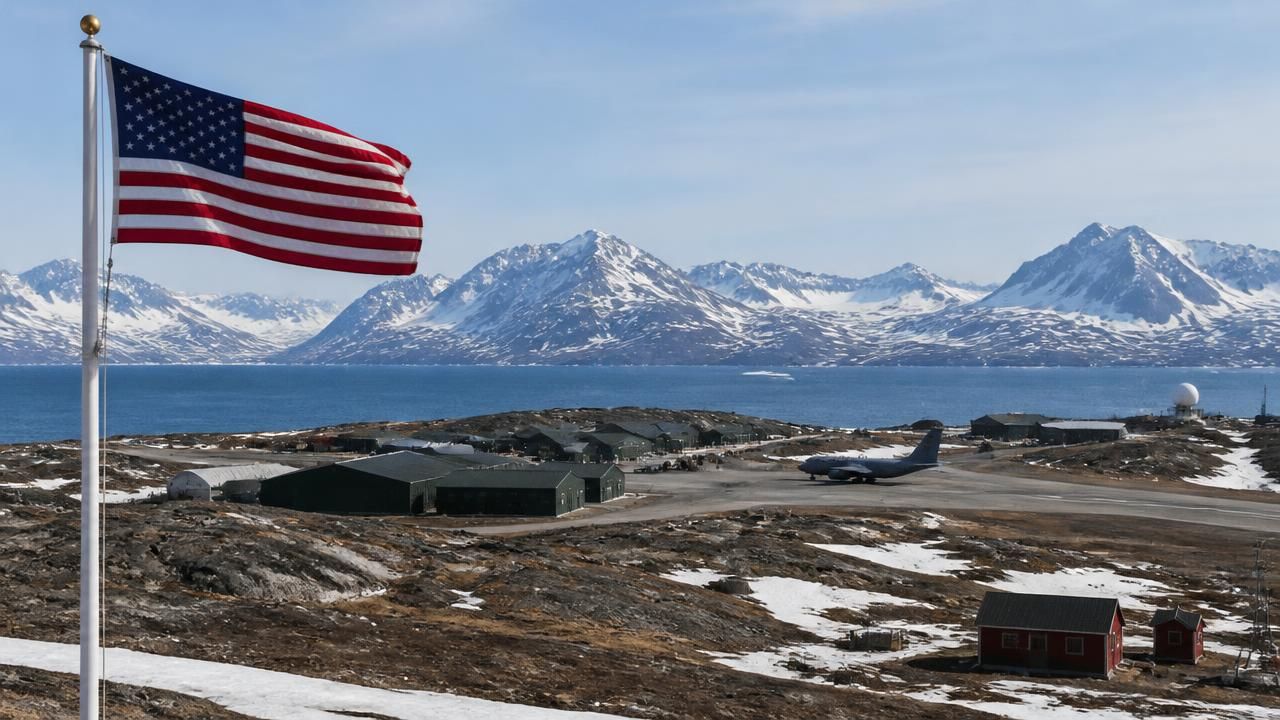
The United States already operates Pituffik Space Base, formerly Thule Air Base, in the island's northwest. Built under a 1951 defense agreement between Washington and Copenhagen, the installation hosts missile-warning radar and space-surveillance missions. Successive American administrations have quietly expanded its capabilities, but the new deal would go considerably further.
Greenland also holds some of the world's largest untapped deposits of rare earth elements, uranium, graphite and lithium — minerals critical to batteries, semiconductors and defense systems. Melting ice is simultaneously opening Arctic shipping routes that could reshape global trade, drawing heightened interest from China and Russia as well.
How the story was framed
The coverage reflected sharply different emphases. NPR foregrounded the diplomatic context, noting the deal came "after months of threatening to take the island by force from the NATO ally" — a framing that underlined how extraordinary the dispute had become. The New York Times led with attribution, emphasizing that the agreement was Trump's characterization and leaving room for confirmation. Headlines syndicated by MSN leaned harder into the president's own messaging, describing a "historic deal" and "permanent" US military rights.
That divergence matters. Aggregator headlines amplified the victory framing while offering little detail on enforcement, duration or the legal instruments involved. The practical question — whether "permanent" means a treaty, an executive agreement or an expanded lease — remains unanswered in the public record.
Reaction and open questions
Denmark's government has so far avoided the kind of forceful rejection it issued in 2019. For Copenhagen, the arrangement may be the least-bad outcome: it preserves formal sovereignty while conceding expanded American presence it could not realistically block. For Greenland's 56,000 residents, who have been steadily advancing toward eventual independence, the deal raises fresh questions about who speaks for the island and whether its government was meaningfully consulted.
NATO allies will be watching closely. A deal that resolves a rupture within the alliance is welcome in Brussels, but the precedent — a superpower leveraging coercion to extract military rights from a smaller partner — is unlikely to reassure European capitals already debating how much they can rely on American security guarantees.
What comes next
The immediate test is verification: whether Danish and Greenlandic officials confirm the terms as Trump described them, and whether the agreement requires parliamentary approval in Copenhagen or ratification in Washington. Until those documents surface, the deal remains a presidential announcement rather than a settled fact — a distinction the more cautious headlines implicitly preserved.
What is clear is that the Arctic has become a front line again. The question now is not whether the United States will deepen its presence in Greenland, but how far, for how long, and at what cost to the alliances that made such access possible in the first place.