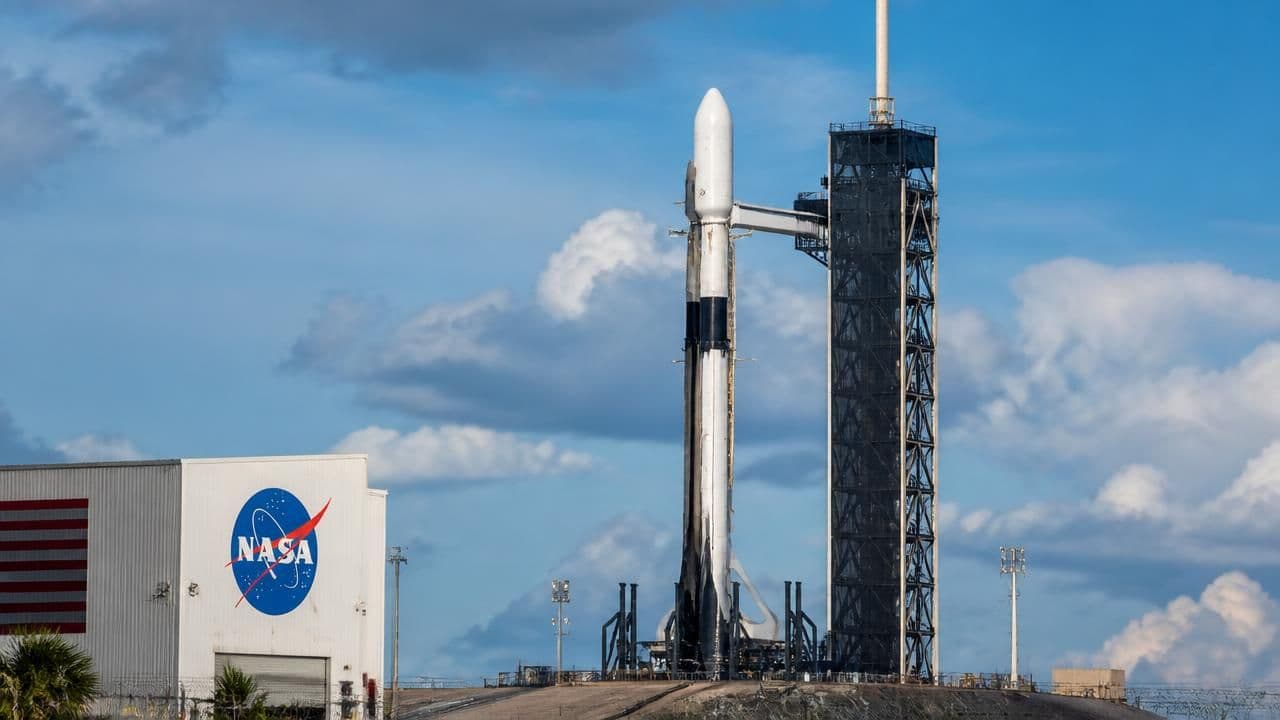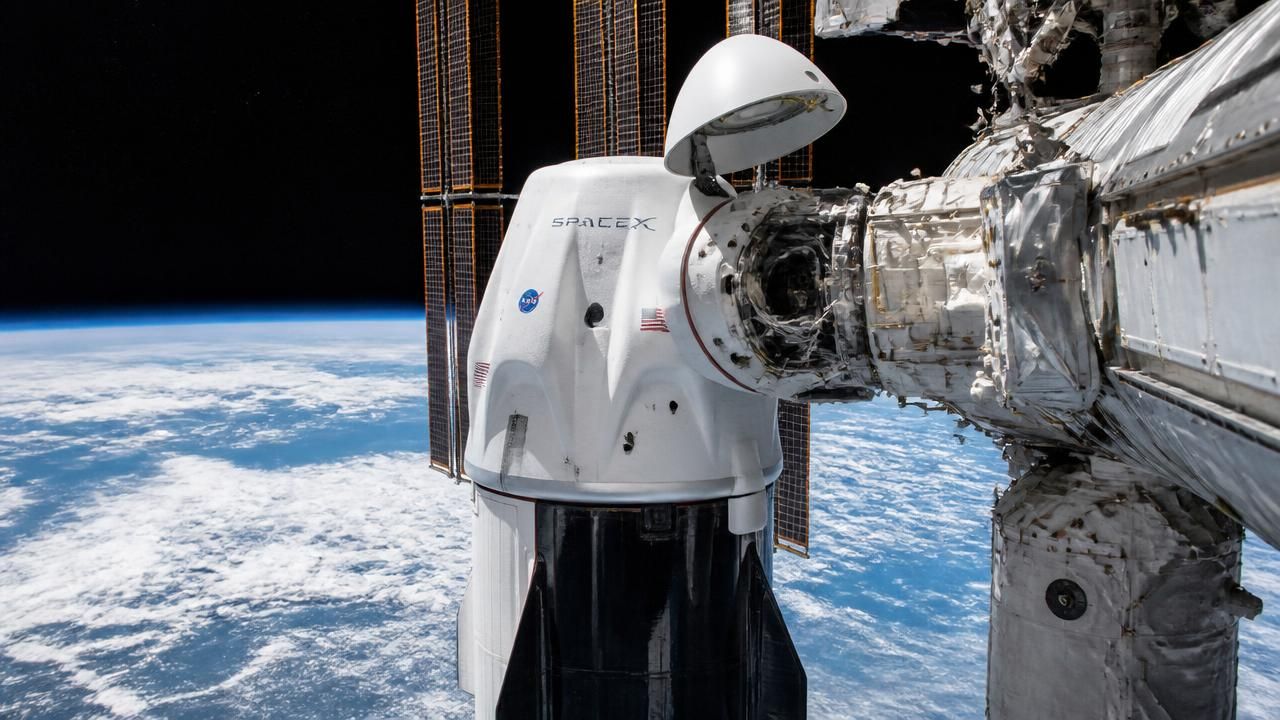
NASA has awarded SpaceX three additional crewed missions to the International Space Station, modifying the company's Commercial Crew Transportation Capability (CCtCap) contract in a firm fixed-price deal worth $946 million — an agreement that extends SpaceX's grip on the agency's crewed access to orbit through the end of the decade.
The modification, which the agency announced after issuing a notice of intent in May to purchase more flights, assigns SpaceX the Crew-15, Crew-16 and Crew-17 missions. It brings the company's total CCtCap task order count to 17 flights and raises the overall value of its contract to $5.92 billion. The period of performance runs through 2030, the year NASA currently plans to retire the aging orbital laboratory.
What the Contract Covers
The $946 million figure is not simply the price of three rocket launches. According to NASA, the award encompasses ground processing, launch, in-orbit operations, and return and recovery operations for each mission. It also includes cargo transportation on each flight and a "lifeboat" capability — the guarantee that a docked Dragon spacecraft can serve as an emergency escape vehicle for the station's crew at all times.
"This is a firm fixed-price, indefinite-delivery/indefinite-quantity contract modification for the Crew-15, Crew-16, and Crew-17," NASA said in its announcement. "The amount includes ground, launch, in-orbit, and return and recovery operations, cargo transportation for each mission, and a lifeboat capability while docked to the International Space Station."
The structure of the award is significant. Fixed-price contracting shifts cost overruns onto the contractor — a deliberate departure from the cost-plus model NASA historically used for human spaceflight, and one that has become a defining feature of the agency's commercial partnerships. The indefinite-delivery/indefinite-quantity framework lets NASA order missions as needed without renegotiating the underlying terms each time.
Building on a Decade of Commercial Crew
NASA awarded the first CCtCap contracts in 2014 to Boeing and SpaceX, betting that a public-private partnership model could restore American crewed launch capability after the retirement of the Space Shuttle in 2011 — a gap during which the United States paid Russia for seats on Soyuz vehicles.
Boeing received the larger initial award, valued at roughly $4.2 billion, while SpaceX received about $2.6 billion. More than a decade later, the trajectories of the two providers have diverged sharply. SpaceX's Crew Dragon began operational flights in 2020 and has flown crew rotation missions on a near-continuous cadence since, with Crew-10 launching from Kennedy Space Center in March 2025. Boeing's CST-100 Starliner, by contrast, has yet to complete a successful operational crew rotation.
The Starliner Shadow
The contract modification cannot be understood without the Starliner context. In June 2024, Starliner carried NASA astronauts Butch Wilmore and Suni Williams to the station on its Crew Flight Test. Propulsion anomalies discovered during the approach led NASA to conclude the vehicle was not safe enough to bring its crew home, and the agency decided Starliner would return uncrewed. Wilmore and Williams remained aboard the station for months, eventually returning aboard a SpaceX Dragon — a stark illustration of why NASA insists on "two unique commercial crew industry partners."
That redundancy rationale appears verbatim in NASA's announcement, even as the practical reality is that one partner carries nearly all the operational load. Awards like this one keep the pipeline full; they also underscore how much of the agency's human spaceflight schedule now depends on a single company.
How Different Outlets Framed the Story
The same set of facts lands very differently depending on the outlet. NASA's own release framed the award institutionally — as a routine and necessary step "to continue regular crew transportation to the International Space Station" and to "maintain access" with two partners. The emphasis fell on mission continuity and the mechanics of procurement.
Financial coverage, by contrast, led with the numbers. Headlines emphasized the $946 million modification and the expanded $5.92 billion deal, treating the award as a revenue event and a marker of SpaceX's commercial dominance in a market where its principal competitor has yet to reach operational status.
Meanwhile, coverage from Wikinews has continued to foreground the astronaut-return narrative — the rescue-adjacent story of stranded crew members and the Dragon vehicles that brought them home. That framing reflects a broader public fascination with the Starliner saga, in which SpaceX appears as the reliable fallback rather than simply a contractor billing the government for flights.
Taken together, the three framings describe the same underlying shift: NASA has, for now, effectively settled on SpaceX as its dependable crew transport while it waits for a genuine second option to mature.
What Comes Next
The modification includes language noting it "does not preclude NASA from seeking future contract modifications for additional transportation services, as needed" — a hedge that leaves room for either more SpaceX flights or, eventually, a rebalanced portfolio.
Looming over all of it is 2030. NASA has awarded SpaceX a separate contract to build the deorbit vehicle that will steer the station to a controlled reentry over the ocean at the end of its life, and the agency is simultaneously seeding commercial space stations to succeed it. Whether Crew-17 is among the final Dragon flights to the ISS — or merely another waypoint in a longer commercial era — depends on how quickly those successor stations come online and whether Boeing's Starliner can finally join the rotation.
For now, the arithmetic is simple: three more missions, $946 million, and a contract total approaching $6 billion for a partnership that began as an experiment and has become the backbone of American crewed spaceflight.