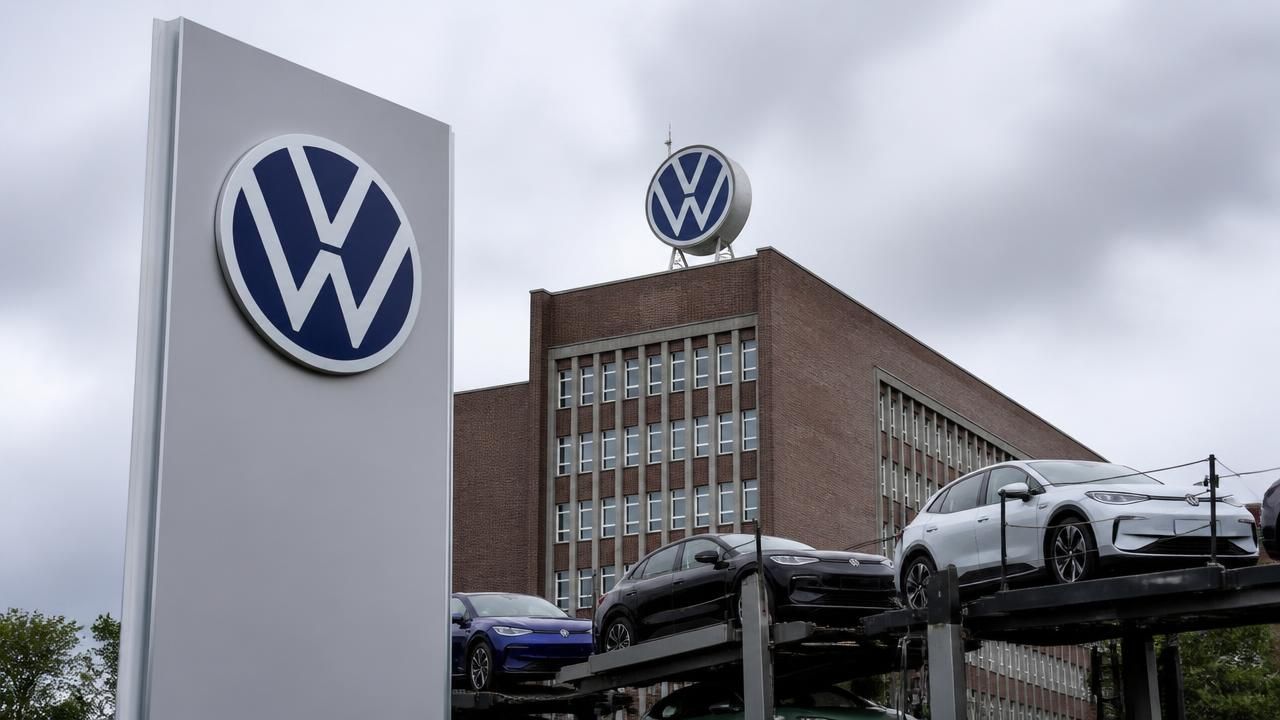
Volkswagen AG cut its profit guidance sharply, capping a bruising stretch for Europe's largest automaker as a deepening sales slump in China, restructuring charges and softer battery-electric vehicle demand combined with a multibillion-euro writedown tied to its Porsche sports-car unit. The revised outlook sent the company's shares sharply lower and renewed investor anxiety about the outlook for the global auto industry.
A Guidance Cut Built on Several Fronts
According to Bloomberg Markets, the Wolfsburg-based group slashed its profit forecast after a sharp contraction in China and a €6 billion ($6.9 billion) writedown linked to Porsche AG. The charge alone accounts for a substantial share of the downgrade, but it is far from the only pressure point.
Seeking Alpha framed the same announcement around a wider set of drags: China weakness, restructuring charges and the slower-than-expected adoption of battery-electric vehicles. That trio has become the standard diagnosis for legacy automakers across Europe and North America, each of whom is trying to fund an expensive EV transition while their profitable combustion-engine businesses come under threat.
Volkswagen AG slashed its profit forecast after a sharp contraction in China and a €6 billion ($6.9 billion) writedown tied to sports-car maker Porsche AG, deepening concerns about the strains facing the global auto industry. — Bloomberg Markets
Competing Figures, Same Direction
The coverage diverges on the precise scale of the damage. Invezz reported that the group faced a roughly €10 billion hit and cut its 2026 profit outlook, framing the news primarily as a stock-moving event. Bloomberg's figure of €6 billion centers on the Porsche-related writedown specifically. The gap between the two numbers reflects how differently outlets are scoping the problem — one measuring a single impairment, the other aggregating impairment, restructuring and other charges into a headline figure.
That divergence matters for investors trying to size the hole in Volkswagen's balance sheet. A €6 billion impairment is a discrete, largely non-cash event; a €10 billion aggregate hit implies a broader deterioration in earnings power that touches the core business, not just one brand.
First-Half Results Show the Damage
The clearest hard data point came from the group's first-half report. As covered by MSN, Volkswagen's H1 operating profit fell 11.6%, dragged down by the company's exit from the U.S. market for the ID.4 electric crossover and by continued weakness in China. The ID.4 withdrawal removes one of Volkswagen's few volume EV offerings from its most profitable per-unit market, an admission that the economics of selling the model there no longer worked.
China, once Volkswagen's single largest source of profit, has become its most acute vulnerability. Domestic champions led by BYD have compressed pricing across the mainstream segment, and Chinese buyers have migrated rapidly toward locally built electric and plug-in hybrid models. Volkswagen's joint ventures, long a reliable earnings engine, have seen their contribution shrink as that shift accelerates.
Why It Matters Beyond Wolfsburg
Volkswagen's downgrade is a bellwether. The company sells more vehicles globally than any rival outside Toyota, employs hundreds of thousands of workers and anchors the industrial base of Lower Saxony. Its guidance is read as a proxy for the health of the German export model.
- EV transition costs: Massive capital spending on battery plants, software and new platforms is colliding with demand that is growing more slowly than planned.
- Restructuring charges: Talks with labor unions over plant closures and job cuts in Germany have added one-time costs and management distraction.
- Trade friction: Tariffs and shifting industrial policy in the U.S. and Europe are complicating cross-border production and pricing decisions.
- Competitive intensity: Chinese manufacturers are expanding into Europe and Southeast Asia, pressuring margins in markets Volkswagen has long dominated.
How the Story Is Being Framed
Each outlet is telling a subtly different version of the same event. Bloomberg emphasizes the profit-forecast cut as a signal of strain across the entire global auto industry, positioning Volkswagen as an emblem of sector-wide pressure. Seeking Alpha treats it as a fundamental earnings story, listing the operational drivers — China, restructuring, BEV adoption — in the headline itself. Invezz leans into market mechanics, leading with the share-price plunge and the larger headline loss figure, a framing aimed at traders rather than long-term holders. MSN anchors the story in the reported first-half numbers, giving readers a concrete percentage decline to hold onto.
Taken together, they describe a company caught between two clocks: the slow, capital-hungry clock of electrification and the fast, unforgiving clock of quarterly earnings.
What Comes Next
Volkswagen now faces the difficult task of defending its profit guidance in an environment where three of its key assumptions — stable Chinese demand, smooth EV adoption and manageable restructuring costs — are all simultaneously under question. Further guidance revisions cannot be ruled out if China's price war persists or if EV demand in Europe softens again.
For investors, the central question is whether this is a cyclical trough driven by one-off impairments and a temporary Chinese downturn, or the beginning of a structural re-rating of a company whose scale was once its greatest advantage. The market's immediate reaction — a sharp sell-off — suggests many are leaning toward the latter, even as management insists the underlying business remains sound.