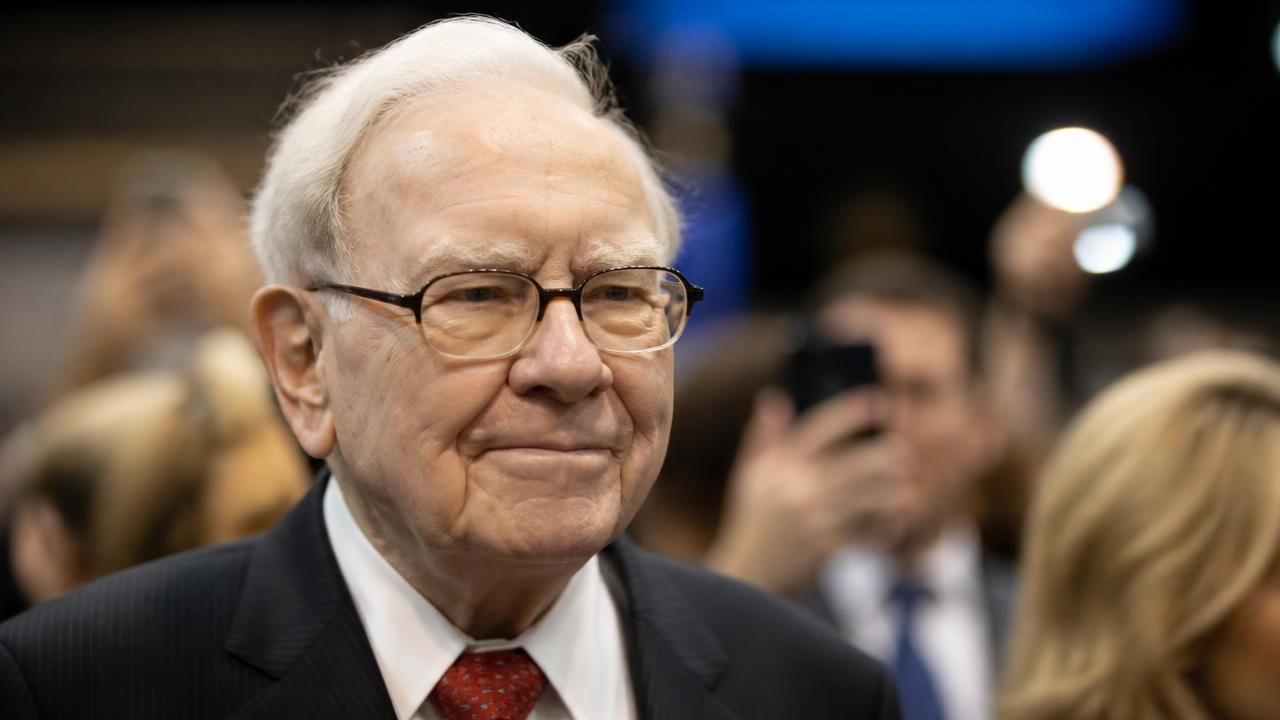
Warren Buffett is stepping down as chairman of Berkshire Hathaway Inc., the conglomerate he built over more than half a century into one of the most valuable companies on earth, ending a tenure that began when he took the chair in 1970. His son, Howard Buffett, will succeed him, the company said, while the elder Buffett will assume the title of chairman emeritus.
The move, confirmed across a wave of coverage from Bloomberg to the New York Times, the Boston Herald and the Journal Star of Lincoln, Nebraska, marks the most consequential succession step yet at a company whose identity has been inseparable from its leader. Bloomberg described it as effectively "ending roughly six decades at the helm of the conglomerate."
An era measured in decades
The precise arithmetic of the run depends on which outlet is counting. Outlook India framed it as 56 years, consistent with Buffett assuming the chairmanship in 1970. Businessday of Nigeria put it at 61 years, counting from his first stake-building in the textile mill that gave Berkshire its name. Yahoo Finance settled on a simpler phrase: "End of an era."
What is not in dispute is the scale of what Buffett leaves behind. Berkshire's market capitalization crossed the $1 trillion threshold, its insurance operations — Geico, General Re and the sprawling reinsurance arm — generate tens of billions in float, and its collection of wholly owned businesses spans freight rail, utilities, manufacturing and retail. Its cash and Treasury holdings have climbed past $300 billion in recent quarters, a hoard that Buffett long defended as dry powder rather than inertia.
"Father Time always wins."
That line, carried in coverage of the announcement, has long been Buffett's own shorthand for the limits of even the most disciplined investor. At 96, he has now applied it to himself.
Howard Buffett takes the chair
The choice of Howard Buffett is notable less for its surprise than for its symbolism. A longtime Berkshire director, farmer and philanthropist, he has been publicly identified by his father as a prospective steward of the company's culture — the guardrail against a conglomerate fracturing after the founder departs. That framing dominated the New York Times headline, which paired the resignation with the naming of his son as replacement.
CNBC TV18 and MSN both emphasized the handover language, with CNBC's headline declaring that Buffett "gives up Berkshire chair after six decades, son Howard takes the reins." The company's own preferred phrasing, carried by MSN and the Journal Star, leaned on continuity: Berkshire "names Warren Buffett as chairman emeritus."
That distinction matters. The chairman emeritus title preserves Buffett's presence as a cultural and strategic anchor without leaving him formally responsible for board governance — a structure several governance specialists have compared to the founder-chairman emeritus arrangements used by technology firms navigating their own generational transitions.
The insurance question
For the specialist press, the story is not merely dynastic. Bloomberg convened its senior property-and-casualty insurance analyst, Matt Palazola, to assess the implications for Berkshire's insurance engine, the division that has funded much of the company's equity portfolio. Insurance Journal led its coverage on the same axis, signaling that underwriters and reinsurance counterparties will be watching the transition for any change in Berkshire's famously patient approach to risk and reserving.
The insurance business is where Buffett's capital allocation philosophy is most directly embedded. A chairman with a family mandate, rather than a market mandate, is expected to preserve that posture — but analysts have cautioned that chair-level change at a company this large rarely leaves the operating culture untouched.
How the coverage differs
- Markets-first framing: Bloomberg and Finance Magnates led on the corporate governance and market implications, with analyst commentary on what changes at the top mean for Berkshire's insurance and investment arms.
- Succession framing: The New York Times, CNBC TV18 and MLive foregrounded the family handover to Howard Buffett.
- Legacy framing: Yahoo Finance, Insurance Journal and the Boston Herald treated the news as the closing chapter of a career, with the Herald noting the chairmanship he had held "since 1970."
- Longevity framing: Outlook India and Businessday competed over the duration of the run, arriving at 56 and 61 years respectively.
- Critical framing: TheStreet paired the announcement with a reminder that an eight-year-old criticism of Buffett's record still resonates with some readers — a signal that not all coverage is elegiac.
What happens next
Berkshire's operating chiefs are expected to continue running the conglomerate's business units, with the chairmanship functioning primarily as a governance and cultural role. Investors will now weigh whether the so-called "Buffett premium" — the valuation cushion the company has long enjoyed because of its founder's reputation — can survive his departure from the chair.
For Omaha, where Buffett's annual shareholder letters and arena meetings became civic institutions, the change is as much local as financial. For the wider market, it is a test case in an enduring question: whether a company built around one person's judgment can outlive that judgment without losing what made it valuable.
Buffett, for his part, has given no indication of retreating entirely. As chairman emeritus, he retains a voice — just no longer the gavel.