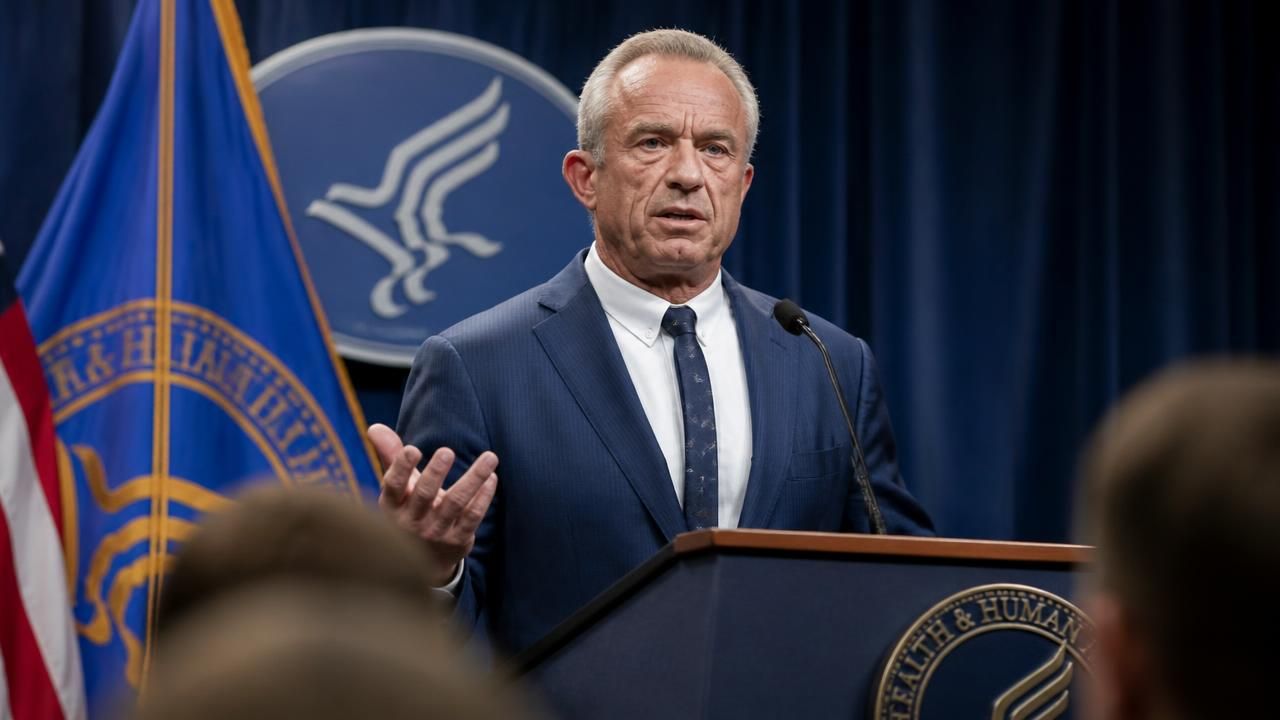
Health and Human Services Secretary Robert F. Kennedy Jr. announced eight new members of the U.S. Preventive Services Task Force on Tuesday, partially restocking a 16-person panel that he effectively froze for more than a year — a move that simultaneously revives and raises questions about one of the most consequential bodies in American medicine.
The USPSTF is a volunteer panel whose recommendations shape not just clinical guidance but the pocketbooks of tens of millions of Americans. Its findings, graded on an A-to-D scale after a rigorous, transparent review of medical evidence, determine which preventive services private insurers must cover at no out-of-pocket cost under the Affordable Care Act. An A or B grade — the panel's two highest ratings — makes coverage mandatory.
That means the task force's judgments touch everything from depression screening and statin use to colonoscopies, mammograms, and cancer screenings. When the panel speaks, insurers listen — and so do physicians, hospitals, and patients.
A Panel Left Idle for More Than a Year
Kennedy's relationship with the task force has been adversarial almost from the start of his tenure. According to reporting by Ars Technica, he sidelined the USPSTF for over a year, canceling its meetings and declining to appoint new members as terms expired and incumbents departed. The result was a panel that steadily emptied out, unable to convene, vote, or issue new guidance while preventive-care recommendations piled up unresolved.
The paralysis came to a head in May, when Kennedy fired two of the task force's leaders — a dismissal that sparked immediate outcry from the medical establishment and intensified long-running fears that he intended to dismantle or politically capture a body designed to be insulated from politics.
"The USPSTF is supposed to use a rigorous, transparent framework for evaluating evidence and sets graded recommendations on an A to D scale."
Those fears were not unfounded, critics argue. Kennedy has already reshaped the CDC's Advisory Committee on Immunization Practices, the panel that sets the nation's vaccine recommendations, installing a slate of members with histories of questioning vaccine safety — a move that drew sharp condemnation from public health groups and prompted some medical societies to say they would no longer treat ACIP guidance as authoritative.
Who Are the New Members?
The department announced the eight appointees as the first tranche of what would restore the panel to its full complement, but the selections arrive under a cloud of suspicion rather than applause. Outlets covering the announcement struck notably different tones: industry and hospital trade publications such as Becker's Hospital Review framed the news as a straightforward staffing update for a key task force. Stat News, which covers health policy in depth, characterized it as an attempt to "revive" a panel crippled by "months of vacancies." The New York Times was blunter, describing Kennedy as naming members to "a powerful health panel whose work he has blocked."
International outlets like NTD and aggregators such as MSN and Yahoo carried largely neutral wires-style accounts — "US health secretary Kennedy Jr. adds eight new members to key health panel" — reflecting how the story played outside the specialized health-policy press: a personnel announcement, not a controversy.
The Preventive-Care Paradox
The most unusual thread running through coverage is the apparent contradiction at the heart of Kennedy's approach. His signature domestic agenda, frequently branded around chronic-disease prevention and the "Make America Healthy Again" slogan, would seem to align naturally with a task force devoted to catching disease early and preventing it altogether.
Yet Yahoo's framing captured the tension directly: "RFK Jr. wants you to get more preventive care. Some experts say that's a bad idea." The concern among those experts is not prevention itself but who defines it — and whether an ideologically reconstituted panel might issue recommendations that diverge from established evidence, or, conversely, use the language of prevention to advance conclusions that mainstream medicine rejects.
Why the Grades Matter
- A and B grades trigger a federal mandate that private insurers cover the service with no copay, deductible, or coinsurance.
- C and D grades carry no such requirement, and D-grade services are those the panel recommends against.
- The downstream effect is financial as well as clinical: a downgrade of a long-standing A-grade recommendation could shift billions of dollars in costs onto patients.
What Happens Next
The eight new members fill roughly half the vacancies, leaving the 16-seat panel still short of full strength. Whether the reconstituted task force resumes issuing recommendations on something like its historic cadence — and whether those recommendations survive scrutiny from the medical societies, patient advocates, and insurers that have historically deferred to it — remains an open question.
Public health observers say the coming months will be a test of institutional independence. If the new USPSTF produces recommendations consistent with the evidence base, critics' warnings may prove overstated. If it diverges — particularly on vaccines, screening ages, or services with political valence — the panel could follow ACIP into a contested space where its pronouncements are treated as one opinion among many rather than the standard of care.
For now, the practical stakes are simple and enormous: for millions of Americans, the difference between an A grade and a C grade is the difference between a free colonoscopy and a bill for one.