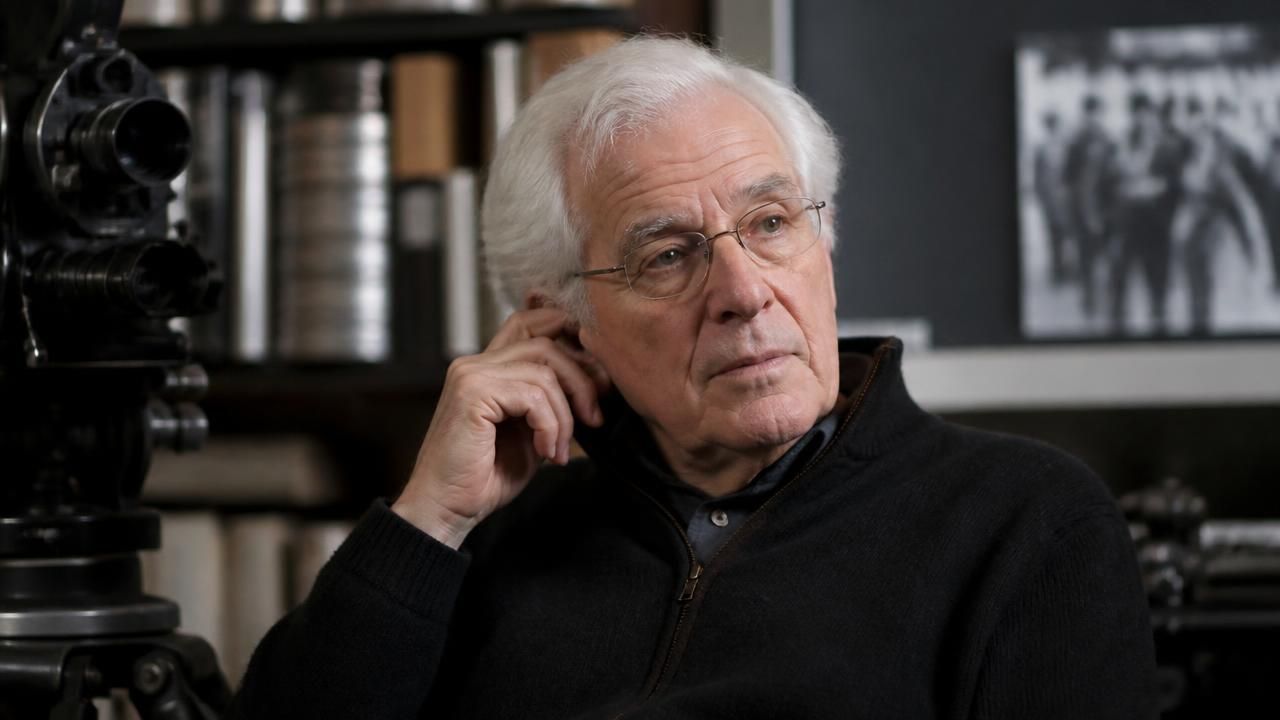
Patricio Guzmán, the Chilean documentary filmmaker whose unsparing chronicles of Augusto Pinochet's 1973 coup and its long afterlife made him one of the most influential non-fiction directors of the past half-century, has died. He was 85.
Guzmán died on Tuesday in Paris, where he had lived for much of his adult life, following a cardiorespiratory arrest, according to the Chilean news outlet Emol, which first reported the death. No further details were immediately released.
News of his passing circulated quickly across international outlets, with each framing a different facet of a career that spanned more than fifty years. The Guardian emphasized the "unsparing but poetic" character of his films; Deadline described him as the documentarian who chronicled Chile's "turbulent political history"; Outlook India foregrounded the Paris setting of his death. For all of them, the headline fact remained the same: The Battle of Chile, the trilogy that defined him, had lost its author.
A Life Interrupted by the Coup
Guzmán was born in Santiago in 1941 and studied film at the Institut des Hautes Études Cinématographiques (IDHEC) in Paris before returning to Chile in the early 1970s, drawn home by the political ferment of Salvador Allende's socialist government. He arrived with a camera and an ambition: to document a democratic revolution unfolding in real time.
What he captured instead became one of the defining records of the 20th century. Beginning in 1972, Guzmán and his crew filmed the escalating confrontation between Allende's Popular Unity government and its opponents — footage that culminated on 11 September 1973, when tanks surrounded the presidential palace and Allende took his own life as Pinochet's forces seized power.
Guzmán was arrested and eventually expelled from Chile. The raw material of The Battle of Chile was smuggled out of the country in diplomatic pouches and suitcases, edited in Cuba, and released in three parts between 1975 and 1979. Its cinematographer, Jorge Müller Silva, remained in Chile and was disappeared by the regime in 1974 — one of the thousands of victims whose fate would haunt Guzmán's later work.
Exile, Return, and the Persistence of Memory
For nearly two decades Guzmán worked in Europe, making films about exile and Latin American politics while Pinochet held power. When democracy was restored in 1990, he returned with a camera — and found a country that had agreed not to look back. Chile, la memoria obstinada (1997), known in English as Chile, Obstinate Memory, screened The Battle of Chile to Chilean audiences who had never seen it, capturing their raw reactions on film.
The film inaugurated the second great phase of his career, one less concerned with recording events than with excavating their traces. In the acclaimed "Chilean trilogy" of his final decade, Guzmán turned to the country's geology and geography as vessels of political memory.
- Nostalgia for the Light (2010) set the work of astronomers in the Atacama Desert alongside the search by women for the remains of disappeared relatives — two forms of looking into the distant past, one cosmic, one forensic.
- The Pearl Button (2015) traced Chile's relationship to water, from indigenous peoples to the dictatorship's use of the sea as a dumping ground for the disappeared.
- The Cordillera of Dreams (2019) surveyed the Andes as both a national symbol and a screen onto which Chile projected its political denials.
The trilogy earned him a new generation of admirers and cemented his status as, in the words of many critics, the conscience of Chilean cinema.
Not an Activist, a Poet
Guzmán consistently resisted the label of political filmmaker, even as his subject matter was inseparable from politics. In an interview with the Guardian, he traced his preoccupations directly to the dictatorship that interrupted his life.
"I'm a film-maker who was very marked by the ways of the dictator. It has remained with me for ever. I cannot leave it behind."
Yet he insisted on a distinction between journalism and his own method. "I'm not a sociologist. Neither am I a politician," he said. "I make films that are metaphorical and poetic; I interpret reality through my own personal way of looking."
That insistence helps explain the range of outlets that marked his death. Where a political obituary might have reduced him to a chronicler of the coup, the tributes instead emphasized craft — the patient voiceover, the long takes, the willingness to let a desert sky or a glacier carry an argument that a talking head could not.
The Politics of Remembering
Guzmán died at a moment when the questions that animate his films remain unresolved in Chile. The country marked the 50th anniversary of the coup in 2023 with contested commemorations, and debates over historical memory — how to teach it, how to memorialize it, how to govern a constitution drafted under a dictatorship — have continued to shape national politics. His 2022 film, My Imaginary Country, documented the 2019 social uprising and the constitutional process it triggered, a project he described as an act of optimism after decades of documenting loss.
His death drew tributes from Chile and beyond, with colleagues and institutions praising a filmmaker who built a body of work out of the insistence that memory is a public resource rather than a private wound. For a director who once described his life as permanently marked by the dictatorship, the final irony is that his films outlasted it — and now stand as the most complete record of what it did.
Guzmán is survived by his wife, Renate Sachse, and by a filmography that continues to be restored, screened and studied. A memorial tribute in Paris is expected in the coming days, with commemorations also planned in Santiago.