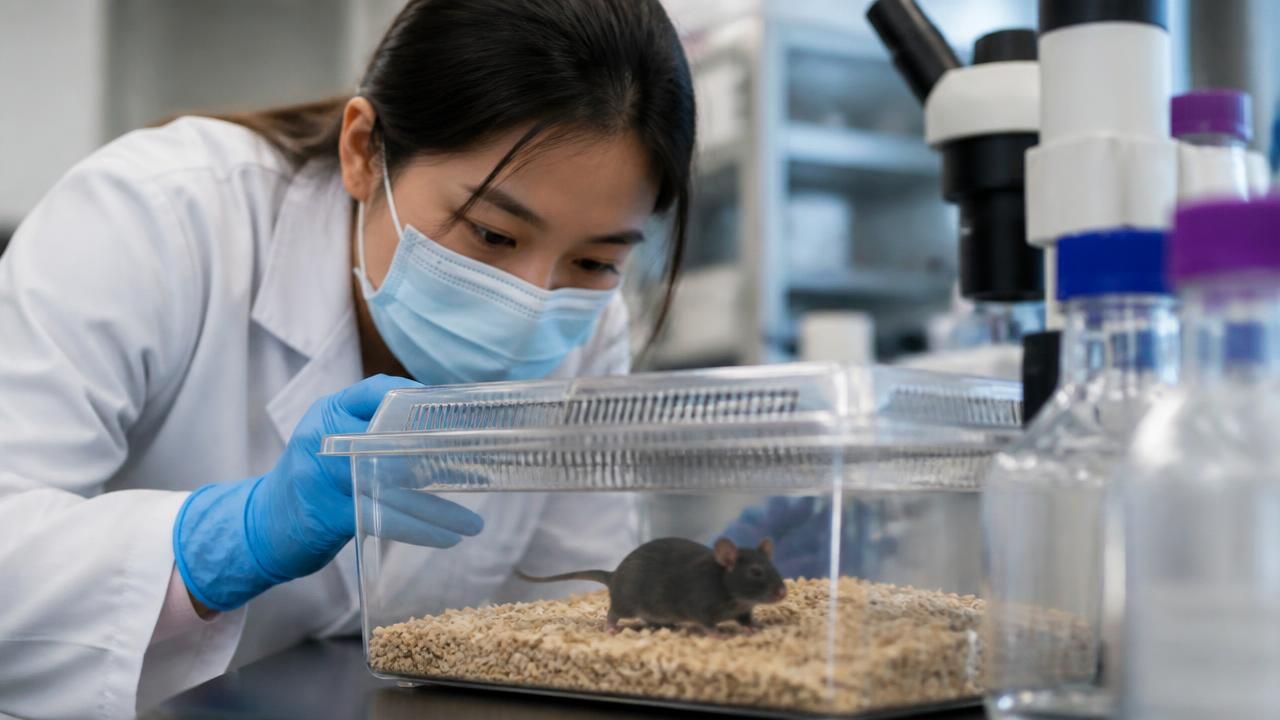
Neuroscientists have crossed a threshold that once belonged to science fiction: mice whose brain cortices are built, in part, from human cells. The advance, reported by NPR and highlighted by MIT Technology Review, offers researchers an entirely new platform for studying neurological conditions such as cerebral palsy — and it has reignited a debate about where the boundaries of such research should lie.
The work centers on human brain tissue grown and then transplanted into the brains of rodents, where it integrates and matures. NPR's headline captured the dual nature of the breakthrough with unusual economy: "Mice with human brain cells offer a tool to study disease. Ethicists ask: What's next?" Stations across the country, including ualrpublicradio.org, carried the same framing, signaling how quickly the story moved from lab curiosity to national conversation.
"Mice with human brain cells offer a tool to study disease. Ethicists ask: What's next?" — NPR
A Mouse With a Human Cortex
MIT Technology Review put the finding more bluntly, introducing readers to "a mouse whose brain cortex is made up of human cells." The distinction matters. Earlier chimeric models involved scattered human neurons; the new generation of transplant-based models produces tissue that organizes itself into structures resembling the layered architecture of the human cortex.
That architecture is exactly what makes human brains distinct — and what makes diseases like cerebral palsy, certain epilepsies, and some psychiatric conditions so difficult to model in animals. If human cortical circuitry can be studied inside a living system, researchers gain a window into development and dysfunction that neither petri dishes nor animal-only models can provide.
Scientists at the Stanford lab associated with the work have pioneered the use of human brain organoids and "assembloids" — self-organizing clusters of human cells that mimic key brain regions. Transplanting them into rodent brains allows the tissue to receive blood supply, oxygen, and sensory input it could never get in a dish, pushing maturation far beyond what in vitro systems allow.
The Ethical Questions
The central ethical concern is not whether the mice look unusual, but what happens as human cells take on more responsibility inside a living animal. If a rodent brain contains substantial human circuitry, does it acquire capacities — consciousness, suffering, or something in between — that change how it should be treated in a laboratory?
Bioethicists have proposed guardrails rather than prohibitions: limits on the proportion of human cells, restrictions on transplantation into regions tied to higher cognition, and expanded welfare monitoring. Most researchers argue the current models fall far short of anything resembling human awareness. But the question, as NPR framed it, is "what's next" — and the answer will be negotiated in real time as the technology advances.
A Broader Wave of Mouse-Model Breakthroughs
The chimeric-mouse work is arriving alongside a cluster of related advances, all of which rely on animal models to translate basic biology into potential therapies.
- An Alzheimer's nasal spray. A spray derived from human placenta preserved memory and protected against cognitive decline in mice, according to reports carried by MSN.
- A messenger protein driving Alzheimer's. University of Utah Health researchers described how a signaling protein in the brain helps propel the disease forward — a finding that reframes the protein as a potential therapeutic target rather than a bystander.
- Microproteins and Alzheimer's. A map of brain "microproteins" published in Nature could yield new clues to the disease, suggesting that short, previously overlooked protein fragments play meaningful roles in brain function.
- Base editing for Huntington's. Genetic Engineering & Biotechnology News reported that a base-editing strategy alleviated Huntington's disease in mice — a precise form of gene editing that changes single DNA letters without cutting the double helix.
- Vascular resistance to gene changes. Separate work found that brain vascular cells resist gene expression changes across multiple neurological disease models, hinting that the brain's blood vessels may be more stable — and more central — than once assumed.
Alzheimer's: Beyond the Brain
One thread running through several of these findings is a quiet shift in how scientists think about Alzheimer's. As one MSN report put it, the disease's threat may actually emerge from beyond the brain — pointing to the immune system, the vasculature, and peripheral biology as drivers or accelerators of pathology that shows up in neural tissue.
That reframing has practical consequences. If Alzheimer's is partly a systemic disease, then interventions like a nasal spray, an immune modulator, or a protein-targeting therapy become more plausible than approaches aimed solely at neurons.
How the Story Was Framed
Coverage of the chimeric-mouse research split along familiar lines. Science-focused outlets, including MIT Technology Review, led with the biology: how the cortex was built, what it means for modeling. General-interest and public-radio outlets, including NPR and its member stations, led with the ethical question, placing the science in a moral and regulatory frame. Aggregators such as Yahoo and MSN emphasized accessibility — the "here's what happened" version — while specialist publications like Nature and GEN concentrated on adjacent molecular discoveries.
Together, the coverage reveals a field moving on several fronts at once: better models, sharper gene-editing tools, and a growing willingness to look outside the brain for answers about brain disease.
What Comes Next
Translation from mouse to human remains slow and uncertain. Most experimental therapies that succeed in rodents fail in people, and the chimeric models are still years from routine use. But the tools now in play — human cortical tissue in living animals, base editors that rewrite single letters of DNA, microprotein maps, and peripherally acting compounds — give researchers something they have rarely had: multiple, complementary ways to interrogate the same diseases.
The ethical conversation, meanwhile, will not wait for the science to mature. As human cells take up residence in animal brains, the questions are likely to arrive faster than the answers — and how the field responds may determine how much of this promising territory it is allowed to explore.