Microsoft is heading back to San Francisco. The company has confirmed it will hold a Windows and Surface event on October 7, its first major gathering of this kind in more than two years, framed by an ambitious and deliberately worded promise: a "conversation on how local AI will shape the next chapter of the PC."
The announcement ends a long hardware-and-software silence for Microsoft's flagship consumer platform, and it signals that the company intends to compete on a battleground it helped define — the AI PC — rather than on the traditional cycle of major Windows version releases.
Who Will Take the Stage
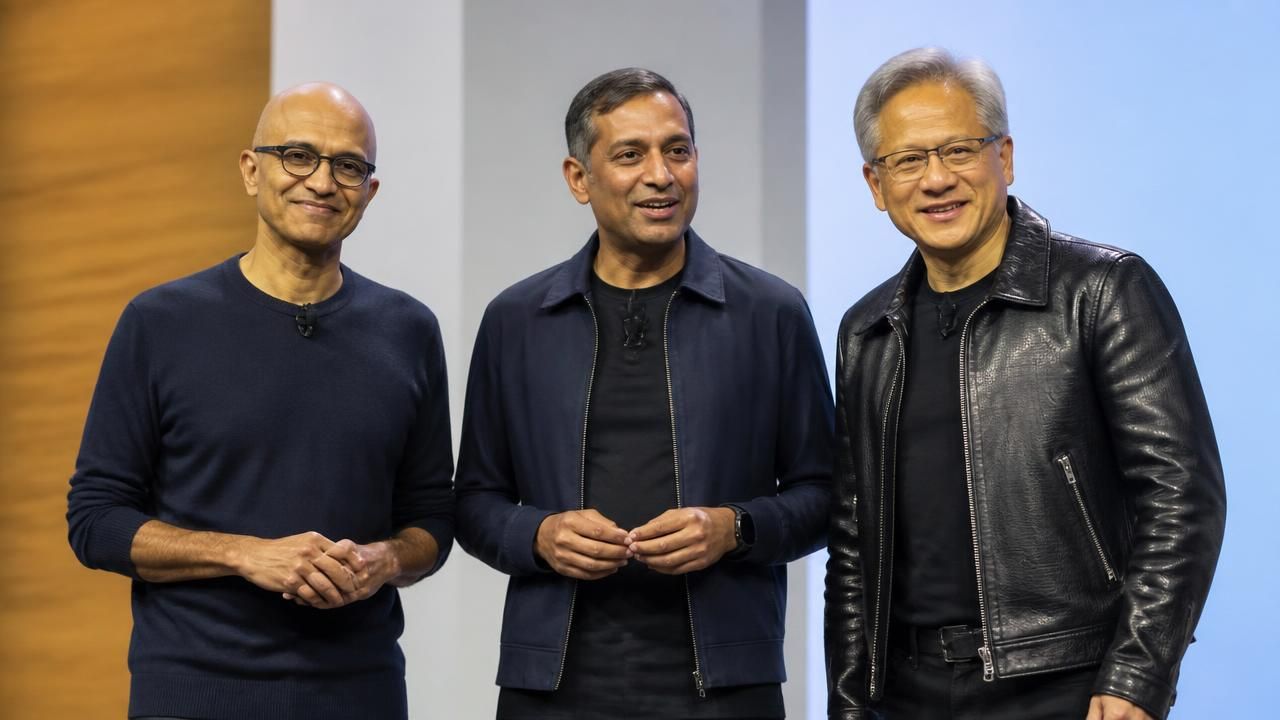
Microsoft is assembling a roster that underscores how thoroughly AI has reshaped its priorities. CEO Satya Nadella is expected to appear, alongside Pavan Davuluri, the executive who oversees both Windows and Surface hardware. Also on the bill: Nvidia CEO Jensen Huang, a guest whose presence is unusual for a Windows event and immediately suggestive of what Microsoft intends to showcase.
According to The Verge, Huang's involvement points toward "RTX Spark PCs" as a possible centerpiece of the event — machines that lean on Nvidia silicon to run AI workloads on-device rather than in the cloud. If that framing holds, The Verge notes, attendees should not be surprised to hear more about pricing and availability for a rumored Surface Laptop Ultra.
What 'Local AI' Actually Means
The phrase at the heart of Microsoft's teaser is doing a lot of work. "Local AI" refers to models that execute directly on a user's machine — on the CPU, GPU or a dedicated neural processing unit — instead of routing every request through remote data centers. The pitch is straightforward: lower latency, better privacy, offline capability, and reduced cloud-compute costs.
The obstacles are equally straightforward. On-device models are constrained by memory, battery life and thermal budgets, which is precisely why chip vendors have become the most visible protagonists in this story. Nvidia's involvement suggests Microsoft is courting the highest-performance end of that spectrum, while its longstanding partnerships with Qualcomm, Intel and AMD cover the mainstream tiers.
Coverage from TechEngage framed the event in pointedly clarifying terms: this is a showcase for local AI PCs — not Windows 12. That distinction matters. For years, Microsoft's biggest public events were organized around a new operating system release. The October 7 gathering appears instead to be organized around a capability layer, with Windows serving as the substrate rather than the headline.
A Two-Year Silence, and Why It Ended Now
Microsoft's last event of comparable scale came more than two years ago, a gap that reflects a broader strategic shift. Under Nadella, the company has poured investment into Azure, Copilot and its OpenAI partnership, while Windows has been repositioned as a distribution channel for AI services rather than a standalone profit engine.
That strategy has not been without friction. The first wave of Copilot+ PCs, launched with considerable fanfare, drew scrutiny over which AI features actually ran on-device and which quietly depended on cloud infrastructure. A dedicated event focused on local AI is, in effect, Microsoft's attempt to answer that critique head-on — and to show that the hardware ecosystem has caught up with the marketing.
The competitive context is unavoidable. Apple has spent two years building Apple Intelligence around on-device processing and private cloud compute. Google has pushed Gemini Nano into Pixel devices. Intel, AMD and Qualcomm all now ship silicon with NPUs measured in tens of TOPS. Microsoft, which popularized the AI PC category, cannot afford to look like a follower in a market it named.
The Surface Question
Surface hardware has always served a dual purpose for Microsoft: a commercial product line and a reference design that nudges partners toward new form factors. A Surface Laptop Ultra — if it materializes — would fit that pattern, pairing premium hardware with the most demanding on-device AI workloads.
Pricing will be the test. Premium AI-capable laptops have generally landed well above mainstream price points, and a flagship Surface launching into a cautious consumer spending environment would face immediate pressure to justify its cost against rival machines.
"A conversation on how local AI will shape the next chapter of the PC." — Microsoft's description of the October 7 event
What to Watch For
- Silicon specifics: Which chips power the demonstrations, and whether Nvidia's presence translates into concrete OEM commitments.
- On-device proof: Live, offline demonstrations of AI features — the clearest way to distinguish local processing from cloud-dependent tricks.
- Surface hardware: Any confirmation of the Surface Laptop Ultra, along with pricing and ship dates.
- The Windows roadmap: Whether Microsoft addresses the future of the operating system itself, or treats Windows purely as an AI delivery vehicle.
- Developer tooling: Frameworks and APIs that would let third-party apps tap on-device models without rebuilding from scratch.
The Stakes
Microsoft has spent three years telling the industry that AI would reinvent personal computing. October 7 is the moment it has to demonstrate what that reinvention looks like when it runs on the device in front of you, disconnected from the cloud, with a battery indicator in the corner.
For Nadella and Davuluri, the event is an opportunity to consolidate a narrative that has occasionally outrun the hardware. For Huang, it is another stage on which to argue that Nvidia's reach extends beyond the data center into the laptop on your desk. And for the broader PC industry — which has endured several bruising years of flat demand — it is the clearest signal yet that the next upgrade cycle will be sold not on speed, but on what your machine can do without asking anyone's permission.
The event takes place October 7 in San Francisco.