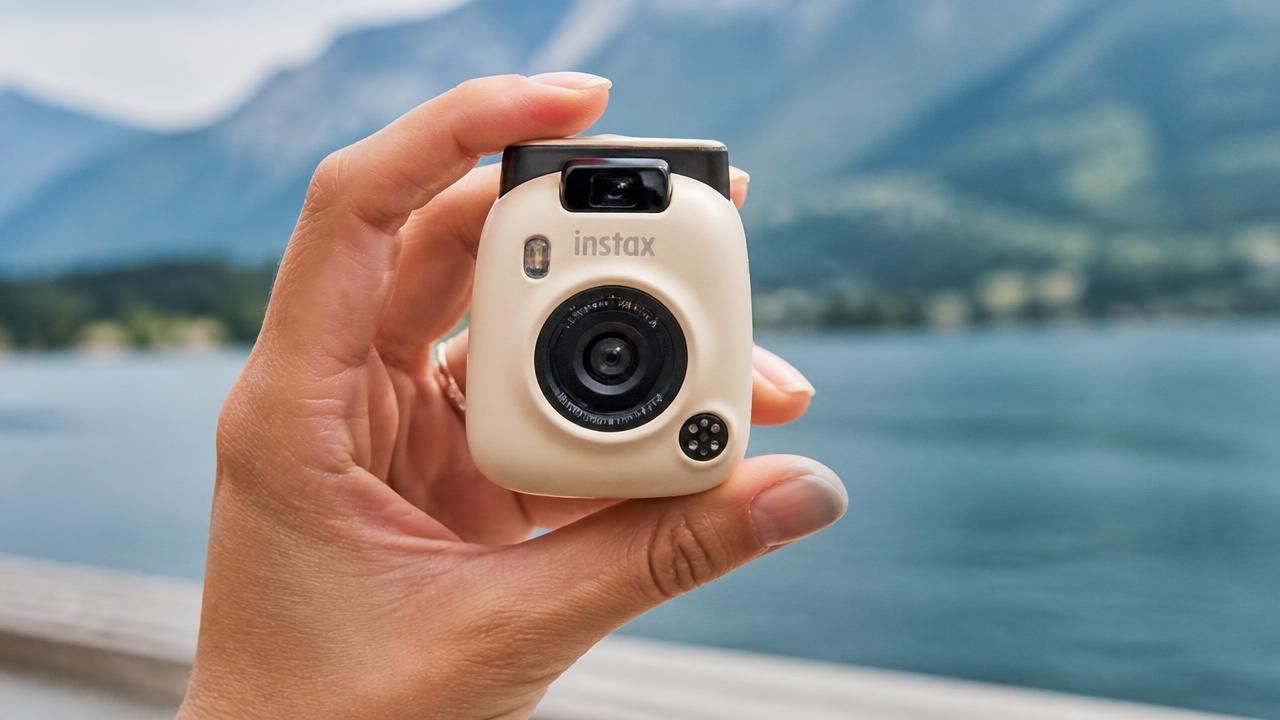
Fujifilm has unveiled the Instax Pal 2, a follow-up to the palm-sized novelty camera it first introduced roughly three years ago. The new model keeps the original's miniature, playful spirit — it weighs less than two ounces and is small enough to be compared, as Inverse put it, to the size of an AirPods case — but adds the two things the first-generation device conspicuously lacked: a screen and a viewfinder.
The Verge reported that the Instax Pal 2 "includes both in a design that looks like a miniaturized analog film camera." The company confirmed the camera will launch in the United States later this month at $169.95, with availability details first surfaced by PetaPixel.
What's actually inside
Fujifilm's pitch hinges less on gadgetry than on form factor, but the hardware is a meaningful step up from the screenless original. According to published specifications, the Instax Pal 2 pairs a 1/3.06-inch sensor with an f/2.2, 28mm-equivalent lens — components that, while firmly in smartphone-adjacent territory, are a credible upgrade over the first Pal's more limited optics.
- Sensor: 1/3.06-inch
- Lens: f/2.2, 28mm equivalent
- Weight: under 2 ounces
- Price: $169.95 in the US
- Availability: later this month
- Add-ons: Instax Link Wide 2 printer; Instax Mini Link 2 smartphone printer bundle
At publication time, Fujifilm had not widely detailed storage, battery life, video capability or screen size — details that will matter to buyers weighing the Pal 2 against a phone camera that already lives in their pocket.
A direct swing at the Charmera
The most consequential framing of the announcement came from outlets that positioned the Pal 2 not as a sequel to a quirky accessory but as a competitive answer to the Kodak Charmera, the retro-styled pocket digital camera that has become a fixture of the so-called "dumb camera" revival. One MSN headline described the device as "a complete redesign and a more direct challenge to the Charmera," while another framed it as "an adorable tiny retro compact camera" weighing less than two ounces.
That shift is deliberate. The original Instax Pal was a round, screen-free curiosity designed primarily as a companion to Fujifilm's instant printers — a capture button with a personality. The Pal 2 abandons the orb in favor of a shrunken film-camera silhouette, complete with the dials-and-lens look that has driven the resurgence of compact and disposable cameras among younger buyers.
The ecosystem play
Fujifilm did not announce the Pal 2 in isolation. Notebookcheck noted that the company also introduced the Instax Link Wide 2 instant photo printer alongside the camera, while other coverage highlighted a bundle pairing the Pal 2 with the Instax Mini Link 2 smartphone printer. The message is consistent with Fujifilm's broader strategy: the camera is the front door, but the recurring revenue lives in film packs and printer hardware.
"A Camera That Fits With You: Fujifilm Introduces instax Pal 2 Digital Camera." — Fujifilm announcement headline
That framing positions the device as an accessory to a lifestyle rather than a serious imaging tool — a distinction that shapes both its appeal and its limits.
The sticking point
Not every early assessment was celebratory. One MSN headline declared that the tiny camera has "bags of personality — and one huge sticking point," a tension that runs through much of the coverage without a single consensus culprit. Two candidates dominate.
The first is price. At $169.95, the Pal 2 costs more than many capable used compacts and sits well above the impulse-buy threshold. Early speculation ahead of the original Pal's debut had pegged a Fujifilm mystery camera at around $100 and wondered whether it would function as a "digital Instax" — a framing that made the eventual price feel steep to some observers.
The second is workflow. Like its predecessor, the Pal 2 does not print on its own; images must be transferred to a paired Instax printer to become physical photographs. Buyers who read "Instax" as "instant" may find the bill of materials — camera plus printer plus film — lands closer to $250 or more before the first photo is printed.
Why it matters
The Pal 2 lands in a pocket-camera market that has quietly become one of the more interesting corners of consumer tech. Demand for film, instant prints and deliberately limited digital cameras has been driven by a generation that grew up entirely on smartphones and is now paying for friction, tangibility and aesthetics.
Fujifilm is not the only company chasing that demand, and the Charmera comparison makes clear the field is crowded. What distinguishes the Pal 2 is the vertical integration: Fujifilm controls the camera, the printer, the film and the app, and can price the entry point aggressively because the consumables carry the margin.
Whether that strategy works depends on the same question the first Pal raised. A tiny, charming camera with an actual screen and a real lens is a much easier sell than one without. But at $169.95 — before a single pack of film — Fujifilm is asking buyers to treat a companion device as a considered purchase. The reviews that follow will determine whether the Pal 2 is remembered as the moment the Instax Pal grew up, or as an adorable accessory that priced itself out of the pocket it was built for.