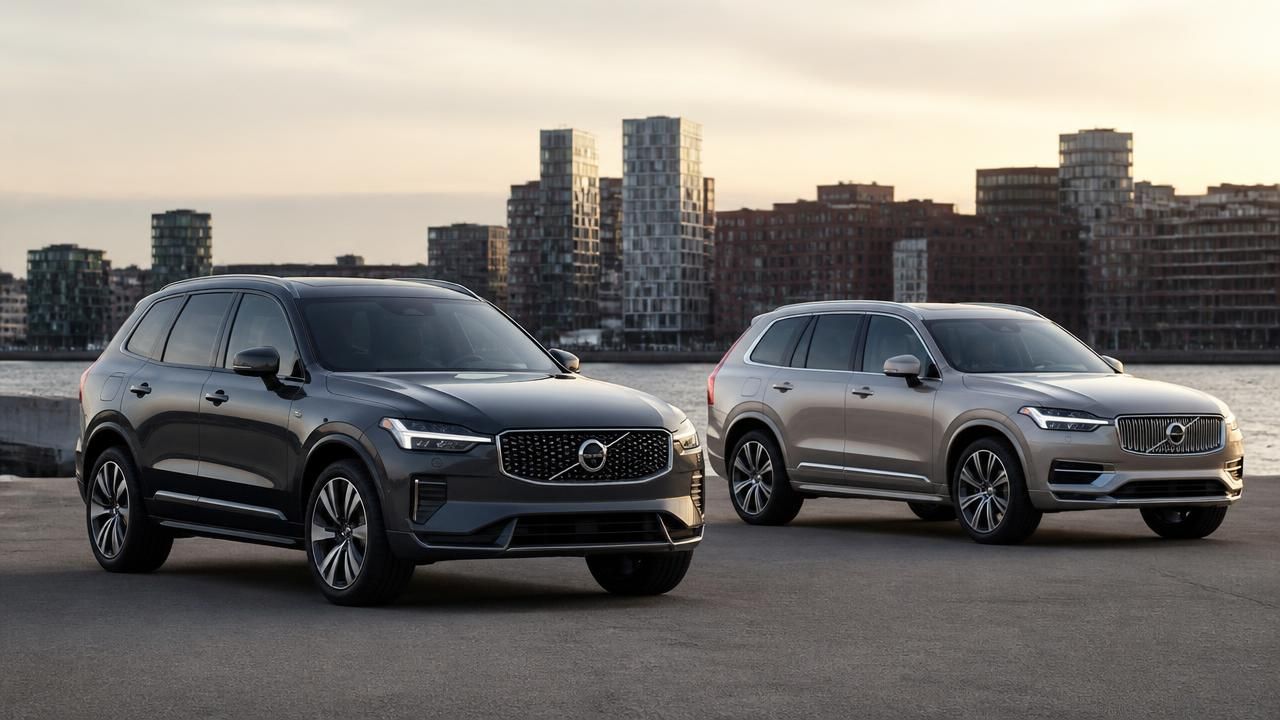
Volvo has refreshed two of the most consequential vehicles in its lineup, giving the 2028 XC60 and the three-row XC90 plug-in hybrids substantially larger battery packs—a change the Swedish automaker and the journalists who previewed the cars frame as a direct answer to the central complaint about plug-in hybrids: that their electric range is too short to matter in real-world daily driving.
The updated SUVs were shown to reporters at an event in London, where Volvo hosted journalists from several outlets, including Ars Technica, which disclosed that the automaker covered flights from Washington, D.C., and accommodation. The XC60 is by far the more commercially significant of the two: Volvo had sold more than 2.7 million XC60s worldwide by the end of last year, making it the brand's global bestseller and the vehicle that anchors its volume ambitions.
A Plug-In Hybrid That Finally Acts Like an EV
The headline change is under the floor. According to Ars Technica, the new plug-in powertrain "more than doubles its real-world electric range." Coverage aggregated by MSN put a finer point on it, describing the 2028 XC60 T8 PHEV as gaining "monster EV range" and traveling nearly 80 miles on battery alone. Autoblog went further still, reporting that the XC60 plug-in hybrid could top 100 miles of electric range—a figure that, if accurate, would place the Volvo in territory occupied by few plug-in hybrids on sale anywhere.
Those numbers do not entirely agree, and the discrepancy is worth noting. The outgoing XC60 T8 was rated at roughly 35 miles of electric range under EPA testing, so a doubling lands in the 70-to-80-mile window that both Ars and MSN describe. The 100-mile claim may reflect a different testing cycle, an as-yet-unconfirmed specification, or an optimistic reading of Volvo's own targets. Until the EPA publishes certified figures for the U.S. market, buyers should treat the higher number as aspirational rather than settled.
What is clear is the strategic intent. The single most common criticism of plug-in hybrids—that they run on gasoline far more often than their owners intend, because their electric range expires mid-commute—is precisely the problem a larger pack solves. A plug-in capable of covering a typical American round-trip commute entirely on electricity behaves, for most days of the week, like an EV while retaining a gasoline engine for long trips.
Subtle Styling, a Familiar Silhouette
Externally, Volvo has resisted the temptation to make a visual event of the refresh, a decision consistent with the brand's restrained design language. The signature "Thor's Hammer" headlights retain their distinctive daytime running light shape but now conceal matrix LED projectors within their depths. There is a new front grille, slimmed down slightly, alongside revised bumpers, wings, and other body panels.
Inside, Volvo has added a ventilated leather interior option, and—mirroring the recently revised XC40—an 11.2-inch infotainment display. The larger screen runs Volvo's Android Automotive OS-based interface, but the more consequential addition is a Gemini personal assistant that enables conversational voice control.
"Based on some brief testing, the new Gemini voice assistant does at least perform a lot better than the previous version, which, if anything, has degraded in ability over the past few years."
That assessment, from Ars Technica, doubles as an admission of how far behind Volvo's software had fallen. In a market where software quality increasingly determines whether a premium car feels premium, the Gemini integration is arguably as important to the refresh as the battery.
Why It Matters
Car and Driver characterized the update plainly: the XC60 is "ready for a refresh to improve the bestseller." That framing captures the stakes. The compact luxury SUV segment is among the most competitive in the industry, contested by the BMW X3, Mercedes-Benz GLC, and Lexus NX, with a growing field of electric alternatives closing in from below.
Volvo's own naming has grown confusing in the process. At least one outlet framed the news around the "EX60"—the name Volvo reserves for its forthcoming all-electric SUV, where "XC" denotes hybrid and combustion models. The mix-up is telling: the line between Volvo's electric and plug-in hybrid lineups has blurred to the point where the two are functionally indistinguishable to outside observers, and increasingly to buyers as well. MSN's headline declaring the new model "more EVish than ever" captures that ambiguity neatly.
The refresh also buys Volvo time. The brand has committed to an all-electric future but has, like many automakers, adjusted its timeline as EV demand growth has slowed in the United States and Europe. In the interim, longer-range plug-in hybrids serve as a bridge product—one that satisfies regulators counting emissions and customers wary of charging infrastructure.
What We Still Don't Know
- Pricing: Volvo has not announced U.S. pricing for the 2028 XC60 or XC90 plug-in hybrids.
- Certified range: EPA figures for the larger battery have not been published, leaving the 80-mile and 100-mile claims unresolved.
- Availability: On-sale timing for North America has not been confirmed.
- Trim details: Whether the larger pack becomes standard across plug-in trims or remains an option is unclear.
For now, the message from Gothenburg is consistent across every account: Volvo has decided that the plug-in hybrid's weakest link was range, and it has attacked that weakness directly. Whether the strategy translates into showroom success will depend on numbers Volvo has yet to publish.