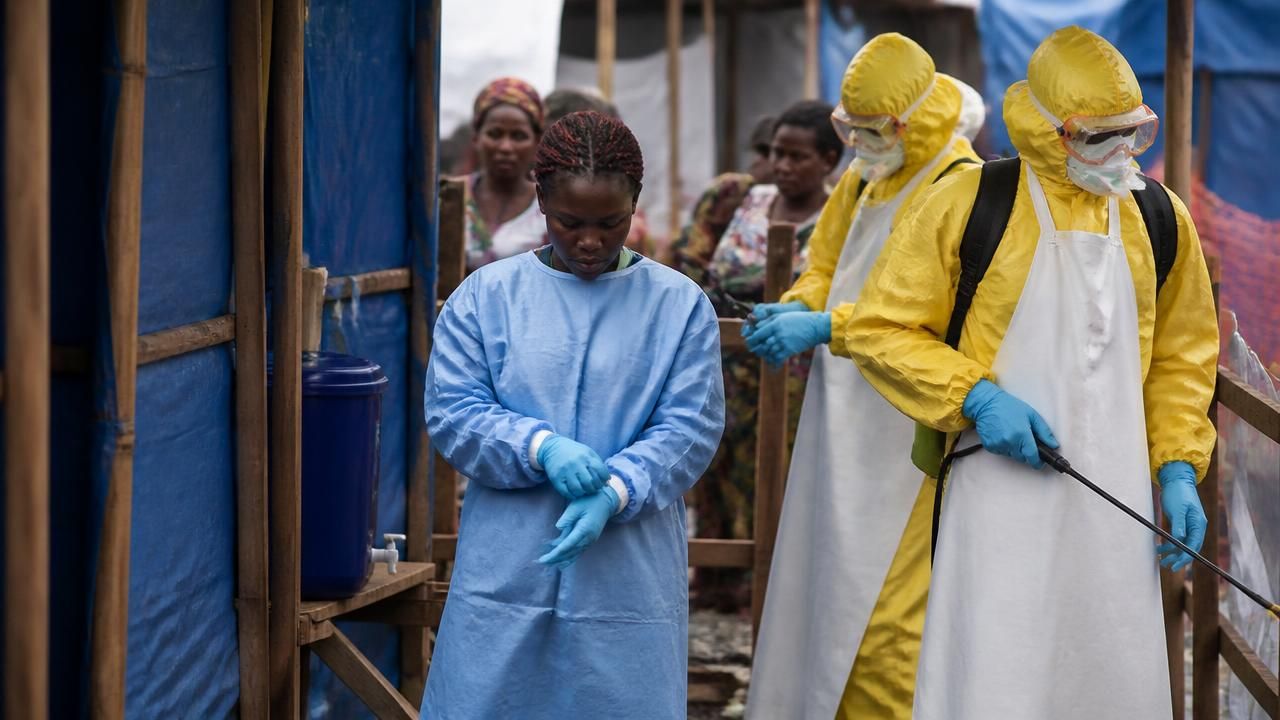
Health authorities in the Democratic Republic of the Congo have declared that the Ebola outbreak ravaging the country's eastern provinces has reached its peak, pointing to slowing infection rates for the first time since the epidemic was formally declared in May. But the announcement has been met with caution from the World Health Organization and independent experts, who warn the virus is still spreading and that the outbreak — already the worst in the country's history — is on track to eclipse the deadliest Ebola epidemic ever recorded.
The competing narratives have produced a rare public split between Kinshasa and Geneva, and they colour nearly every headline written about the crisis. Some outlets, echoing Congolese officials, report that the outbreak is "under control." Others, amplifying WHO briefings and United Nations warnings, describe a contagion that is "growing exponentially" and has reached a "tipping point" toward becoming the worst ever documented.
Numbers that tell two stories
The raw figures chart a relentlessly upward curve. Early in the outbreak, authorities confirmed just over 1,000 cases and 254 deaths. That toll climbed past 2,000, then beyond 2,500, before reaching roughly 3,398 dead. Confirmed cases passed 5,000, then 5,515, and have now crossed the 7,000 mark. Roughly 3,500 people have died in total.
The disparity in the reporting is as much about timing as it is about interpretation. Wire services and aggregators that carried the earliest figures — 1,000 cases, 254 deaths — captured a different phase of the epidemic. The latest numbers reflect a crisis that has now burned for months across a densely populated region with fragile health infrastructure, active conflict and large-scale population movement.
Public health specialists note that a deceleration in new infections does not necessarily signal the beginning of the end. In Ebola outbreaks, case counts can dip sharply before rebounding if contact tracing, safe burials and community surveillance break down.
Peak, or simply a pause?
The Congolese government's declaration of a peak rested on the observation that the number of people becoming infected is slowing. Officials also said more must be done to ensure the Bundibugyo strain is fully contained — a signal that virological surveillance remains incomplete and that pockets of transmission may yet be undetected.
The World Health Organization has taken a more cautious line, warning that the virus is still spreading even as some indicators improve. That divergence matters: a premature declaration of victory can loosen the vigilance that containment depends on, from hand-washing stations at markets to the tracing of every known contact.
"Behind every case, a person"
That reminder comes from the Congolese official leading the national response, who has repeatedly argued that the statistical war — case counts, death tolls, percentage declines — obscures the human reality of families losing parents, health workers being infected in clinics, and children being orphaned. Guardian reporting on his message has framed the story around that hidden cost rather than the daily numbers war.
Vaccines arrive as the campaign accelerates
The primary weapon against the outbreak is Ervebo, the licensed rhesus-based vaccine that proved decisive in earlier Congolese outbreaks. More than 16,000 doses have arrived in the country, and authorities have launched a large-scale vaccination campaign targeting health workers, known contacts of confirmed cases, and contacts of those contacts — a strategy known as ring vaccination.
A further 70,000 doses are earmarked for the country, according to officials, a scale-up intended to match what has been the fastest-moving outbreak in Ebola history. Russian state media, among others, has emphasised the vaccination drive as the centrepiece of the response, while outlets including Al Jazeera and the New York Post have focused on the logistics of getting doses into remote, sometimes insecure territory where cold-chain requirements are punishing.
Vaccination alone, however, cannot stop an outbreak of this size. Supplies of therapeutics, the availability of isolation beds, and the willingness of communities to accept treatment all shape the outcome.
The aid vacuum
Experts say containment has been hampered by something beyond epidemiology: the dismantling of the US Agency for International Development. Reporting by CNBC highlighted warnings from global health specialists that the closure of USAID — the single largest funder of outbreak response in the region — has left a gap that neither the WHO nor local authorities can quickly fill. The squeeze has been compounded by broader cuts to global health financing.
Analysts describe the situation as a natural experiment in what happens when the world's emergency health architecture loses a major pillar mid-crisis. Surveillance teams, contact tracers, community mobilisers and burial teams have all historically been underwritten by donor money.
Schools, communities and a fragile normal
In the outbreak zone, life has been disrupted far beyond hospital wards. Parents and teachers have urged authorities to delay the resumption of the school year, fearing classrooms will become transmission hubs. Ebola spreads through direct contact with bodily fluids, and crowded schools with limited sanitation are precisely the environments health officials worry about.
Pope Leo has added a moral voice to the debate, urging global action to save lives and warning against the world turning away from a crisis that is not yet contained. His intervention reflects growing concern that outbreaks in Africa command less international attention — and fewer resources — than they warrant.
A global pandemic in waiting?
Some public health researchers have gone further, warning in medical and scientific outlets that the DRC outbreak has the potential to become a global pandemic if it is not contained at source. Their prescriptions are familiar but underfunded: rapid case detection, robust contact tracing, community trust, and surge capacity in a region where conflict frequently prevents health workers from reaching the sick.
That framing — local crisis, global risk — is what has driven the differences in coverage. Outlets close to Kinshasa emphasise sovereignty and progress; international organisations emphasise risk; and experts on the ground emphasise that both are true at once.
What happens next
The coming weeks will test whether the reported slowdown holds. Success depends on whether the vaccination campaign can reach the last mile, whether donor funding can be replaced or restored, whether laboratories can confirm cases fast enough to break transmission chains, and whether communities trust the responders enough to report symptoms early.
If the curve bends downward and stays there, the DRC will be credited with containing one of the most difficult outbreaks it has ever faced. If it does not, the outbreak will almost certainly be recorded as the worst in history — a distinction no country wishes to claim, and one that the world's strained health system may struggle to answer.