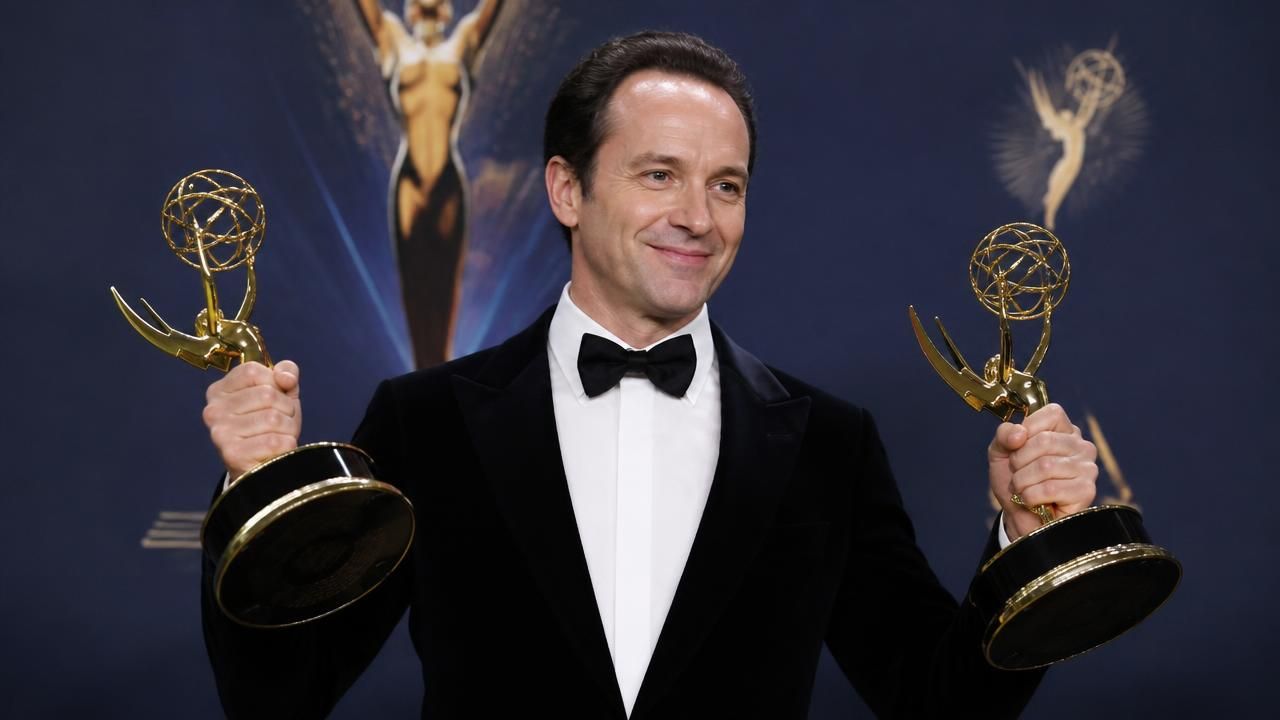
Television's biggest night ended with two shows standing above the rest. At the 78th Primetime Emmy Awards, held Monday night, The Pitt and Widow's Bay took home the top prizes in television, while actor Matthew Rhys became the first performer ever to win in two lead acting categories in a single ceremony, according to NPR, which co-produced coverage of the event.
The result was a rare split verdict from Emmy voters: one drama widely praised for its stripped-down realism, the other a genre-bending critical darling that dominated the night's acting races. As Today.com framed it in its winners report, Rhys and Jean Smart "make history" while Widow's Bay sweeps.
The Pitt and Widow's Bay took home the top prizes in television at the Emmy Awards on Monday night. And actor Matthew Rhys became the first person to win in two lead acting categories in one night. — NPR
The Night's Biggest Winners
By the time the ceremony ended, a clear hierarchy had emerged. Widow's Bay led the overall haul, a dominance that prompted several outlets — including Today.com and India's Latestly — to use the word "sweep" in their headlines. The Pitt, meanwhile, converted its widespread critical acclaim into the evening's other marquee trophy.
Among the individual honorees cited across winners lists published by NPR, the Associated Press, Forbes, Vanity Fair, NBC 6 South Florida, and MSN's live blogs were:
- Matthew Rhys — two lead acting victories, an Emmy first
- Jean Smart — another lead acting win, extending her remarkable late-career run
- Noah Wyle — lead actor honors for The Pitt
- Rhea Seehorn — a lead acting win
- Widow's Bay — the night's most-decorated series
- The Pitt — top-series honors
Aggregated live coverage from MSN also placed Hacks and Pluribus among the night's leading contenders going into the final categories, underscoring how competitive the drama and comedy fields were this year.
Rhys and the Making of an Emmy First
The headline-grabbing statistic of the night belonged to Rhys. Emmy rules have long allowed performers to submit in multiple categories, but winning two separate lead acting races in a single evening had never happened before Monday. The achievement was flagged by NPR in its wrap-up and picked up immediately by outlets including the Hindustan Times' Hans India vertical, Latestly, and Filmibeat, whose live blog headlined the story as a historic script-flip.
The feat illustrates how thoroughly the television landscape has blurred the lines between genres — and how Emmy voters have increasingly rewarded actors who move between them. Rhys's double win is likely to be studied by awards strategists for years, much as earlier records for youngest winners or most nominations in a single year became reference points for campaigns that followed.
How Different Outlets Told the Story
Coverage of the 2026 Emmys split into three recognizable modes. Wire services and legacy broadcasters — the Associated Press, NPR member stations such as UALR Public Radio, NBC 6 South Florida, and the New York Times — prioritized completeness, publishing exhaustive and frequently updated winners lists. Entertainment specialists such as Vanity Fair, Forbes, and HuffPost focused on the night's narrative arcs, treating the ceremony as a story about which shows defined the cultural moment.
A third camp, dominated by aggregators and international outlets — MSN, Soap Central, Primetime Timer, Whittier Daily News, and India's Hans India and News24 — optimized for speed, posting live-updating lists and partial tallies before final results were confirmed. Whittier Daily News went so far as to publish both a partial and a final list, a reflection of how fiercely audiences now refresh results in real time.
That fragmentation also created friction: several major publishers, including Forbes, the New York Times, the Associated Press, and Soap Central, gated their winners lists behind JavaScript checks and anti-bot verification, pushing readers toward aggregators to get the full picture.
What the Wins Signal
Emmy voters handed top honors to two shows with strikingly different production models: one a lean, character-driven network drama, the other a high-concept series that became a water-cooler phenomenon. The split suggests the Academy is rewarding both craft and cultural reach — and that prestige television's center of gravity continues to shift away from a single dominant platform.
For the industry, the business implications are immediate. Emmy wins of this scale typically translate into measurable streaming lifts, renegotiated licensing deals, and accelerated development of similar projects. With Widow's Bay and The Pitt now the benchmarks of the season, networks and streamers will spend the coming months chasing their formulas — while Rhys's unprecedented night becomes the trivia answer that every future awards campaign is measured against.
The 78th Primetime Emmys, then, will be remembered less for any single trophy than for a record that had stood untouched for the awards' entire history — until Monday night.