The Department of Homeland Security has spent weeks combing through publicly accessible state voter registration websites in search of noncitizens on the rolls — an effort that has alarmed election administrators, voting-rights advocates and civil-liberties lawyers who say it rests on a premise the evidence does not support.
According to reporting by The New York Times, the department has been conducting the search despite the absence of evidence of widespread fraud. Hamed Aleaziz, the Times reporter who broke down the effort, described an agency using open-source state voter registration portals — the same databases any member of the public can query — as a hunting ground for suspected illegal registrations.
A Hunt Built on Public Data, Not Proof
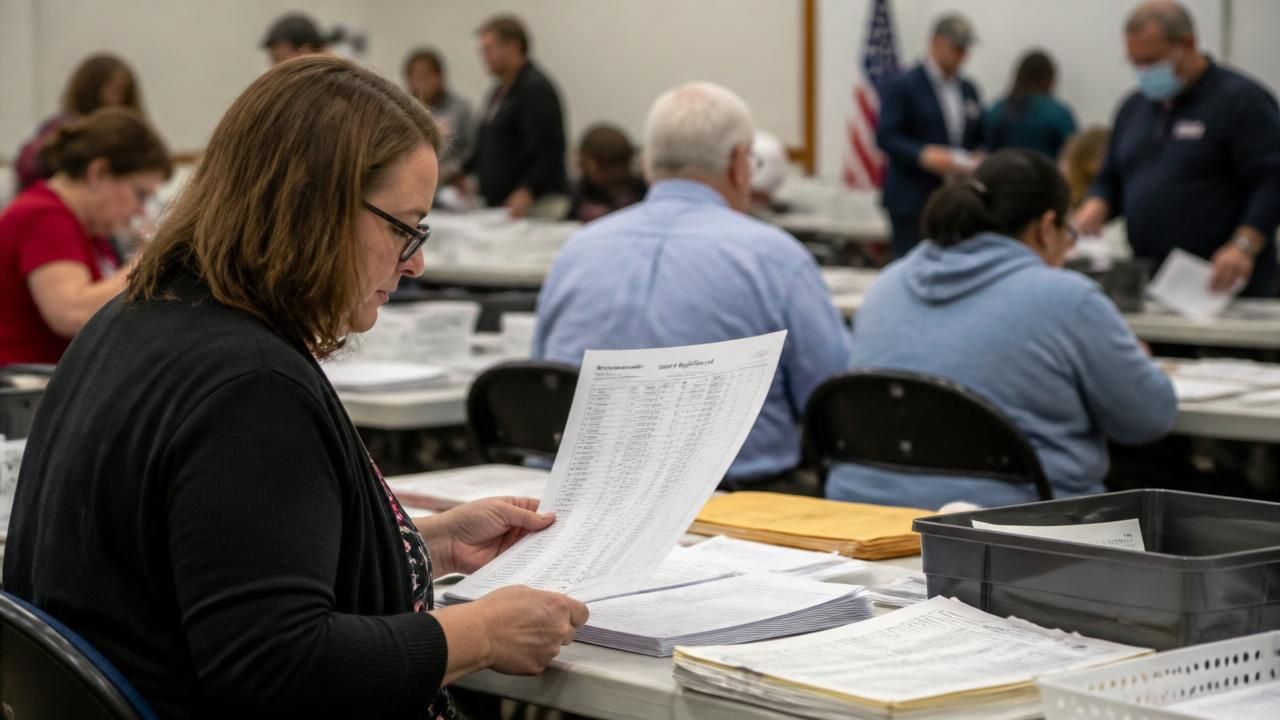
The mechanics of the operation are what make it unusual. State voter files are, by design, public records. They list names, addresses, party affiliation and voting history, and are used by campaigns, academics, journalists and election administrators alike to audit the accuracy of the rolls. Turning that open record into a federal investigative tool inverts its purpose, critics argue: what was built for transparency is being repurposed for enforcement.
Noncitizen voting is already illegal, and it is already vanishingly rare. Multiple studies of recent elections have found only a handful of cases, often the result of administrative error rather than intent, and typically caught by the safeguards states already operate. The National Voter Registration Act of 1993 requires states to maintain accurate rolls and provides a process for removing ineligible voters — a process that voting-rights groups warn can be weaponized when the lists are inaccurate.
The Department of Homeland Security has not publicly detailed the scope of the search, how many names have been flagged, or what happens to those flagged. Spokespeople have framed the work as a routine integrity measure.
Why a Domestic Agency Is in the Room
The involvement of a national security department in election administration is itself the story. Historically, federal election oversight has been the province of the Department of Justice and the Election Assistance Commission, with DHS focused on cybersecurity of voting infrastructure after 2016. That mandate expanded during the Trump administration with the short-lived Presidential Advisory Commission on Election Integrity, which disbanded in 2018 without substantiating claims of mass fraud.
Databases of citizenship status exist, but they are neither complete nor designed for this purpose, which is why federal searches of voter rolls have drawn lawsuits in the past. If the current effort leads to removal notices or referrals, it is likely to be litigated on the grounds that it pressures eligible voters — particularly naturalized citizens — off the rolls.
Meanwhile, the Ground Game Continues
Far from Washington, elections carry on at a scale where the stakes are concrete and personal. Wikinews has been interviewing candidates across several contests, a reminder that the machinery of democracy is overwhelmingly local.
- David Liebelt, a candidate in South Gippsland, Australia's local elections.
- Lindsay Love, running in the Tarwin Valley ward of South Gippsland.
- Anda Banikos, also a local council candidate in South Gippsland.
- Rebecca Jennings, an independent candidate in the Daly by-election in Australia's Northern Territory.
- Jonathan Stanley, the Scottish Unionist candidate in the 2021 Airdrie and Shotts by-election.
The South Gippsland contests were fought in the shadow of a recent period of state-appointed administrators running the shire — a period that became the central issue of the campaign.
“The Administrators were a disaster for the Shire.”
That framing — that outside intervention in local governance failed — is the obverse of the debate in Washington, where the question is how much federal involvement in elections is too much. One set of communities is arguing for the return of local control; the other is watching it get pulled away.
Two Different Frames for One Subject
The divergence in coverage is instructive. The Times treats the DHS effort as a civil-liberties and institutional-integrity story: a federal agency building an enforcement operation on a problem that has not been documented. The Wikinews pieces treat elections as a civic-education beat — candidate interviews, ward-level issues, the mundane machinery of local democracy.
Both framings address the same underlying question: who gets to decide who votes, and on what evidence?
What Comes Next
Watch for three things. First, whether DHS produces any numbers — how many registrations were flagged, and how many of those turned out to be genuine errors or deliberate fraud. Second, whether state election officials cooperate or resist; several secretaries of state have already signaled that they will not hand over lists beyond what public-records law requires. Third, whether Congress pursues oversight hearings, which would force the department to explain its legal authority.
In the meantime, thousands of candidates like Liebelt, Love, Banikos, Jennings and Stanley will be knocking on doors in wards and constituencies whose voters are unlikely to be scanning federal databases. Most of them will win or lose on the price of a road repair or the future of a local hospital — and their campaigns will proceed regardless of what the department in Washington finds.
That, in the end, may be the most useful contrast of all: an election system under federal scrutiny from above, still functioning from the ground up.