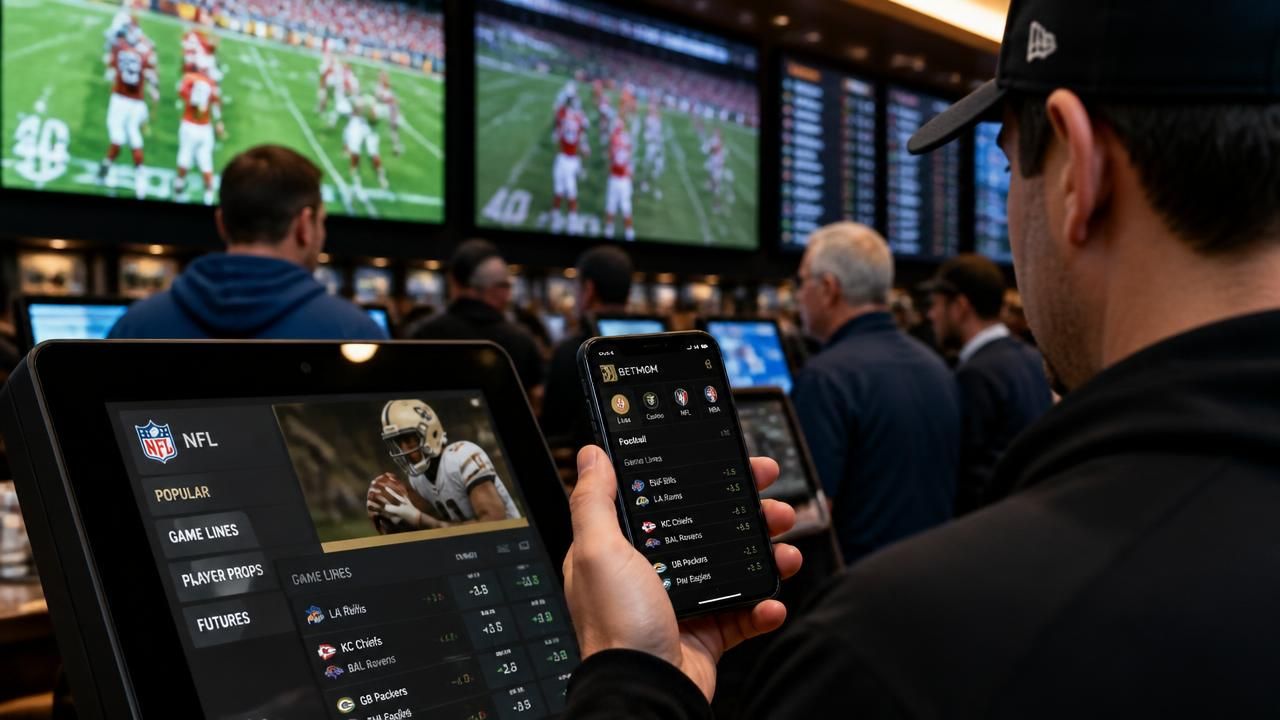
The NFL's opening weekend delivered everything the betting industry hoped for — except a profitable Sunday for the house. According to BetMGM CEO Adam Greenblatt, the season has launched with strong enthusiasm and heavy early activity, but the first full slate of games broke in favor of the customers.
"From the bookmakers' perspective, Sunday was not a favorable day because the fans came out ahead," Greenblatt said, describing a weekend that left bettors happy and operators nursing an early loss.
Greenblatt made the comments in an interview with Bloomberg's Romaine Bostick and Isabelle Lee on "The Close," where he also made the case that regulated sportsbooks — not emerging prediction markets — are the better venue for Americans who want to wager on football.
A Season of High Expectations, Slower Growth
The tone of the CEO's pitch reflects a broader reality: the NFL season remains the single biggest revenue engine in American sports betting, but its growth curve is flattening. Multiple industry trackers and financial outlets reported this week that football betting is expected to rise only slightly this season compared with prior years, a marked slowdown from the double-digit expansion that defined the post-Murphy v. NCAA era after the Supreme Court struck down the federal ban on sports wagering in 2018.
The deceleration isn't because demand is falling. It's because a growing share of that demand is migrating to prediction markets — platforms that let users trade contracts on binary outcomes such as game winners, playoff berths, and even non-sports events like elections.
Prediction Markets Crash the Football Party
Prediction markets have moved aggressively into the mainstream this fall. Once confined to niche, crypto-native platforms, they are now spending heavily on national advertising timed to NFL kickoff, putting them in direct competition with sportsbooks for the same eyeballs and the same dollars. Industry coverage this week described the collision as a "reshaping" of the sports betting landscape, with prediction platforms and traditional operators trading barbs in marketing, in statehouses, and in court.
The commercial battle has a regulatory core. Prediction markets argue they are federally regulated derivatives venues and therefore fall outside the state-by-state gaming framework that governs sportsbooks. State gaming regulators and casino operators counter that they are unlicensed sports wagering operations in disguise.
The American Gaming Association has "thrown a flag" on the expansion, signaling that the industry's primary trade group intends to fight the newcomer category in courts and legislatures rather than cede market share. That fight is likely to define the fall.
An Advertising Arms Race
The marketing intensity this season is unmistakable. Sportsbooks are back with their familiar blitz of bonus offers and promo codes — BetMGM's own affiliate campaigns are running through partners including CBS Sports and the New York Post, touting up to $1,500 in bonus bets for marquee matchups from Monday Night Football to the Jets–Giants and Giants–Dolphins rivalry games.
Those promotions, once the industry's primary customer-acquisition tool, now compete for attention with prediction market commercials airing in the same broadcasts. The shift matters for unit economics: bonus-heavy acquisition is expensive, and operators have been under investor pressure to demonstrate sustainable margins rather than endless growth-at-any-cost spending.
- Operators' case: Regulated sportsbooks offer consumer protections, tax revenue, and established integrity frameworks.
- Prediction markets' case: Federally supervised event contracts create efficient, transparent markets — and a novel product that appeals to traders rather than pure bettors.
- Regulators' dilemma: Duplicative or conflicting oversight across state and federal agencies, with no clear precedent for how the two models should coexist.
Why the Fall Matters Beyond Football
The timing is not accidental. Analysts note that the convergence of the NFL calendar and the U.S. midterm elections creates an unusual concentration of high-volume, high-attention events — the exact conditions in which prediction markets have historically thrived. Election contracts could draw as much attention as any Sunday slate, giving the platforms a second front on which to build mainstream legitimacy.
That dynamic helps explain the intensity of the industry's response. If prediction markets successfully establish themselves as a permanent, federally tolerated alternative during football season and an election cycle, sportsbooks lose not just revenue but the argument that state licensing is the only legitimate pathway to market.
Still, the sportsbooks retain significant structural advantages. The incumbents control the customer relationships, the promotional infrastructure, and the state-by-state compliance apparatus. Greenblatt's decision to use a national television appearance to argue the case for bookmakers — rather than simply tout BetMGM's own numbers — suggests the industry views the prediction market threat as strategic rather than marginal.
What to Watch
Three questions will shape the season. First, whether early customer-friendly results like Week 1 translate into sustained retail engagement or simply a temporary lift. Second, how aggressively federal and state regulators act on prediction market contracts tied to sports. And third, whether the AGA's promised legal offensive produces injunctions or settlements that clarify the boundary between derivatives trading and sports wagering.
For now, the takeaway from kickoff weekend is a familiar one in gambling: the house wins over time, but not every Sunday. What has changed is who, exactly, is holding the book.