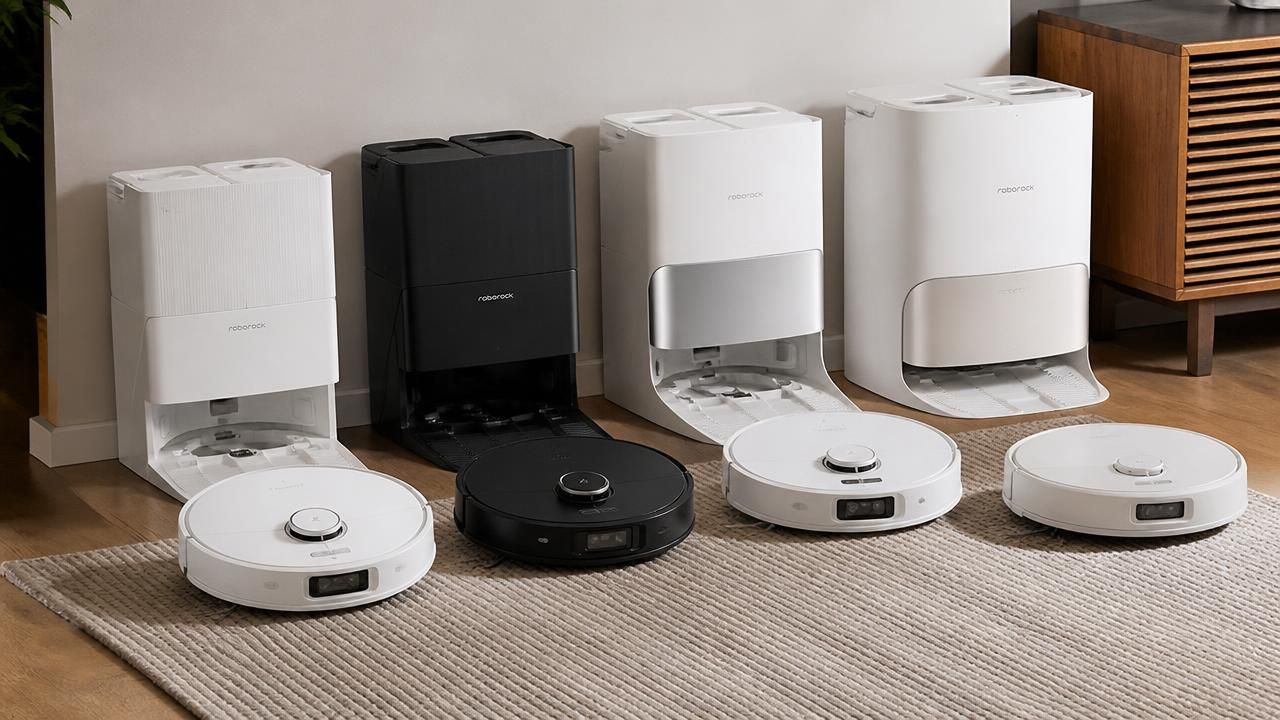
Roborock has spent 2026 doing what few consumer-robotics companies manage: filling a single product family with enough variation to cover nearly every price point a shopper might name. The Qrevo line — spanning the entry-level Qrevo 2, the mid-tier Qrevo S Pro, the freshly U.S.-launched Qrevo 2 Pro, and the slim-framed Qrevo CurvX and Curv 2 — has become both the default recommendation across tech outlets and the default bargain across deal desks.
The convergence is striking. In the same news cycle, Wired was crowning one Qrevo model a budget king, Popular Mechanics was praising another for reaching under furniture better than anything else in its test lab, and the New York Post was pitting two Roborocks against each other to answer a single question: which one would I actually buy? Meanwhile, Mashable, MSN and Kotaku tracked a wave of price cuts that have made the category's premium features accessible at mid-range money.
One Family, Four Price Tiers
Roborock's strategy is segmentation at industrial scale. Rather than a single flagship with a handful of options, the company ships near-identical silhouettes with sharply different internals:
- Roborock Qrevo 2 — the value play. Wired's reviewer found it "a good vacuum for the price, especially when it's on sale," though thresholds and small objects remain a challenge.
- Roborock Qrevo S Pro — the mid-priced workhorse, rated by MSN for "high-end cleaning performance" and headlined by 18,500Pa of suction.
- Roborock Qrevo 2 Pro — newly launched in the U.S. and, per Mashable and MSN, already discounted at launch.
- Roborock Qrevo CurvX and Curv 2 — the design-forward tier, with slim chassis and smarter mopping; Mashable flagged a $200 cut on the Curv 2.
What the Reviews Actually Say
The budget tier earns its reputation
Wired's assessment of the Qrevo 2 is the most useful kind of review: it praises what matters and names what doesn't work. The vacuum "did well on corners and navigating my home, but thresholds and small objects remain a challenge," the outlet reported — a detail that matters more than spec sheets suggest, since stray cables and socks are the most common reason robot vacuums need human rescue.
"It's a good vacuum for the price, especially when it's on sale." — Wired on the Roborock Qrevo 2
The mid-range punches up
The Qrevo S Pro has emerged as the lineup's sweet spot. MSN's review framed it as "a mid-priced robot vacuum and mop with a high-end cleaning performance," and Kotaku emphasized the raw number behind that claim: 18,500Pa of suction, a figure that would have been flagship-only territory two product cycles ago. The New York Post went further, running the S Pro head-to-head against the QV 35A — a comparison that implicitly treats the S Pro as the benchmark to beat rather than the challenger.
Design as a differentiator
Where the S Pro competes on power, the CurvX competes on geometry. Popular Mechanics found its slim frame reaches under furniture better than other robot vacuums the publication has tested, pairing that with "powerful suction and smarter mopping." Android Authority's take on Roborock's newest flagship-tier machine leaned into the same theme from the user's perspective: it is "so hands-off, you might forget it's there."
The Discount Machine
If the reviews built the Qrevo's reputation, the pricing built its market share. The New York Post reported Prime Day 2026 deals of up to $700 off, with robot vacuums starting at $189 — enough, the outlet argued, that messy homes had no excuse left. Wired separately anointed one model as "the Roborock vacuum to buy during Prime Day." The discounting didn't stop with Prime Day: Kotaku tracked the Qrevo S Pro dropping to an all-time low for Labor Day, and Mashable highlighted a $200 reduction on the Qrevo Curv 2.
The timing is not accidental. Robot vacuum launches cluster around Amazon's shopping events because discounting is now the primary customer-acquisition channel in the category. A launch-day price cut — as with the Qrevo 2 Pro in the U.S. — lets Roborock claim a premium position while undercutting rivals on the shelf.
Why This Matters Beyond One Brand
The Qrevo blitz lands in a consolidating market. Robot vacuum pioneer iRobot has spent recent years cutting costs and restructuring as Chinese competitors outpaced it on price and navigation features. Roborock, Ecovacs, Dreame and others now ship lidar, AI obstacle recognition and self-emptying, self-washing docks as standard in the mid-range — features that were luxury add-ons a few years ago.
That compression is good for buyers and brutal for laggards. It also reframes what "budget" means: the Qrevo 2's weaknesses — thresholds, small objects — are exactly the frontier where the industry's AI navigation is still fighting reality, regardless of price tier. Paying more buys power and clearance, not omniscience.
Which One Should You Buy?
The outlets, read together, sketch a clear decision tree. For apartments and light-touch cleaning, the Qrevo 2 at a sale price is the rational buy — Wired's caveats notwithstanding. For homes with pets, carpets and daily mopping needs, the Qrevo S Pro's 18,500Pa suction makes it the value flagship. For low-slung sofas and design-conscious rooms, the CurvX's slim frame is the feature worth paying for, and the Curv 2 is the same appeal at a $200 discount. The Qrevo 2 Pro, meanwhile, is the newest entry and already on sale — an option for early adopters willing to trade a track record for a launch price.
The through-line from all eleven sources is less about any single model than about a company that has learned to sell the same idea four different ways — and to time the discounts so that shoppers rarely pay full price for any of them.