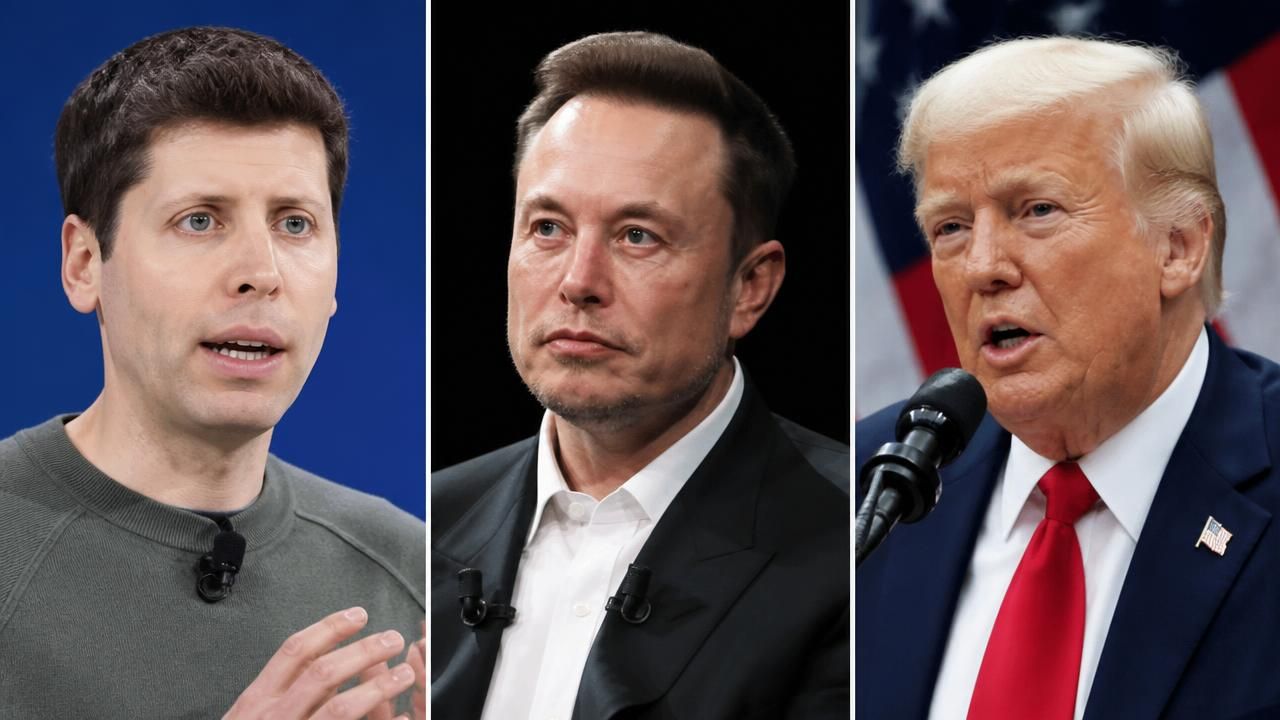
A rare public appeal for restraint from some of the most powerful figures in artificial intelligence has collided with a political reality in Washington: the White House has no intention of slowing down. Over the weekend, OpenAI chief executive Sam Altman and xAI founder Elon Musk both signaled support for a more measured approach to frontier AI development, days after Anthropic CEO Dario Amodei publicly urged the U.S. government to take steps to slow the technology's advance. President Donald Trump's response was swift and dismissive, framing any slowdown as a gift to China.
The episode has become a Rorschach test for how the AI debate is now framed. Wired characterized it as a standoff between industry leaders who want guardrails and a White House that says the responsibility lies with the companies themselves. Wire services, including the Associated Press and syndicated partners such as MSN and ideastream, emphasized a different angle: the president's determination to preserve American technological primacy. Forbes, meanwhile, zeroed in on a narrower but consequential front — Trump's defense of the sprawling data centers that power AI models.
An Uncomfortable Alliance
The call for caution is notable precisely because of who signed on. Amodei has been among the most vocal executives warning that rapid, unregulated scaling of AI systems could outpace society's ability to manage the risks. Altman, whose company competes directly with Anthropic, and Musk, who has both warned about AI's dangers and raced to build his own models, have each at various times been accused of talking about safety while pursuing speed.
Their alignment this weekend reflects a broader shift in the industry's public posture. As models grow more capable and more expensive, executives face mounting pressure from regulators, investors and the public to articulate a theory of control. Yet the same companies are locked in an arms race in which pausing — even rhetorically — carries competitive risk.
China dismissed the executives' call for a slowdown as "fear mongering," according to reports.
Beijing's reaction was blunt. State-aligned commentators and officials rejected the premise of the appeal outright, casting it as an attempt by American firms to freeze the global playing field in their favor. The characterization is a familiar one in the geopolitics of technology: whoever is ahead benefits most from a pause, and whoever is behind benefits most from momentum.
Trump's Calculus: China First
Trump's public comments made clear that his lodestar is not safety but supremacy. He downplayed the need to check AI development and said he does not want to cede the edge to China, according to the Associated Press. The message to the executives urging restraint was, in effect, that the caution they are preaching is theirs to practice.
That framing has become the administration's default posture on AI. The president has repeatedly tied the technology to national competitiveness, job creation and military capability, and he has shown little appetite for measures that could be read as slowing American labs while Chinese competitors accelerate.
The Chinese AI sector's recent advances — most notably the release of highly capable, low-cost models that unsettled Silicon Valley — have sharpened that argument. For Trump and his advisers, any slowdown is not a moral choice but a strategic concession.
The Data Center Fight
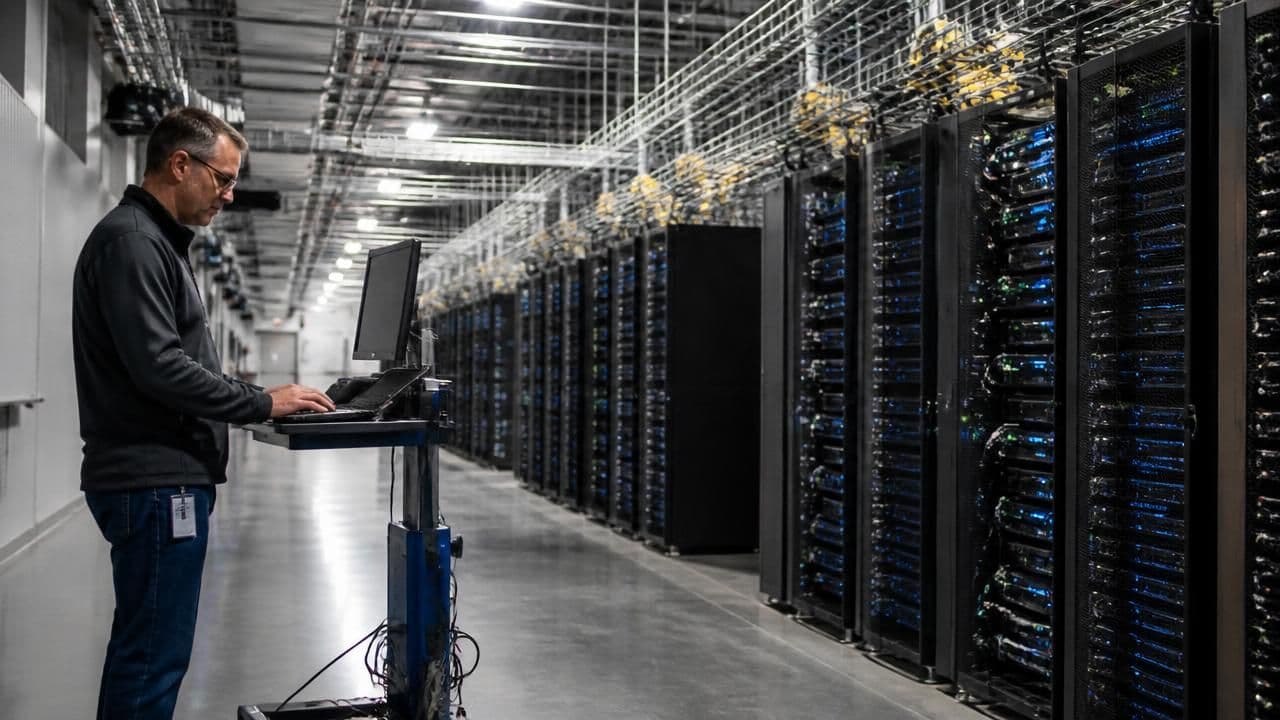
The debate extends well beyond model weights and safety benchmarks. It now plays out in local zoning meetings, utility rate cases and statehouses, where the build-out of massive AI data centers has triggered resistance over electricity costs, water use and land.
Trump weighed in forcefully on that front, defending the facilities and arguing that opposing them is a mistake. "Smart ones" want them, he said, according to Forbes — a populist reframing of an issue that has divided his own coalition, pitting energy-hungry tech growth against rural and suburban communities that bear the infrastructure burden.
The economics are difficult to ignore. Data centers are among the largest new sources of electricity demand in the United States, and utilities have warned that meeting it will require significant new generation capacity and grid investment. Those costs frequently land on ratepayers, a dynamic that has made the facilities politically radioactive in some regions even as governors compete to attract them.
A Contradiction Without a Resolution
The current moment contains an unresolved tension. The executives most responsible for building frontier AI are asking for limits; the government most capable of imposing them says the industry should police itself; and the chief geopolitical rival dismisses the entire conversation as a tactical maneuver.
- Industry position: Frontier AI carries risks serious enough to warrant restraint, and Washington should be involved in setting the pace.
- White House position: Restraint is a choice for companies, not a mandate for government, and the United States cannot afford to fall behind China.
- Beijing's position: The slowdown appeal is self-serving — "fear mongering" designed to lock in American advantage.
Each side's argument is strengthened by the others' behavior. If China is racing, American restraint looks naive. If American labs keep racing, calls for caution look performative. And if the executives genuinely believe the risks are existential, critics ask, why not simply slow down themselves?
That question is likely to define the next phase of the debate, as Congress weighs proposals on model transparency, compute governance and data center siting. For now, the only real brakes on AI development are the ones the companies apply to themselves — and, as this weekend showed, the pressure to keep building is coming from both the market and the White House.