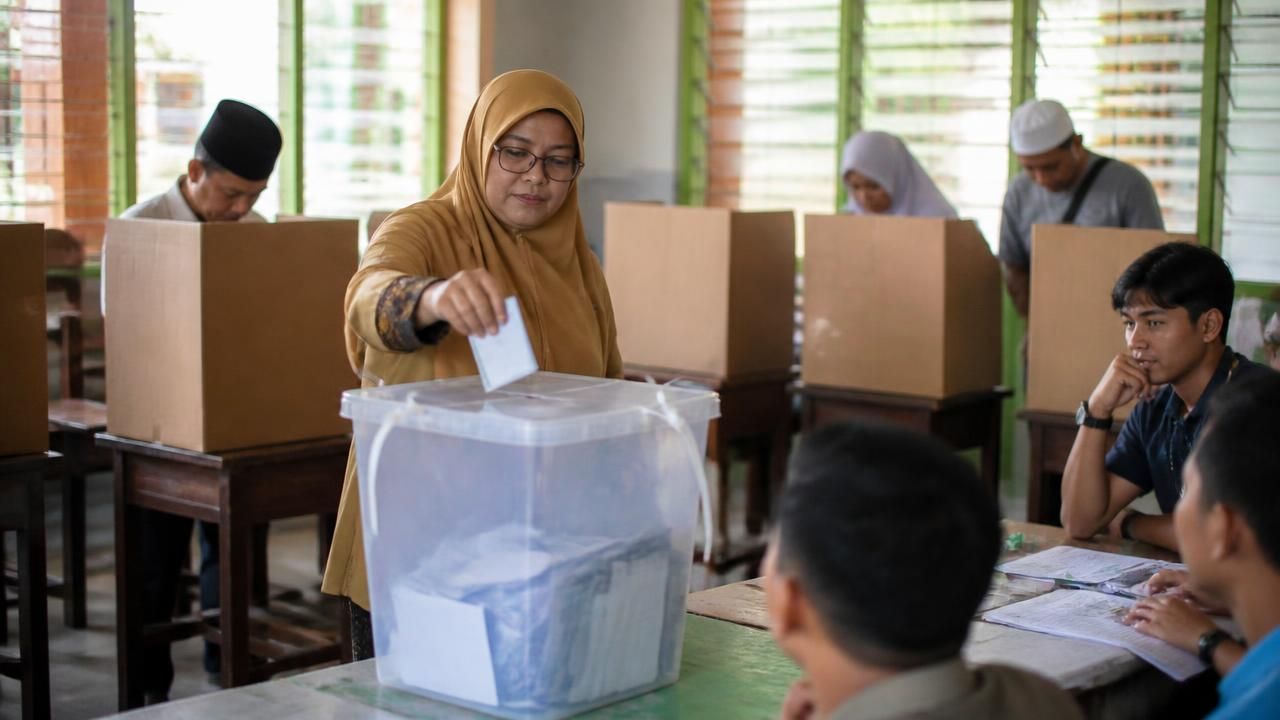
Voters across the southern Philippines' Muslim autonomous region cast ballots in their first-ever parliamentary election, a vote that supporters cast as the capstone of a decades-long peace process and skeptics treated as its most consequential stress test.
Bloomberg Markets framed the balloting in the Bangsamoro Autonomous Region in Muslim Mindanao (BARMM) as an act of hope — voters turning out "hoping to cement peace and economic growth after decades of separatist conflict." The Associated Press led with the historic nature of the exercise: a Muslim region in the southern Philippines voting "in first elections." The Arkansas Democrat-Gazette was blunter still — "Philippine region has its first elections" — while two MSN feeds emphasized the same milestone through a governance lens, framing it as "Clearing the way for Muslim Mindanao self-governance."
A Parliament Where There Was Once a Rebellion
The vote creates an 80-seat legislature with seats allocated to political parties, geographic districts and sectoral groups, replacing the appointed Bangsamoro Transition Authority that has governed the region since 2019. It is the first time residents of the region — rather than Manila-appointed officials or former guerrilla commanders alone — have chosen their own lawmakers in a parliamentary system.
The balloting is the political endpoint of the 2014 Comprehensive Agreement on the Bangsamoro, signed between the Philippine government and the Moro Islamic Liberation Front (MILF), which ended one of Asia's longest-running separatist insurgencies. A conflict that began in the 1970s killed an estimated 100,000 or more people and displaced millions across Mindanao, stunting development in a region rich in farmland, fisheries and mineral deposits.
The BARMM was formally established in 2019, succeeding the older Autonomous Region in Muslim Mindanao, which critics considered a failed experiment in autonomy. The transition period was originally scheduled to end in 2022, but Congress twice postponed the first parliamentary election, extending the interim authority to give the new government time to build institutions, pass a regional administrative code and demobilize fighters.
Violence Shadows the Ballot
The run-up to the vote was not peaceful. Three people were shot dead on the eve of the election, according to Malay Mail, which led its coverage with the killings. UCA News framed the contest as a "violence test" for the Bangsamoro project, and the Associated Press similarly placed security concerns at the center of its reporting.
"Philippines' autonomous Muslim region votes for first parliament after three shot dead on eve of election." — Malay Mail
Election violence is a familiar feature of politics in the southern Philippines, where clan feuds known as rido, private armed groups and competition over land and patronage have long made Mindanao a perennial election hotspot for the Commission on Elections. The deadly shootings underscored the central risk facing the new government: that a political system built to absorb armed groups into democratic competition could instead be captured by the same warlord dynamics it was meant to replace.
Regional officials and international observers have argued that the alternative — a return to armed struggle — is far worse, and that the election's very occurrence represents progress. Turnout and the conduct of the count are being watched closely as early indicators of whether the peace dividend is real.
The Economics of Peace
For investors and development economists, the stakes are material. The BARMM receives an annual block grant from the national government worth tens of billions of pesos, giving a region that is consistently ranked among the country's poorest a dedicated budget stream. It also controls, or shares, jurisdiction over some of the Philippines' most promising resource frontiers: the Sulu archipelago's fisheries, the fertile plains of Maguindanao and North Cotabato, and untapped energy and mineral prospects.
Advocates argue that a stable, elected Bangsamoro government could unlock agriculture, halal industry and infrastructure investment that decades of conflict deterred. Skeptics counter that institutional capacity remains thin, corruption risks are high, and the region depends heavily on Manila's fiscal transfers rather than generating its own revenue.
The vote also came with a legal complication: the Supreme Court ruled in 2024 that Sulu province is not part of the BARMM, removing a significant area from the region's jurisdiction and complicating the geographic reach of the new parliament.
How the Story Was Told
- Bloomberg Markets emphasized peace and economic growth — the forward-looking case for autonomy.
- The Associated Press and UCA News foregrounded the violence test, balancing the historic vote against security fears.
- Malay Mail led with the eve-of-election killings, placing the human cost first.
- MSN's two feeds stressed self-governance, treating the election as the culmination of a long autonomy project.
- The Arkansas Democrat-Gazette kept the emphasis on the milestone itself: a region governing itself through the ballot box for the first time.
What Comes Next
Once the new parliament is seated, the interim Bangsamoro Transition Authority dissolves and the region enters a permanent, democratically constituted phase — a transition that will test whether ballot boxes can hold where bullets once ruled. The immediate questions are whether the elected body can deliver services, whether former combatants are integrated into civilian life, and whether Manila continues to fund the autonomy arrangement generously enough to make it credible.
For now, the significance is simpler and larger than any single result. After five decades of separatist war, the Muslim south of the Philippines voted for its own parliament — and the fact that the vote happened at all, despite the violence surrounding it, is itself the message.