Semaglutide, the molecule sold as Ozempic, Wegovy and Rybelsus, has already upended the treatment of diabetes and obesity. Now a growing body of research suggests it may do something far more sweeping: slow the biology of aging itself.
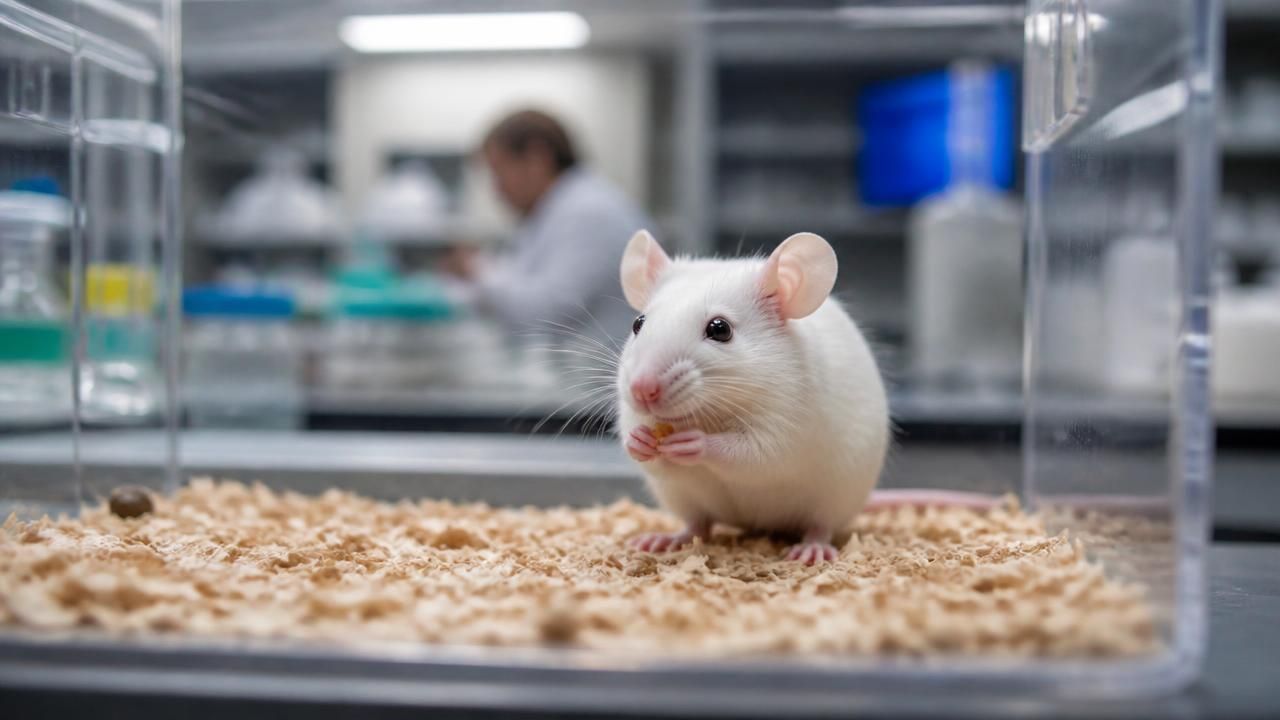
In experiments described by researchers, semaglutide was given to older but otherwise healthy mice. The treated animals lived longer than their untreated counterparts and performed better on tests of memory, muscle function and blood-sugar control, while showing improvement in several established biological markers of aging. Crucially, the scientists reported, the effects went beyond what calorie restriction alone would predict—a detail that has pushed the story from the business pages into the longevity labs.
What the study actually found
The work is notable less for any single outcome than for the breadth of them. Aging research generally measures decline across many systems at once, and semaglutide appeared to touch several:
- Longevity: treated mice lived longer than controls of the same age, even though the animals were already past middle age when dosing began.
- Cognition: memory performance improved, suggesting the drug may influence the brain independently of its metabolic effects.
- Muscle: physical function held up better than in untreated animals—significant, because muscle loss is a hallmark of frailty in both mice and humans.
- Metabolism: blood-sugar control improved, consistent with the drug's known GLP-1 receptor activity.
- Biological age: several molecular and physiological signs of aging shifted in a younger direction.
"Its effects went beyond those seen with calorie restriction, raising the possibility that GLP-1 drugs could tap into a separate biological pathway linked to longevity."
— Summary of the findings
A fourth lever for longevity
For decades, longevity science has effectively worked with three levers. The first is caloric restriction, the most reliably life-extending intervention across species. The second is genetic and pharmacological signaling—the insulin/IGF-1 and mTOR pathways, which rapamycin and metformin target. The third is lifestyle, chiefly exercise. MSN's framing of the new result as a possible "fourth factor" captures why researchers are taking it seriously: if GLP-1 receptor agonism works through a pathway distinct from simply eating less, then the drug is not merely a weight-loss tool with incidental benefits.
That distinction matters enormously for how the finding is interpreted. Weight loss itself can improve blood sugar, reduce inflammation and ease strain on joints and hearts. But if semaglutide's benefits persist beyond the metabolic effects of shedding pounds, the drug is doing something else—something that might be replicated, refined, or combined with existing interventions.
How different outlets framed it
The story has been told in strikingly different registers. Science Daily led with mechanism, emphasizing the pathway question and the comparison with calorie restriction—the version aimed at researchers. Prevention translated the same result into consumer terms, asking whether an "ultra-popular medication" might extend readers' lives. National Geographic treated it as a feature-length explainer on why GLP-1s could be an anti-aging breakthrough, embedding the mouse data in the broader cultural moment around these drugs. Trade and aggregator outlets, including Labroots and the International Business Times, focused narrowly on the next step: a human trial designed to test the theory directly. That divergence is itself informative. The same study is simultaneously a mechanistic puzzle, a lifestyle promise, and a clinical milestone—and each audience is hearing a different headline.
From mice to people
The most consequential development is that the question is no longer confined to animal models. A new clinical trial is now putting the theory to the test in humans, measuring biological age clocks, inflammatory markers, and functional outcomes such as muscle strength and cognition alongside the usual metabolic endpoints. Human studies of aging are slow and expensive by nature—unlike mice, people cannot be followed for their entire lives—so researchers increasingly rely on surrogate measures of biological age, which remain imperfect and contested.
The caveats
Skeptics raise several reasonable objections. Mouse lifespan studies have an uneven record of translating to humans; laboratories are controlled environments, and the animals in question were healthy, not living with obesity or diabetes as most GLP-1 patients are. It is also difficult to disentangle a drug's direct effects from the consequences of reduced appetite, and separating the two in mice is harder than it sounds. Meanwhile, GLP-1 medications carry real side effects—gastrointestinal distress chief among them—and cost and access remain thorny issues if a drug is to be prescribed for prevention rather than treatment.
What to watch
- Whether the human trial shows measurable slowing on validated biological-age metrics, not just weight loss.
- Whether the effect is dose-dependent and reversible when treatment stops.
- Whether combining GLP-1s with existing interventions—exercise, caloric restriction, mTOR inhibitors—produces additive or redundant results.
- How regulators and insurers would treat a drug indicated for aging rather than disease, a category that does not currently exist.
For now, the honest summary is this: in mice, semaglutide looks like more than a weight-loss drug. Whether it is an anti-aging drug will be decided in people—and the trial now underway is the first real attempt to find out.