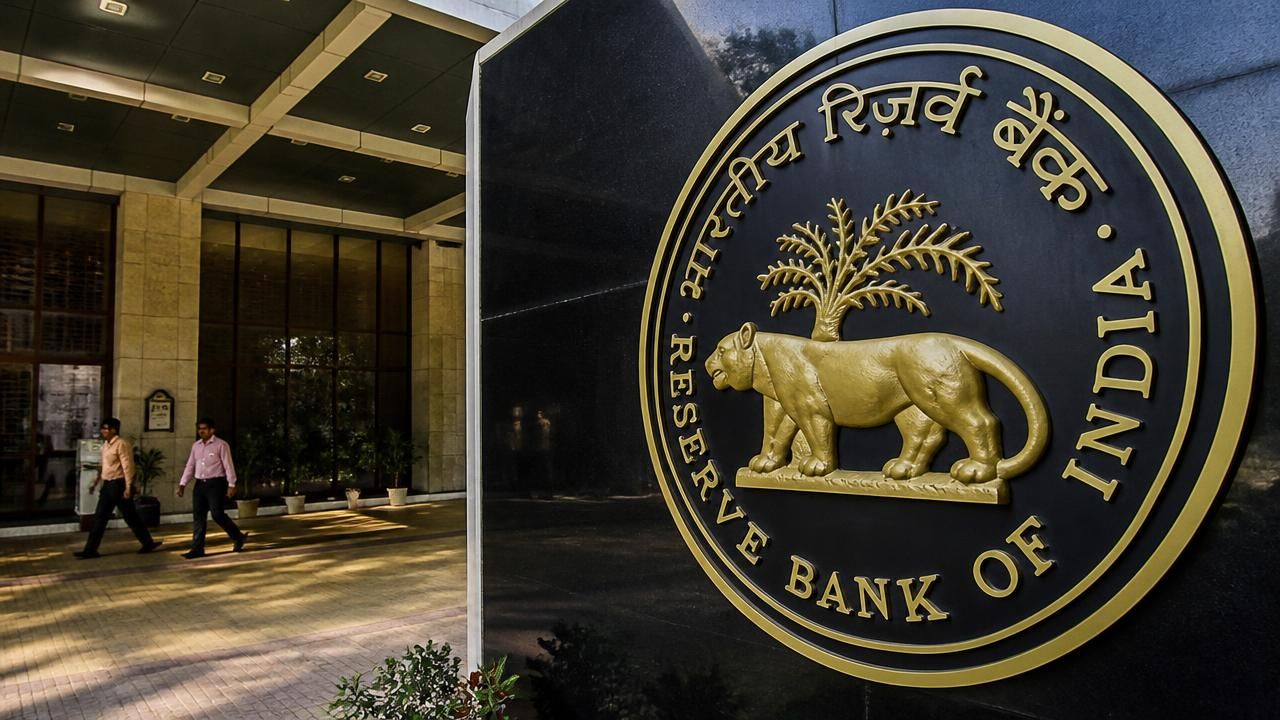
India's central bank has rejected a long-pending application from Tata Sons Pvt. to surrender its registration as a non-bank financial company — a decision that effectively puts the holding company of the $100-billion-plus Tata group on a path toward a stock market listing its controlling trusts have resisted for years.
The Reserve Bank of India conveyed the rejection to the company in recent days, according to people familiar with the matter, Bloomberg reported. The regulator's stance, those people said, signals that it expects Tata Sons to comply with the rules that apply to so-called shadow lenders — rules that, for India's largest non-bank financial companies, include an obligation to list.
"India's central bank rejected an application from Tata Sons Pvt. to surrender its status as a shadow lender, according to people familiar with the matter, signaling it expects the company to adhere with rules for such entities that include an initial public offering."
A rejection roughly 30 months in the making
Tata Sons first sought to give up its non-bank finance company (NBFC) licence about two-and-a-half years ago, according to syndicated accounts of the decision — a timeline that suggests the holding company spent months lobbying for a quiet exit before the central bank closed the door. The application was not a routine filing: Tata Sons is the principal investment vehicle of a conglomerate that spans software, automobiles, steel, aviation, chemicals and consumer goods, and it sits at the apex of a corporate structure that ultimately finances one of India's best-known philanthropic endowments.
By declining to deregister the company, the RBI has forced Tata Sons back into a compliance framework it had hoped to leave behind. The practical consequence, according to multiple reports, is a mandatory listing process — one that could produce one of the largest initial public offerings in Indian corporate history.
Why the RBI insists on a listing
Tata Sons is registered as a Core Investment Company (CIC), a specialised category of NBFC whose assets are overwhelmingly equity or debt holdings in group companies and which does no ordinary lending business. Under the RBI's scale-based regulatory framework introduced after a series of shadow-banking failures, the central bank publishes a list of "upper layer" NBFCs — entities deemed systemically important by virtue of their asset size — and Tata Sons was included in that list as its only core investment company.
Upper-layer status brings enhanced requirements covering capital, governance, disclosure and, critically, a deadline to list on a recognised stock exchange. Several of Tata Sons' peers in that bracket, including listed consumer-lending and vehicle-finance giants, already trade publicly; the RBI's position has been that size alone justifies market discipline, regardless of whether a company takes public deposits.
The company's counter-argument
Tata Sons has long maintained that it does not function as a financial firm. It accepts no public deposits, extends no loans to outsiders, and derives the overwhelming majority of its income from dividends on its holdings — most notably its roughly 72% stake in Tata Consultancy Services. On that reading, the company argued, it should not be treated as a lender at all, and its CIC registration should be cancelled.
The RBI's refusal leaves Tata Sons with a narrow set of alternatives. It could seek a legal remedy; it could restructure its balance sheet so that financial assets fall below the thresholds that define a CIC, for instance by expanding non-financial operations such as electronics manufacturing, aviation or digital ventures; or it could begin preparing for a listing it has spent years trying to avoid.
The trusts problem
The resistance to going public is not merely a matter of paperwork. Tata Sons is roughly two-thirds owned by Tata Trusts, the philanthropic vehicles that have controlled the group since the 1930s. A listing would require a public float, a detailed prospectus and continuous disclosure — exposing the trusts' internal economics, their cross-holdings and the mechanics of how India's most famous charitable structure exercises corporate control.
Analysts have also flagged valuation questions. Holding companies typically trade at a discount to the value of the assets they own, and Tata Sons' stake in TCS alone is worth well over $100 billion at recent market prices. A float would have to be priced against that discount while satisfying both the regulator and trustees reluctant to dilute an ownership structure designed for permanence.
How the story is being framed
The coverage itself reveals the ambiguity at the heart of the decision. Bloomberg, which broke the news, framed it as a regulatory signal — the RBI expects compliance, and compliance means an IPO. The Indian Express headlined the same facts more bluntly, saying the RBI had rejected the company's plea to remain private and "directed the firm to go public." Syndicated versions carried a spread of interpretations: one declared Tata Sons faces "mandatory listing"; another said the decision set "the stage for mandatory listing"; a third described "continued listing uncertainty after RBI classification."
That divergence matters. A rejection of deregistration is not identical to an order to float shares, and the RBI's framework theoretically allows an entity to move to a lower regulatory layer if it no longer meets upper-layer criteria over time. The difference between "must list" and "cannot escape listing via this route" is likely to be litigated — in the press, and possibly in court.
- Timeline: Upper-layer NBFCs face a listing deadline measured in years from classification, putting pressure on Tata Sons' compliance calendar.
- Market impact: An IPO of Tata Sons would rank among the largest ever in India, dwarfing recent mega-offerings and reshaping the benchmark indices.
- Precedent: Other large unlisted family or trust-controlled investment vehicles will read the decision as a warning that the RBI will not grant exit routes on request.
- Governance: Public shareholders in a holding company controlled by charitable trusts would raise novel questions about minority rights and succession.
What happens next
Tata Sons has not publicly detailed its next move, and the RBI does not comment on individual entities. The company could still argue that its financial-asset ratios disqualify it from CIC status, or propose a phased restructuring that shifts the group's centre of gravity toward operating businesses. Some observers expect an appeal or a writ petition; others expect a quiet compliance process that unfolds over years.
What is clear is that the central bank has declined to make an exception for India's most storied conglomerate. In doing so, it has reaffirmed a post-crisis doctrine — that systemically important non-banks, however blue-blooded their shareholders, will be held to the same disclosure standards as everyone else. For the Tata Trusts, that principle now carries a price tag measured in public scrutiny.